
Bird Dog Exercise: How to Build Real Core Stability and Protect the Lower Back
Corrective exercise can relieve a headache by releasing tension in the chest, lats, and neck muscles that pull the head forward, addressing a common root cause of head and neck pain. At Function Thru Fitness in Green Bay, WI, corrective exercise specialist Chad Gossen uses a light, targeted workout to help clients find headache relief in a single session — a service available to clients throughout Green Bay and the surrounding Brown County communities of Northeast Wisconsin.
In our video, Chad Gossen, CPNMT, LMT, NASM-CPT, CES, shares what he does when a client shows up dealing with a headache severe enough that they nearly canceled their session.
Why the Bird Dog Matters for Core and Lower Back Health
The bird dog trains the deep stabilizing muscles of the spine — particularly the multifidus, transverse abdominis, and the erector spinae — in a way that most conventional core exercises do not. These deep stabilizers are responsible for segmental spinal stability: the ability of each vertebra to maintain its position relative to the ones above and below it during movement.
When deep core stability is insufficient, the lumbar spine compensates by increasing muscular tone in the superficial back muscles, which creates the chronic tension and pain that many people experience as lower back tightness or lower back pain. Exercises that train the deep stabilizers directly — like the bird dog performed correctly — address this root cause rather than the symptom.
This is why the bird dog is one of the most clinically relevant exercises for lower back pain relief and why it functions as one of the most accessible exercises for lower back pain for elderly clients and active adults working on spinal health. It requires no equipment and can be performed by nearly every fitness level when started conservatively.
Setup: Joint Stacking
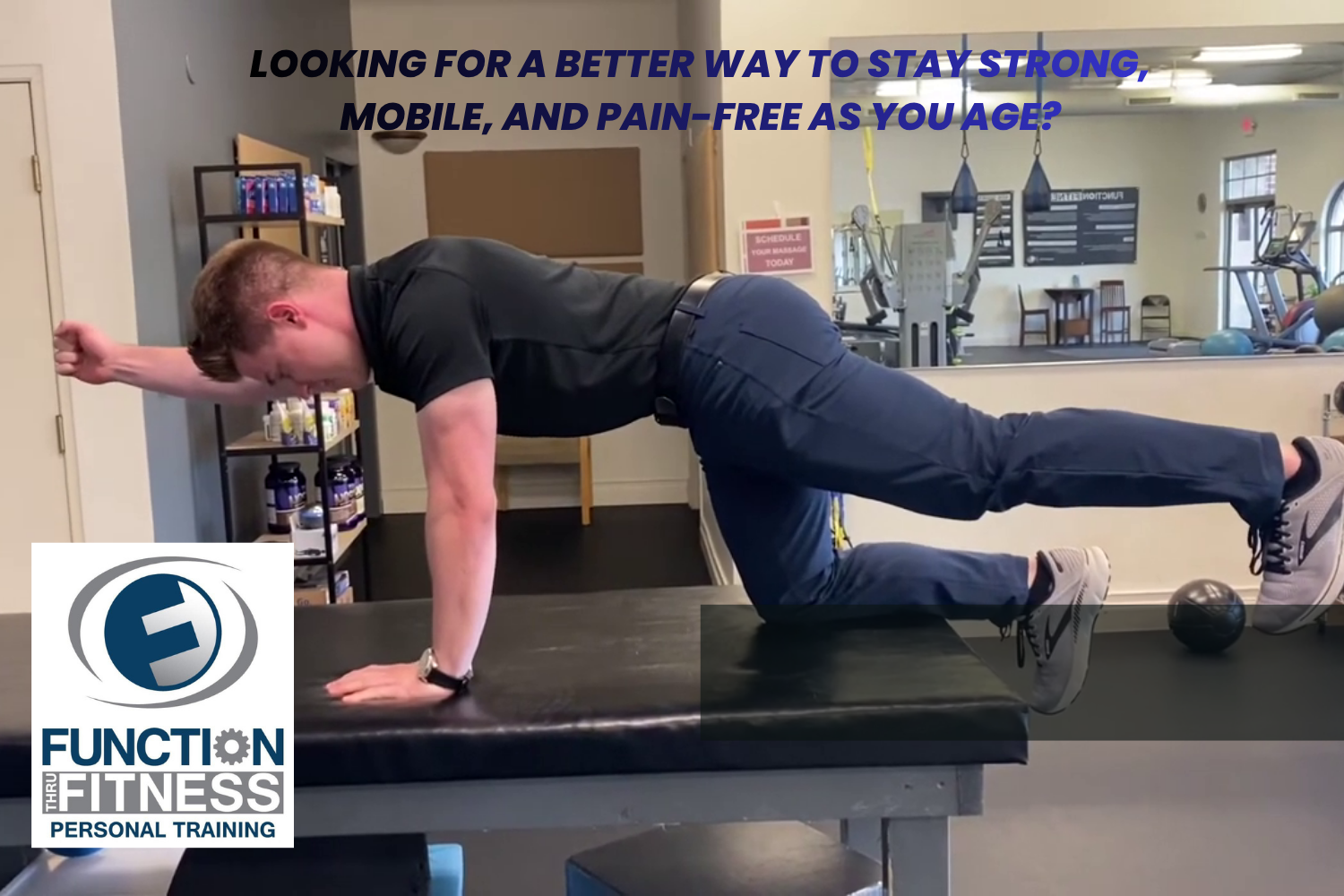
The bird dog begins on hands and knees in a quadruped position. Proper alignment is non-negotiable: the wrist is stacked under the elbow, which is stacked under the shoulder. The knee is stacked under the hip. This joint stacking creates a neutral load distribution through the upper and lower extremities and establishes the position from which the spinal stability work is done.
Spinal Preparation: Cat-Cow to Find Neutral
Before the first bird dog repetition, John performs a cat-cow to bring spinal awareness to the movement. The full flexion of cat — rounding the back toward the ceiling — and the full extension of cow — letting the back drop toward the floor — bracket the available range of the spine. The neutral middle between these two extremes is where the spine is long and where the deep stabilizers are most effectively loaded.
Finding this neutral before beginning is what ensures the bird dog is performed in the position where it is most valuable. Without the cat-cow preparation, most people default to a slightly extended lumbar position that mimics the arching error the exercise is specifically designed to avoid.
John adds a cue to think about pushing the top of the head through the wall ahead — this lengthens the cervical spine and activates the deep cervical stabilizers, extending the neutral spine position from the base of the skull through the tailbone.
The Abs First Principle
Once neutral is found, the abs engage before any limb movement begins. This is a bracing core exercise response — the entire abdominal wall contracts circumferentially to stabilize the spine against the destabilizing force the extending limb will create. Engaging the abs first ensures the deep stabilizers are loaded before the movement challenge is applied, which is the sequence that produces spinal stability training rather than spinal compensation.
Leg Extension: Heel-Led, Not Height-Led
This is the technique detail most people miss. When the leg extends, it leads with the heel — think about pushing the heel straight through the wall behind you. The direction of the extension is horizontal, not upward.
When the leg rises too high, the lumbar spine hyperextends to accommodate the height. That extension is what John specifically identifies as the error to avoid: the moment the back arches, the spinal neutral position is lost and the deep stabilizers disengage. The superficial back muscles take over to hold the arched position, and the core stability training stops.
Straight out, not up. Lead with the heel. Keep the spine long and neutral throughout. If the back arches at any point, reduce the range of the extension until the neutral position can be maintained.
Fist Tension and Opposite Arm Extension
Simultaneously with the leg extension, the opposite arm extends forward. Making a fist with the extended hand is John's technique for increasing tension throughout the entire extended chain. The fist engages the forearm and hand musculature, which creates a reflexive increase in tension that travels through the arm, shoulder, and into the core — increasing the overall activation of the exercise.
The focus in both the arm and the leg extension is length, not height. Think about creating maximum distance between the extended fist and the extended heel — a long diagonal line through the body from heel to fist.
The Five-Breath Hold
This is what makes the bird dog genuinely challenging. Once the extended position is achieved — heel out, opposite arm extended, fist closed, spine neutral, abs engaged — hold it for five full inhales and five full exhales.
Breathing through the hold while maintaining spinal position is a significant demand on the deep stabilizing system. The breath creates intra-abdominal pressure fluctuations that the core must manage without allowing the spine to move. Five breath cycles — particularly the later ones as fatigue builds — are what truly load the deep stabilizers in the way that produces meaningful training adaptation.
After the fifth exhale, return to center, re-establish the stacked position and neutral spine, re-engage the core, and repeat on the other side.
The volume is five repetitions per side with the five-breath hold. John's benchmark is direct: after five reps per side done correctly, you should be sweating. If not, the core is not engaged enough.
Applications at Function Thru Fitness
At Function Thru Fitness in Green Bay, WI, the bird dog appears in personal training programs across populations because it builds the spinal stability foundation that everything else depends on. As a senior exercises for core strength movement, it is accessible for older adults working on lower back health and functional movement quality. For athletes and active adults, it trains the deep stabilizers that protect the lumbar spine under load. And for anyone addressing chronic lower back issues, it is one of the most direct corrective exercise tools available.
FAQ
What muscles does the bird dog exercise work? The bird dog primarily targets the deep stabilizing muscles of the spine, including the multifidus, transverse abdominis, and erector spinae. It also engages the glutes through the extending leg and the shoulder stabilizers through the extending arm. When performed with a five-breath hold and full core engagement, the entire posterior chain and core work simultaneously to maintain spinal stability.
Why should the leg not go too high during the bird dog? When the leg rises too high, the lumbar spine hyperextends to accommodate the height. This arching releases the neutral spinal position that the deep stabilizers are working to maintain — and shifts the load to the superficial back muscles instead. The extension should be horizontal, leading with the heel, not upward. If the back arches at any point, the range of the extension should be reduced.
What does making a fist do in the bird dog? Making a fist with the extended hand creates tension in the forearm and hand musculature that reflexively increases engagement throughout the extended arm and into the shoulder and core. This fist tension technique increases the overall activation of the exercise without requiring any additional equipment or resistance.
What is the five-breath hold in the bird dog? After achieving the extended position — heel out, opposite arm extended, spine neutral, abs engaged — the position is held for five full inhales and five full exhales. Breathing through the hold while maintaining spinal stability loads the deep stabilizing system significantly. John uses a simple benchmark: after five repetitions per side with the five-breath hold, you should be sweating — if not, the core is not sufficiently engaged.
Is the bird dog exercise good for lower back pain? Yes. The bird dog is one of the most clinically recommended exercises for lower back pain because it trains the deep stabilizing muscles of the spine that are typically underactivated in people with chronic lower back issues. When performed with correct spinal neutral position and full core engagement, it directly strengthens the muscles responsible for segmental spinal stability — addressing a common root cause of lower back pain rather than just stretching or resting the symptomatic area.
Looking for a better way to stay strong, mobile, and pain-free as you age?
At Function Thru Fitness, we go beyond big-box gyms. As one of the established fitness centers green bay wi, our focus is on restoring how the body moves, reducing pain, and building long-term strength through a proven function fitness approach.
We help people move better at every stage of life through personalized training, corrective exercise, golf fitness, neuromuscular therapy, and athlete recovery.
Download our free guide: Essential Exercises for Lifelong Mobility and Independence www.ftfpt.com/essential-exercises
Visit us at 801 Hoffman Rd. Suite 103, Green Bay, WI Book online at www.ftfpt.com