
How Marshall Paschke Prepares Clients for Joint Replacement Surgery
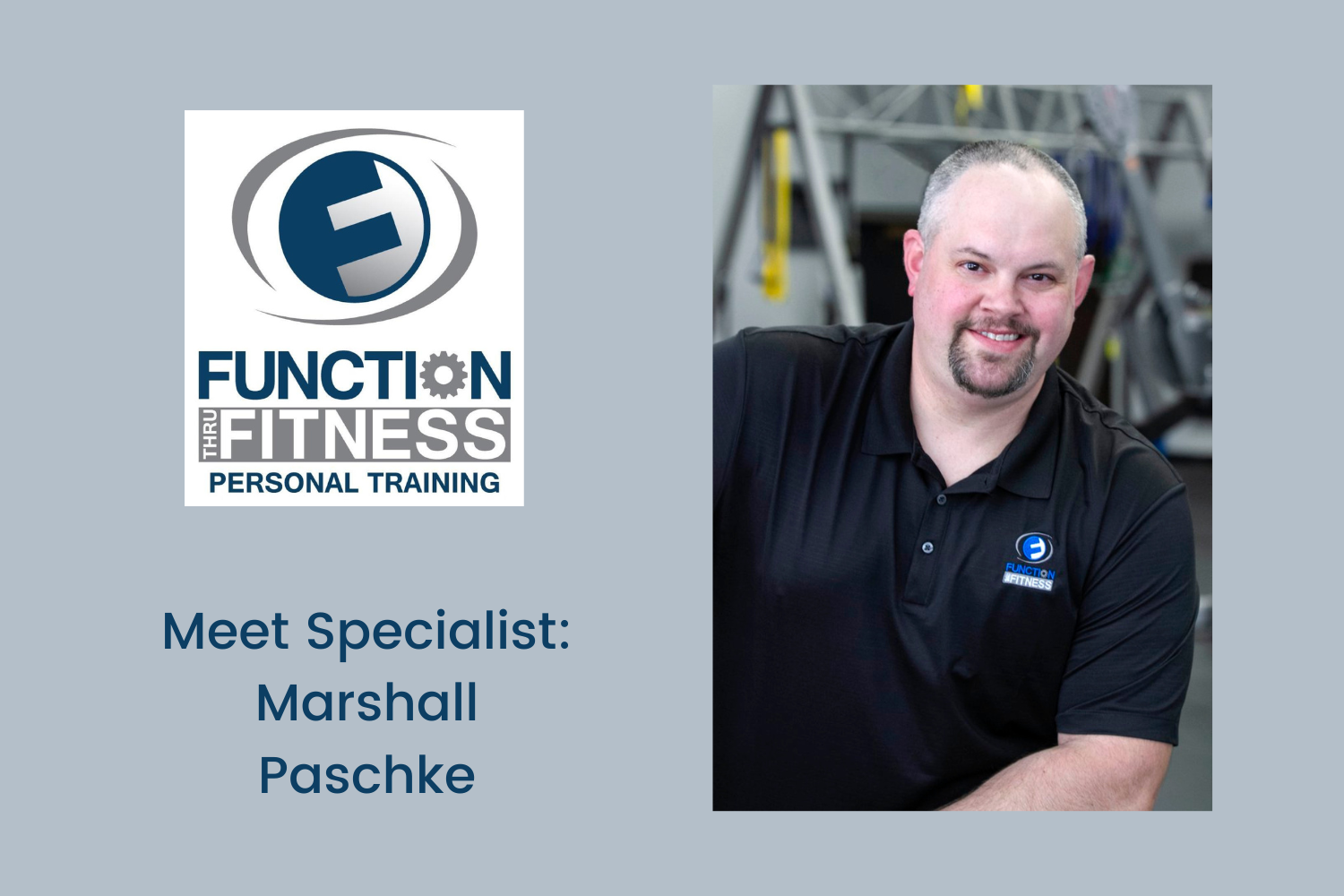
Prehab is training done before a surgery — in this case, a shoulder, knee, or hip replacement — with the specific goal of improving strength and endurance so a patient goes into the operating room in the best physical condition possible. At Function Thru Fitness in Green Bay, WI, personal trainer Marshall Paschke, NASM-CPT, ACSM, builds prehab programs for clients with a joint replacement surgery on the calendar, serving clients throughout Green Bay and the surrounding Brown County communities of Northeast Wisconsin.
In our video, Marshall explains why he encourages clients to start this work well before surgery day, rather than waiting until formal rehabilitation begins afterward.
Why Training Before Surgery Matters
It's easy to think of a joint replacement surgery as the starting point of recovery. Marshall's approach treats it as the midpoint instead. The strength and endurance a client builds beforehand becomes the foundation their body draws on immediately after surgery — which is why the physical condition someone is in going into the operating room can meaningfully shape how smoothly and completely they recover once it's behind them.
This isn't a new idea in rehabilitation medicine, but it's one that doesn't always make it into the conversation before a scheduled surgery. Marshall's role is to make sure it does — working with clients on a structured plan well ahead of their surgery date so they aren't starting their recovery from a deconditioned baseline.
A client who walks into surgery with stronger surrounding muscles and better overall endurance typically has more physical reserve to draw on during the early, most demanding stage of recovery. That's the thinking behind prehab: rather than waiting for rehab to rebuild everything from scratch, prehab aims to raise the floor beforehand, so rehab has a stronger starting point to work from.
What Prehab With Marshall Actually Involves
Every client Marshall works with starts with a functional assessment — a look at current strength, endurance, and movement patterns, not a generic pre-surgery checklist. From there, he builds a program aimed at improving the specific physical qualities that matter most for that client's upcoming procedure and their day-to-day goals, whether that's a shoulder replacement, a knee replacement, or a hip replacement.
That individualized approach matters because two people facing the same surgery can be in very different physical condition beforehand. A client who's stayed active but is limited by joint pain has different prehab needs than a client who's become deconditioned trying to avoid aggravating the joint. Marshall's programs are built around where each client's body actually is, not a one-size-fits-all pre-surgery routine.
Life After Rehab: Picking Up Where Physical Therapy Leaves Off
Prehab is only one half of Marshall's approach. Once a client completes their surgery and finishes their formal rehabilitation with their medical team, Marshall picks the process back up. At that stage, the focus shifts to continuing to build function, strength, and endurance beyond what clinical rehab alone typically restores, so clients can return to the quality of life they had before their joint started holding them back.
That continuation matters because physical therapy is generally designed to restore safe, functional movement — not necessarily to rebuild a client all the way back to the strength and endurance levels they want for an active life. Marshall's post-rehab training picks up that thread, working alongside what a client's medical team has already accomplished rather than duplicating it.
Because these clients are coming out of a recent surgery, Function Thru Fitness follows the same standard policy that applies to anyone under recent doctor care for a surgery or injury: clearance from a physician or physical therapist comes first, and post-rehab training begins from there. The same applies on the front end — clients starting a prehab program are encouraged to loop in their surgeon so training complements, rather than complicates, their surgical plan.
Who Prehab and Post-Rehab Training Is For
Marshall's prehab and post-rehab programs apply across all three major joint replacement surgeries — shoulder, knee, and hip — and across a wide range of ages and activity levels. Some clients come to him well ahead of a scheduled surgery date specifically to prepare. Others come to him after completing rehab, looking to keep building strength and endurance now that their medical team's work is done. Either point of entry is a fit for this approach.
In practice, that means clients who are still fairly active but have been slowed down by joint pain, as well as clients who've become more sedentary trying to protect a painful joint, can both benefit from prehab — just from different starting points. The same is true after surgery: whether the goal is getting back to walking comfortably, returning to a favorite hobby, or simply keeping up with day-to-day life without the joint pain that led to surgery in the first place, Marshall builds the post-rehab plan around that specific goal rather than a generic template.
Finding the Right Personal Trainer for Surgery Preparation in Green Bay
For clients with a joint replacement surgery on the calendar, or clients who've recently finished rehab and want to keep building strength, the difference often comes down to whether a trainer understands both sides of that timeline. Marshall's approach — starting with a functional assessment and building a plan for prehab, post-rehab, or both — is built specifically around that need, for clients throughout Green Bay and the surrounding Brown County area of Northeast Wisconsin.
Frequently Asked Questions
Can personal trainers help with rehabilitation?
Yes — a personal trainer with the right background, like Marshall Paschke, can play a meaningful role both before and after a joint replacement surgery: building strength and endurance ahead of a scheduled procedure, and continuing that work once a client's formal physical therapy or rehabilitation has concluded.
Where can I find expert functional assessment services near me
Function Thru Fitness in Green Bay, WI offers functional assessments as the starting point for every new client, including those preparing for or recovering from a joint replacement surgery. Marshall Paschke uses this assessment to identify current strength, endurance, and movement patterns before building a personalized prehab or post-rehab plan.
How to book a functional assessment consultation with certified professionals
Clients can book a functional assessment directly with Marshall Paschke, NASM-CPT, ACSM, at www.ftfpt.com/marshall, or reach the broader Function Thru Fitness team at www.ftfpt.com to find the right specialist for their goals.
Best early stage exercises after knee replacement surgery.
The right early-stage exercises after a knee replacement depend on where a client is in their recovery and what their medical team has cleared them for. Marshall works alongside that guidance, focusing on rebuilding strength and endurance safely once formal rehab has progressed to that point.
How to increase knee range of motion safely after surgery.
Improving knee range of motion safely after surgery typically starts within a formal physical therapy plan, then continues with a trainer like Marshall Paschke, who builds on that foundation with a structured strength and endurance program suited to where a client's recovery currently stands.
If you have a shoulder, knee, or hip replacement surgery coming up — or you've recently finished rehab and want to keep building strength — book a session with Marshall Paschke at www.ftfpt.com/marshall and start working toward the best outcome possible.
Looking for the right place to start? Download our free guide: Essential Exercises for Lifelong Mobility and Independence — designed to improve strength, mobility, and balance at any age, no equipment required.
www.ftfpt.com/essential-exercises
At Function Thru Fitness, we're not your typical gym. As a trusted Fitness Center Green Bay WI, we specialize in personalized care through:
✔ Personal Trainer Green Bay programs tailored to your goals
✔ Corrective Exercise Specialist Near Me sessions to restore pain-free movement
✔ TPI Golf coaching and Golf Trackman Simulator training for performance and mobility
✔ Neuromuscular Therapy and Soft Tissue Therapy to relieve pain and restore function
✔ Athlete Recovery and Green Bay Personal Training solutions to keep you strong for the long term
Discover why so many choose Function Fitness and our Functional Fitness Gym approach to live healthier, more active lives.
Visit us at 801 Hoffman Rd. Suite 103, Green Bay, WI
www.ftfpt.com | info@ftfpt.com | 920-610-0004