
How Alex Kiefer Uses Balance Training to Keep Clients Active Outdoors
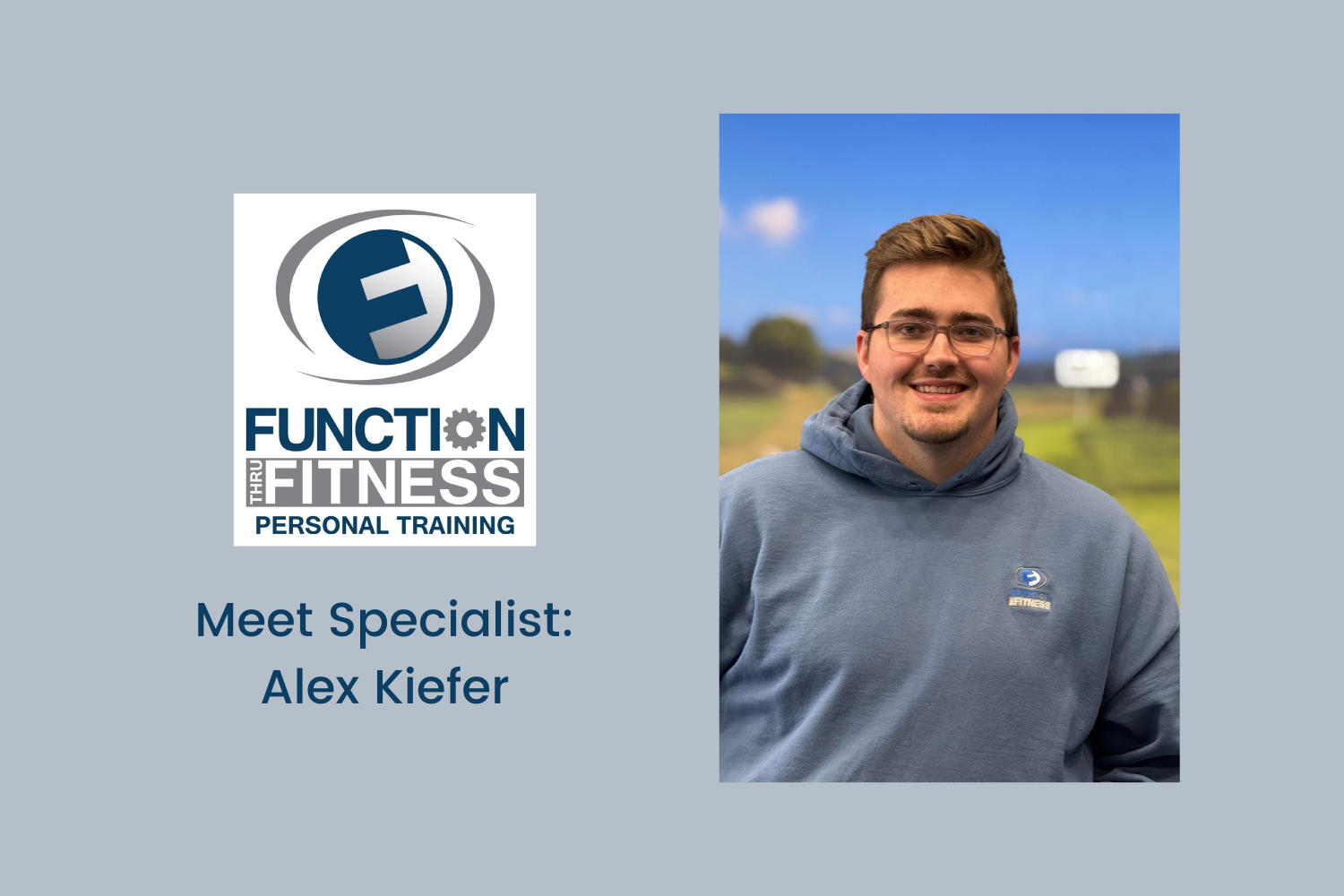
Balance training addresses one of the most overlooked pieces of long-term mobility: the ability to walk and stand confidently on ground that isn't flat. At Function Thru Fitness in Green Bay, WI, personal trainer Alex Kiefer, NASM-CPT, NASM-CES, works with clients whose balance has been affected by years of ankle and knee issues, serving clients throughout Green Bay and the surrounding Brown County communities of Northeast Wisconsin.
In our video, Alex shares the story of a client he's worked with for close to two years — and what it took to get him back to the outdoor activities he loves most.
Years of Ankle and Knee Issues Adding Up to a Balance Problem
When this client first came to Alex, the issue wasn't a single injury — it was years of accumulated ankle and knee issues that had gradually eroded his balance. That kind of gradual decline is easy to miss day to day, but it shows up clearly in the activities that depend on stable footing: hunting on uneven trails, standing in a boat, walking a rocky beach. For this client, a favorite way to spend time, whether alone or with his grandkids, was exactly the kind of activity his balance had started to limit.
This is a pattern Alex sees often: balance problems rarely announce themselves directly. Instead, they show up indirectly, as a hunting trip that gets cut a day short, a beach walk that starts to feel like more effort than it's worth, or a general sense of hesitation on ground that used to feel completely ordinary. By the time someone names it as a balance issue, it's often been building for years, which is exactly what had happened here.
Making Balance and Peripheral Vision the Core Focus
Rather than treating the ankles and knees as separate, isolated issues, Alex and his client made balance itself the central focus of their training, along with peripheral vision — the ability to take in and react to the ground and surroundings without staring straight down at every step. Training two to three times a week for close to two years, they built that capacity gradually, the same way it had gradually declined.
Guided resistance workouts for seniors with mobility limitations, like the ankle and knee issues in this story, typically start with identifying exactly where balance and stability break down before building toward more demanding, uneven-surface conditions. That progression is what allowed this client to eventually train on the kind of unstable, uneven ground his hobbies actually require, rather than stopping at balance work performed only on a flat gym floor.
What Two Years of Consistent Training Has Made Possible
The results speak for themselves. This client now goes on full weekend hunting trips with his grandkids — trips that would have felt out of reach without the balance and confidence to navigate uneven terrain for days at a time. He fishes up to six times a month. He walks the beach with his kids and grandkids without the hesitation that used to hold him back. And in two weeks, he's trying water skiing for the first time in about five years, a milestone that reflects just how far his balance and confidence have come.
None of that happened in a single session or even a single month. Training two to three times a week for close to two years is what allowed the improvements to compound — each session building on the last, gradually closing the gap between where his balance had fallen and where it needed to be for the level of activity he wanted back in his life. That timeline is worth naming clearly: lasting balance improvement, especially after years of decline, tends to be a long-term process rather than a quick fix.
Why Balance Training Matters Beyond "Not Falling"
It's easy to think of balance training narrowly, as fall prevention. For this client, the real value was broader: balance is what let him keep saying yes to the activities and time with family that mattered most to him, rather than gradually saying no as uneven ground started to feel too risky. Benefits of resistance exercises for seniors with arthritis and other joint issues often get framed around pain relief alone, but for many clients, the bigger payoff is simply staying in the activities they love without hesitation.
That distinction matters for how a program gets built, too. Fall-prevention programs are often designed around minimizing risk — teaching someone to move more cautiously. Alex's approach with this client went the other direction: building enough genuine balance and stability that caution became less necessary in the first place, which is why the outcome wasn't just staying safe, but getting back to full weekends outdoors.
Finding the Right Personal Trainer for Balance Training in Green Bay
Recommended resistance exercises for adults over 60, and for anyone whose balance has been affected by joint issues, work best when they're built around a real functional assessment rather than a generic balance routine. Alex's approach — training consistently over time, with balance and peripheral vision as the focus — is available to clients throughout Green Bay and the surrounding Brown County area of Northeast Wisconsin.
Frequently Asked Questions
Guided resistance workouts for seniors with mobility limitations
Guided resistance workouts for clients with mobility limitations, like the ankle and knee issues in this story, typically begin with a functional assessment to identify exactly where balance and stability break down. From there, a trainer like Alex Kiefer builds a progressive plan that gradually introduces more challenging, uneven-surface conditions as strength and confidence improve.
How to choose personal trainers specializing in older adults
Look for a personal trainer who treats balance and mobility as trainable qualities, not just limitations to accommodate. Alex Kiefer, NASM-CPT, NASM-CES, at Function Thru Fitness builds his approach around a client's specific balance and movement goals, whether that's staying steady around the house or getting back to demanding outdoor activities.
Fitness professionals specializing in senior clients Green Bay.
Function Thru Fitness in Green Bay, WI has a team of NASM-certified personal trainers, including Alex Kiefer, who works specifically with clients whose balance and mobility have been affected by joint issues over time. Clients can book directly with Alex at www.ftfpt.com/alex.
Recommended resistance exercises for adults over 60
The right resistance exercises depend on a client's current balance, strength, and joint history, which is why Alex starts every new client with a functional assessment rather than a standard routine. From there, exercises are selected specifically to address what's limiting that individual's balance and mobility.
Benefits of resistance exercises for seniors with arthritis
Resistance training can help support the muscles around an arthritic joint, improving stability and reducing strain on the joint itself. For clients like the one in this story, that support is what made it possible to return to demanding, uneven-ground activities rather than avoiding them.
If years of ankle or knee issues have started to affect your balance, book a session with Alex Kiefer at www.ftfpt.com/alex and start working toward getting back to the activities you love.
Visit us at 801 Hoffman Rd. Suite 103, Green Bay, WI Book online at www.ftfpt.com