
Correcting Neck Pain & Postural Issues: A Deep Dive with Function Thru Fitness
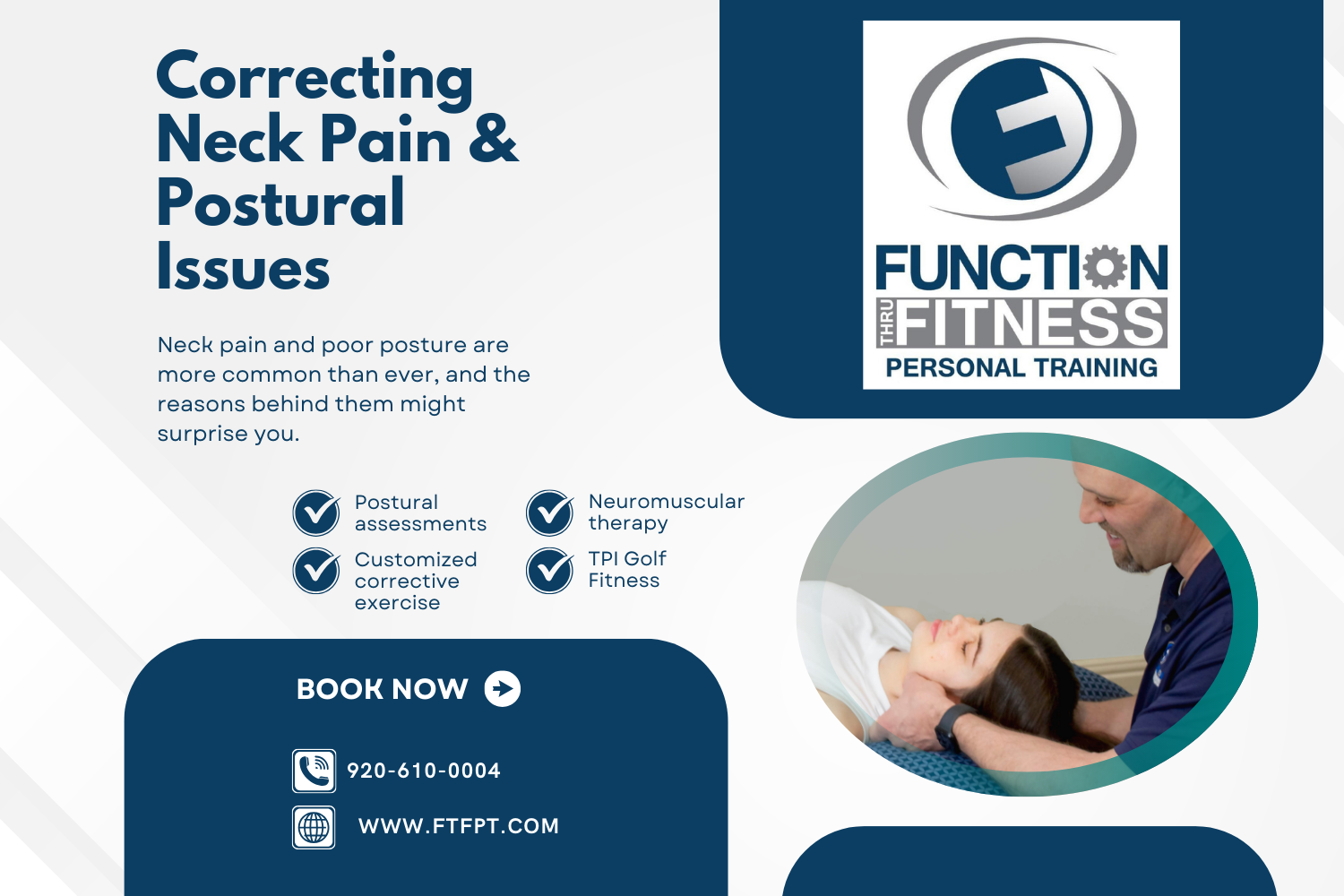
Neck pain and poor posture are more common than ever, and the reasons behind them might surprise you. In our latest YouTube video, Glen and John from Function Thru Fitness explore the most common postural and muscular pain issues—particularly neck pain and forward head posture—and share expert solutions to correct them.
Why Is Neck Pain So Common?
The Function Thru Fitness team regularly treats clients with chronic neck pain, headaches, and upper back stiffness. According to Glen, the two most common pain issues they see are:
✔ Neck pain and headaches (often linked to posture)
✔ Low back pain
John also sees a high number of shoulder, knee, hip, and ankle issues, which often stem from daily posture habits and repetitive movements.
The Root Cause: Forward Head Posture
Many of us spend hours hunched over desks, phones, and books, which encourages a damaging forward head posture. This position weakens key muscles and forces others to compensate, leading to chronic discomfort.
The worst culprit?Looking down at your phone. This common habit puts excessive strain on the neck, increasing the risk of pain and stiffness.
How Poor Posture Affects Your Body
Tightens the front neck and chest muscles, pulling the head forward
Weakens the upper back and deep cervical flexor muscles, reducing stability
Contributes to headaches, migraines, and shoulder tension
Increases the risk of long-term spinal issues
How to Fix Forward Head Posture
The good news? Neck pain is reversible with the right approach. Glen and John recommend a two-part strategy:
Manual therapy to release tight muscles (massage, neuromuscular therapy, or myofascial release)
Strengthening exercises to support proper posture
Simple Adjustments to Reduce Neck Pain
✔ Use a laptop stand: Keep the screen at eye level
✔ Get a wireless keyboard: Prevent unnecessary forward leaning
✔ Switch to a standing desk: Encourages better spinal alignment
✔ Hold your phone at eye level: Avoid looking down for extended periods
✔ Check your sitting posture: Keep feet flat and avoid arching your back
Top Exercises & Stretches for Neck Pain Relief
1️. Upper Trap Stretch – Relieves neck and shoulder tension
2️. Horizontal Rowing – Strengthens the upper back muscles
3️. Reverse Flies – Improves shoulder blade mobility
4️. Doorway Chest Stretch – Opens up tight chest muscles
5️. Foam Roller Stretch – Helps reset posture and relieve stiffness
Quick Tip: Throughout the day, stand tall, rotate your palms outward, squeeze your shoulder blades together, and take deep breaths. This simple movement helps activate the right muscles and reset your posture!
Long-Term Solutions for Postural Health
If you spend long hours at a desk or experience recurring neck pain, headaches, or upper back tightness, corrective exercise and neuromuscular therapy can make a huge difference. At Function Thru Fitness, we specialize in:
✔ Postural assessments to identify the root cause of pain
✔ Neuromuscular therapy to relieve muscle imbalances
✔ Customized corrective exercise programs to restore balance
✔ TPI Golf Fitness training to optimize movement patterns for golfers
Get Expert Help Today
Neck pain isn’t just a minor inconvenience—it affects your energy, productivity, and long-term health. Whether you’re a desk worker, an athlete, or just want to move better without pain, we’re here to help.
Watch the Full Video
FAQs:
Q: What causes neck pain and forward head posture?
A: Neck pain and forward head posture are most commonly caused by prolonged looking down at phones, hunching at desks, and repetitive posture habits that tighten the front neck and chest muscles while weakening the upper back. A corrective exercise specialist near me can assess and address the root cause.
Q: What is neuromuscular therapy and how does it help neck pain?
A: Neuromuscular therapy massage targets muscle imbalances, trigger points, and soft tissue restrictions that contribute to neck pain, headaches, and upper back tension. At Function Thru Fitness in Green Bay, WI, neuromuscular therapy near me is available as part of a comprehensive corrective approach.
Q: What is corrective exercise and how is it used for posture?
A: Corrective exercise is a structured approach to identifying and fixing movement imbalances and postural dysfunction. At Function Thru Fitness, corrective exercise programs are customized to strengthen weak muscles and release overactive ones to restore proper alignment and reduce pain.
Q: Can a slouch back be corrected with exercise?
A: Yes. A slouch back or slouchy back posture can be improved through a combination of manual therapy to release tight muscles and targeted strengthening exercises for the upper back, deep cervical flexors, and shoulder blade stabilizers. Consistency with the right exercises makes a significant difference.
Q: How do shoulder exercises for range of motion relate to neck pain?
A: Restricted shoulder range of motion often forces the neck and upper back to compensate, contributing to chronic tension and pain. Shoulder exercises range of motion work is frequently included in corrective programs at Function Thru Fitness in Green Bay, WI to reduce that compensation and relieve neck strain.
Looking for a better way to stay strong, mobile, and pain-free as you age?
At Function Thru Fitness, we go beyond big-box gyms. As one of the established fitness centers green bay wi, our focus is on restoring how the body moves, reducing pain, and building long-term strength through a proven function fitness approach.
We help people move better at every stage of life through personalized training, corrective exercise, golf fitness, neuromuscular therapy, and athlete recovery.
Download our free guide:
Essential Exercises for Lifelong Mobility and Independence
www.ftfpt.com/essential-exercises
Visit us at 801 Hoffman Rd. Suite 103, Green Bay, WI
Book online at www.ftfpt.com