
How Mike Hoffman Helps Golfers Address Lead Hip and Low Back Pain
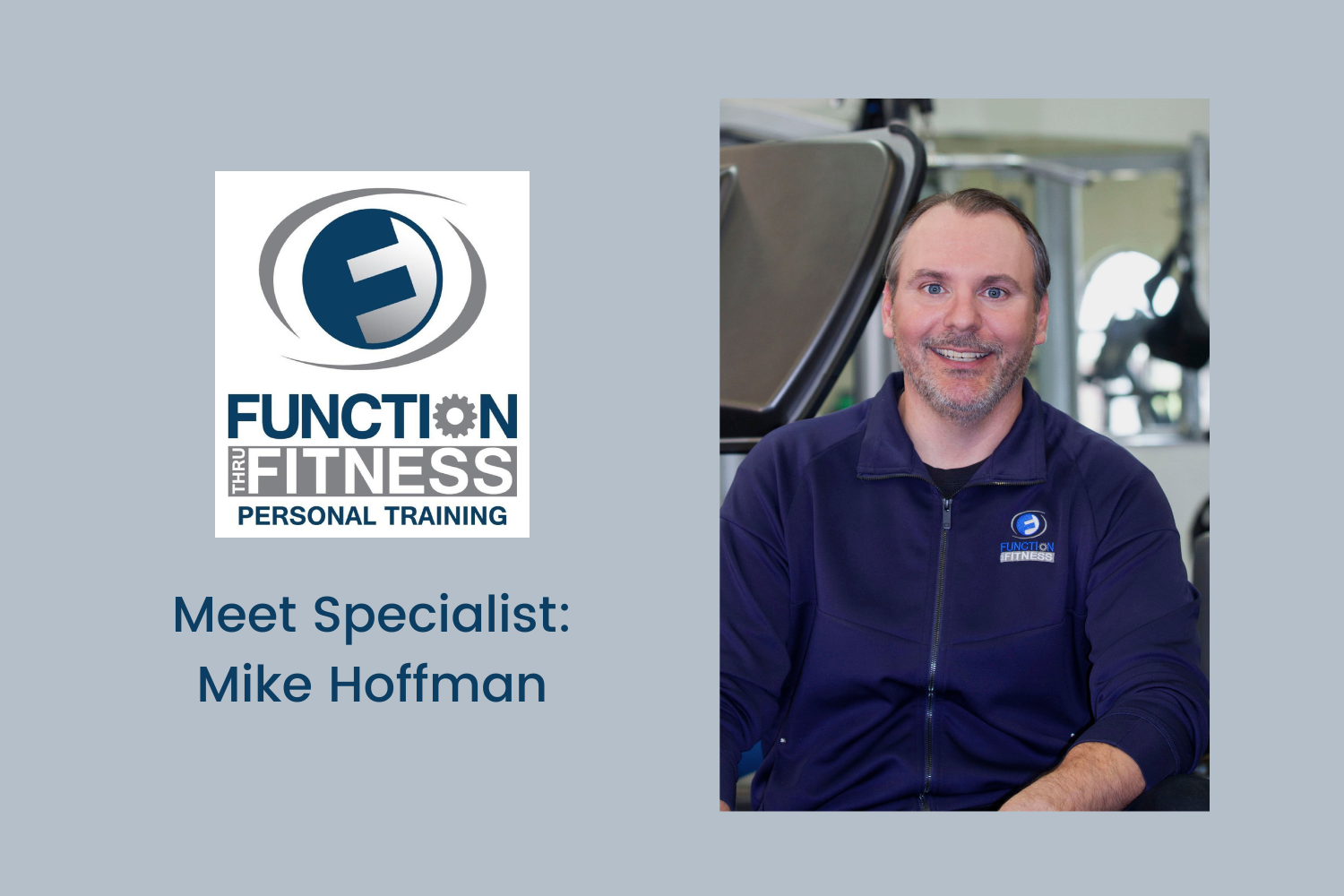
Golf hip pain and golf lower back pain often show up together when the body cannot create or control the rotation a swing demands. At Function Thru Fitness in Green Bay, WI, TPI golf instructor Mike Hoffman assesses how a golfer's hip mobility, strength, and pelvic motion work together—whether that golfer trains in Green Bay itself or comes from one of the surrounding Brown County communities Function Thru Fitness serves throughout Northeast Wisconsin.
In our video, Mike explains one of the most common patterns he sees: chronic lead hip pain with low back pain on the same side, combined with limited internal rotation and too much side-to-side movement in the swing.
Why Lead Hip Pain and Same-Side Low Back Pain Can Show Up Together
The golf swing asks the hips and pelvis to rotate while the body also produces and transfers force. When the lead hip lacks internal rotation or the hips are not strong enough to control that force, the body finds another route. For many golfers Mike assesses, that compensation is a drift toward the target that increases stress at the lead hip and the low back on the same side.
How Limited Hip Internal Rotation Changes the Swing
In an efficient downswing and follow-through, the lead hip drives back to create space for the pelvis and trail hip to travel through. The motion is rotational, but it also depends on the hip joint having enough internal rotation to accept the position without forcing the body to slide.
When that hip motion is limited, the golfer may move toward the target first and turn through later. The hip still completes the motion, but it does so after a large lateral shift, which can concentrate stress at the very areas that already feel painful.
What a TPI Golf Assessment With Mike Looks For
Mike's assessment starts with the movement pattern, not a generic list of golf exercises. He looks at lead-hip internal rotation, overall hip mobility, glute and outer-hip strength, and whether the pelvis can stay controlled as the golfer rotates. Those findings help identify why the golfer is drifting and what needs to change first.
The screen also helps separate a mobility limitation from a strength or motor-control problem. One golfer may need more usable rotation; another may already have the range but lack the strength to own it at swing speed. Persistent, severe, or worsening pain should also be evaluated by an appropriate healthcare professional.
From Mobility to Strength to Swing Pattern
Mike's progression has three parts. First, improve internal rotation and create usable mobility in the lead hip. Second, strengthen the glutes and outer hips so the pelvis does not drift excessively from side to side. Third, integrate that new capacity into the actual movement the golfer needs: driving the lead hip back instead of sliding it forward.
That order matters. Stretching alone may create more range without giving the golfer control. Strength work alone may not solve a joint that cannot reach the needed position. Swing cues alone may fail when the body lacks the mobility or strength to perform the cue. The goal is to build the capacity first, then teach the body how to use it.
Why "Drive the Lead Hip Back" Matters
Driving the lead hip back creates space for the pelvis to continue turning without crowding the hip joint. It also reduces the need to shove the whole pelvis toward the target before rotation can occur. For golfers with the hip-and-low-back pain pattern Mike describes, that difference can be central to both comfort and swing efficiency.
The cue is not meant to be forced in isolation. Mike first restores the motion and strength that make the position possible, then trains the movement until the golfer can reproduce it without the old side-to-side drift.
Why Glute and Outer-Hip Strength Matter
The glutes and outer hips help stabilize the pelvis while it rotates. When those muscles cannot control the motion, the golfer may lose the space and position created by improved mobility. Strengthening them gives the body a better base for rotation and helps reduce unnecessary lateral movement.
This is also where a corrective exercise specialist near me search often leads people to Function Thru Fitness. Golfers looking for more than a generic stretching routine find a team that starts with an individual assessment and builds mobility, strength, and movement work around what the golfer actually needs.
Finding the Right TPI Golf Instructor in Green Bay
For golfers searching for a Green Bay personal trainer or TPI golf instructor who understands both the body and the swing, the difference often comes down to whether the plan addresses the individual golfer's limitations—or hands everyone the same exercises. Function Thru Fitness uses an assessment-first approach for golfers throughout Green Bay and the surrounding Brown County area.
Frequently Asked Questions
What causes lead hip pain in golfers?
Lead hip pain can have many causes. In the pattern Mike describes, limited hip internal rotation, insufficient glute and outer-hip strength, and a pelvic drift toward the target can increase stress at the lead hip. An assessment is needed to determine which factors apply to an individual golfer.
Can limited hip internal rotation contribute to low back pain in golf?
It can contribute to compensation. When the hip cannot provide enough rotation, the pelvis and low back may be asked to create or absorb more motion. Mike looks at the hip and trunk together so the plan addresses the movement pattern rather than only the painful area.
How do you stop sliding toward the target in the golf swing?
The answer depends on why the slide is happening. Mike's sequence is to restore lead-hip mobility, build glute and outer-hip strength, and then retrain the swing so the lead hip drives back instead of drifting forward.
How do the glutes support a golfer's hip rotation?
The glutes help the pelvis stay controlled as the hips rotate and force moves through the swing. Better glute and lateral-hip strength can reduce excessive side-to-side motion and help the golfer use available hip mobility more effectively.
Where can I get a TPI golf assessment in Green Bay WI?
Function Thru Fitness offers golf movement and performance assessments with TPI golf instructors, including Mike Hoffman, at 801 Hoffman Rd. Suite 103 in Green Bay. Book with Mike at www.ftfpt.com/mike and start with an individual golf movement assessment.
At Function Thru Fitness, we're not your typical gym. As a trusted Fitness Center Green Bay WI, we specialize in personalized care through:
✔ Personal Trainer Green Bay programs tailored to your goals
✔ Corrective Exercise Specialist Near Me sessions to restore pain-free movement
✔ TPI Golf coaching and Golf Trackman Simulator training for performance and mobility
✔ Neuromuscular Therapy and Soft Tissue Therapy to relieve pain and restore function
✔ Golf mobility and Green Bay Personal Training solutions to keep you moving for the long term
Discover why so many choose Function Fitness and our Functional Fitness Gym approach to live healthier, more active lives.
Visit us at 801 Hoffman Rd. Suite 103, Green Bay, WI
www.ftfpt.com | info@ftfpt.com | 920-610-0004