
Outer to Inner Foot Roll for Foot Mobility and Balance
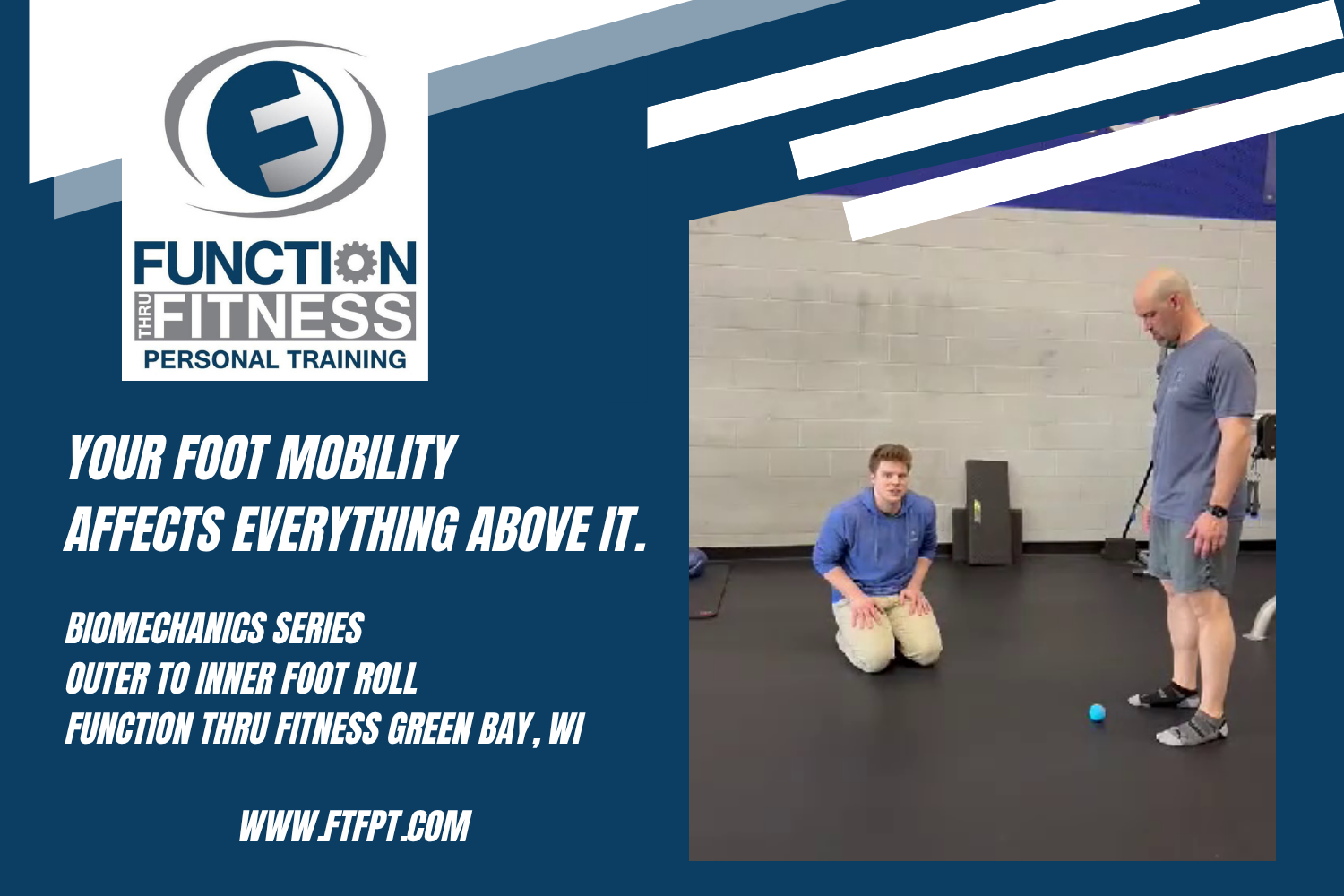
The outer to inner foot roll is a simple, seated mobility drill that works systematically across the ball of the foot — from the knuckle of the pinky toe to the knuckle of the big toe and back — using controlled pressure and deliberate pacing to restore foot mobility and improve how the foot contacts the ground. It requires no equipment, takes one and a half to two minutes per foot, and addresses one of the most consistently overlooked areas in movement care. For those focused on senior exercises for balance, lifelong mobility, or understanding how foot mechanics influence the rest of the body, this technique is a practical and accessible starting point.
Why Foot Mobility Matters More Than Most People Realize
The foot is the body's first point of contact with the ground. Every step, every stance, every transfer of weight begins there. How the foot rolls, loads, and distributes pressure across the ball determines how force moves up through the ankle, the knee, the hip, and into the low back.
When foot mobility is restricted — when the foot no longer rolls smoothly from the outer edge inward, or when certain areas of the ball lose their ability to make full contact with the floor — the structures above compensate. That compensation is often where pain shows up. Knee tightness, hip stiffness, low back tension, and balance difficulties can all have contributors at the foot that are never identified or addressed.
What is biomechanics and why does it matter? Biomechanics examines how forces move through connected structures during real-world movement. From a biomechanical perspective, the foot is not a single contact point — it is a dynamic surface that should roll and load across multiple zones with every step. Restoring that function changes the entire movement pattern above it.
What the Outer to Inner Foot Roll Does
In this video, John Blaser walks Glen through the outer to inner foot roll. The goal is to systematically restore mobility and pressure distribution across the ball of the foot — from the outer edge to the inner edge — through controlled, repetitive rolling movement.
This is not a massage and it is not an aggressive release technique. It is a deliberate, low-load mobility drill that re-educates how the foot contacts the ground and how pressure moves across it.
How do I fix poor posture and movement patterns? For many people, the answer begins at the foot. The outer to inner foot roll is one of the most direct ways to address foot mechanics before building corrective work on top of it.
How to Perform the Outer to Inner Foot Roll
The drill is performed seated, which removes the balance challenge of standing and allows full attention to be placed on the foot itself.
Begin with the foot on the floor. Locate the knuckle of the pinky toe — the outermost point of the ball of the foot. Apply steady downward pressure through that knuckle. The pressure should be firm enough to feel contact beneath the joint, but not so aggressive that it causes sharp discomfort or makes breathing difficult. Moderate, consistent pressure is the target.
From that starting point, slowly roll inward across the ball of the foot, moving one knuckle at a time toward the big toe. The pace is deliberate — not rushed, not hesitant. Each knuckle receives the pressure before the roll continues to the next.
Once the big toe knuckle is reached, reverse the direction. Roll back toward the pinky toe, one knuckle at a time, maintaining steady pressure throughout. That back and forth motion is one cycle.
Continue for one and a half to two minutes per foot. Most people find that the pressure and the rolling motion reveal areas of the foot that feel notably different — tighter, more sensitive, or less responsive — than others. Those areas are exactly where the attention is most valuable.
What to Notice During the Drill
One of the useful aspects of this drill is the feedback it provides. Because the pressure is consistent and the movement is slow, areas of restriction or reduced mobility become apparent fairly quickly.
If one part of the ball of the foot feels significantly tighter or more resistant than others, that is an indication of where mobility is limited. Continuing to work through those areas with controlled pressure — rather than avoiding them — is how the drill creates change over time.
John describes the pressure as something you can feel clearly without it being overwhelming. That threshold is the right working range. Too light and the drill loses its effect. Too aggressive and the body will guard against it rather than respond to it.
Who Benefits from This Drill
The outer to inner foot roll is accessible to a wide range of people and is relevant across many movement goals.
Those working on senior exercises for balance will find this drill particularly relevant. Balance depends heavily on how the foot contacts the ground and how it responds to shifts in weight. Restoring foot mobility through this drill improves the quality of that contact, which supports steadier balance across daily activities.
Anyone focused on lifelong mobility benefits from including foot work in their daily routine. The foot is often the first structure to lose mobility with age and reduced activity — and one of the last to be addressed. A few minutes of daily foot rolling can maintain ground contact quality and movement efficiency well into later life.
Those working with a corrective exercise specialist on lower body pain, postural issues, or movement dysfunction may find foot mobility work is part of their foundational program. Before corrective patterns can be built, the base of the kinetic chain needs to be functional.
Golfers benefit as well. How the foot loads and rolls during the swing affects ankle mobility, hip rotation, and ultimately the power and consistency of the movement. Addressing foot mechanics is part of a comprehensive approach to golf performance and movement quality.
The Biomechanics Perspective
John Blaser, NASM-CPT, NASM-CES, NASM-FNS, CBS, is a biomechanics specialist and the only Certified Biomechanics Specialist in Green Bay, WI. His approach to movement assessment starts at the foundation — and for most people, that means looking at how the foot contacts and interacts with the ground before evaluating anything above it.
The outer to inner foot roll reflects that perspective. Rather than addressing the knee, hip, or low back in isolation, biomechanics traces the movement pattern back to its origin. When the foot is addressed first, everything built on top of it has a better foundation to work from.
How can I improve mobility as I age? Starting at the foot — with simple, consistent, low-load work like this — is one of the most practical and sustainable answers available.
FAQ — Outer to Inner Foot Roll
Q: What is biomechanics and why does it matter for foot mobility? A: Biomechanics examines how forces move through connected structures during movement. The foot is the body's first contact point, and how it rolls and loads directly influences the ankle, knee, hip, and low back. Addressing foot mobility biomechanically means restoring the rolling pattern across the ball of the foot so that force transfers correctly through the entire chain.
Q: How can I improve mobility as I age? A: Consistent, low-load foot mobility work like the outer to inner foot roll is one of the most practical daily habits available. It requires no equipment, can be done seated, and addresses a structure that directly influences balance, posture, and lower body movement quality.
Q: Are there senior exercises for balance that start at the foot? A: Yes. Balance depends on how the foot contacts the ground. The outer to inner foot roll improves pressure distribution and mobility across the ball of the foot, which supports steadier balance across daily activities and is well suited to older adults working on stability.
Q: How do I fix poor posture and movement patterns that may start at the foot? A: A biomechanical assessment can identify whether restricted foot mobility is contributing to patterns higher in the chain. The outer to inner foot roll is a foundational starting point — restoring how the foot rolls and loads before building corrective movement on top of it.
Q: How long should I do the outer to inner foot roll each day? A: One and a half to two minutes per foot is the recommended protocol. The drill can be performed seated and requires no equipment, making it practical as part of a morning or evening movement routine.
Book a Session
If foot tightness, balance challenges, or lower body movement issues have been affecting your daily life, a biomechanical assessment with John Blaser can identify what is driving them from the ground up.
Book now: www.ftfpt.com/john
Looking for a better way to stay strong, mobile, and pain-free as you age?
At Function Thru Fitness, we go beyond big-box gyms. As one of the established fitness centers green bay wi, our focus is on restoring how the body moves, reducing pain, and building long-term strength through a proven function fitness approach.
We help people move better at every stage of life through personalized training, corrective exercise, golf fitness, neuromuscular therapy, and athlete recovery.
Download our free guide: Essential Exercises for Lifelong Mobility and Independence www.ftfpt.com/essential-exercises
Visit us at 801 Hoffman Rd. Suite 103, Green Bay, WI Book online at www.ftfpt.com