
Dorsal Sacral Roll for Low Back Pain Relief
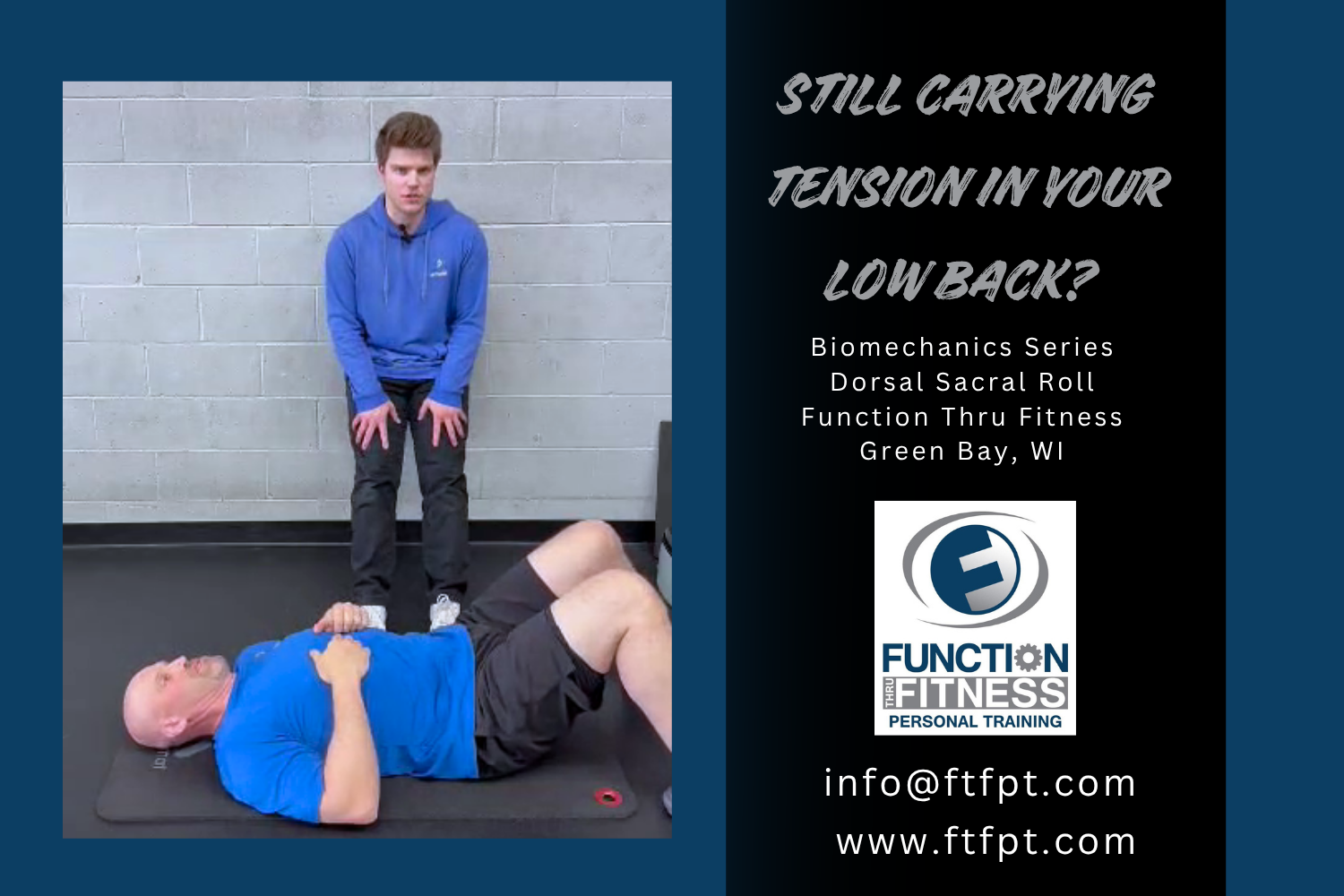
The dorsal sacral roll is a floor-based movement that uses momentum and gravity to mobilize the spine one vertebra at a time, targeting the posterior compression that builds in people with anterior pelvic tilt. It requires no equipment, takes two sets of ten repetitions, and is one of the most direct introductory movements available for those dealing with chronic low back tightness. Among the best stretch exercises for lower back pain tied to postural compression, it stands apart because it works directly on the spinal structures that drive the problem.
What Anterior Pelvic Tilt Does to the Low Back
Anterior pelvic tilt is one of the most common postural patterns in people with chronic low back pain. It is the position where the belt buckle tips downward and forward, the low spine arches excessively, and the back of the rib cage and lumbar region become compressed and rigid.
Most people in this pattern have been told to stretch their hip flexors or strengthen their core — and while those strategies have value, they do not directly address what is happening at the spine itself. The posterior structures remain compressed, the spine stays rigid, and the low back never fully releases.
How do I fix poor posture and movement patterns? For anterior pelvic tilt specifically, the answer starts with finding a way to reverse that orientation and create space in the back of the spine. The dorsal sacral roll is built around that goal.
What the Dorsal Sacral Roll Does
In this video, John Blaser walks Glen through the dorsal sacral roll. The concept behind it is straightforward: by using the weight of the abdominal contents to roll backward, the body creates a posterior shift that expands the back of the rib cage and the low back — the area that stays compressed in anterior tilt.
The movement is not a stretch in the traditional sense. There is no held position, no static tension, and no pulling. It is a dynamic spinal mobilization that uses controlled momentum to sequence through the vertebrae from top to bottom, encouraging each segment to move rather than stay locked.
What is biomechanics and why does it matter? The dorsal sacral roll is a biomechanical solution to a biomechanical problem. The choice of position, the use of momentum, and the spinal sequencing are all deliberate — based on how the spine responds to gravity and load, not based on convention.
How to Perform the Dorsal Sacral Roll
The setup begins on the floor in a seated position. Place the hands behind the knees, in the crease where the thigh meets the lower leg. This grip provides the control needed to manage the movement as the body rolls backward.
From the seated position, round the low back and maintain that rounding throughout. The goal is to keep the backside of the ribs and the low back curved — not flat, not arched. This posterior orientation is what allows the movement to work.
To initiate the roll, kick the legs upward. The momentum of the legs carries the body backward, and the spine sequences down toward the floor one vertebra at a time. The movement should feel progressive — each segment landing in sequence rather than the entire lower back hitting the floor at once.
At the bottom of the roll, extend the knees slightly, then flex them to bring the feet back down and return to the upright seated position. The knee movement drives the return.
Two sets of ten repetitions is the recommended protocol. Most people notice a meaningful difference in posterior low back tension within that volume.
What to Expect if the Low Back Is Rigid
If the low back is particularly stiff, the first few repetitions will not feel smooth. John describes it as a clunker — the spine does not sequence evenly when segments are locked, and the movement may feel abrupt or uneven in certain areas.
That is not a problem. It is feedback. The unevenness identifies exactly where the restriction is, and the continued repetitions are what begin to address it. Slowing the movement down and focusing on sequencing one vertebra at a time is the correction — not stopping.
This is one of the reasons the dorsal sacral roll is particularly valuable as an introductory activity. It reveals where the spine is not moving, and then begins to restore that motion through the movement itself.
Who Benefits from This Movement
The dorsal sacral roll is accessible to a wide range of people and is especially relevant for those dealing with low back pain tied to postural compression.
Those searching for the best stretch exercises for lower back pain related to anterior pelvic tilt will find this movement more directly targeted than most standard low back stretches. It addresses the posterior spinal structures that are actually compressed in that pattern.
Exercises for lower back pain for elderly individuals benefit from the low-load, floor-based nature of this movement. It does not require standing, balancing, or loading the spine under body weight, making it accessible for older adults managing low back stiffness or reduced spinal mobility.
Those with a slouch back or rounded upper back may also benefit, as the dorsal sacral roll encourages the entire posterior spine — not just the lumbar region — to sequence and mobilize.
Anyone working with a corrective exercise specialist as part of a low back pain program may encounter this movement as part of their early-phase work. It is an introductory activity that creates the spinal mobility needed before more demanding corrective exercises can be effective.
The Biomechanics Perspective
John Blaser, NASM-CPT, NASM-CES, NASM-FNS, CBS, is a biomechanics specialist and the only Certified Biomechanics Specialist in Green Bay, WI. His approach to low back pain starts with understanding the postural and mechanical contributors before applying any intervention.
Can personal training help with chronic pain? When delivered by a corrective exercise specialist who understands the biomechanics of the spine, yes — and the dorsal sacral roll is a clear example of what that looks like in practice. A movement chosen not because it is popular, but because it directly addresses the mechanical reality of what is driving the pain.
FAQ — Dorsal Sacral Roll for Low Back Pain
Q: What are the best stretch exercises for lower back pain from anterior pelvic tilt? A: The dorsal sacral roll is one of the most direct options. It uses momentum and gravity to expand the posterior low back and rib cage — the area that becomes compressed when the pelvis tips forward — rather than working around the problem with hip flexor or hamstring stretches alone.
Q: How do I fix poor posture and movement patterns in the low back? A: Start by addressing the spinal rigidity and compression that comes with anterior pelvic tilt. The dorsal sacral roll is an accessible introductory movement that begins to restore posterior spinal mobility. A corrective exercise specialist can assess the full pattern and build a program from there.
Q: Can personal training help with chronic pain in the low back? A: Yes, when the training is guided by a corrective exercise specialist who assesses how the body is actually moving. Generic exercise programs often miss the mechanical contributors to chronic low back pain. A biomechanics-informed approach identifies what is driving the problem before applying solutions.
Q: Are there exercises for lower back pain for elderly individuals that are safe on the floor? A: The dorsal sacral roll is one of them. It requires no standing, no loading under body weight, and no equipment. The floor provides support throughout, and the movement can be scaled in intensity by controlling how far the roll travels.
Q: What is biomechanics and why does it matter for low back pain? A: Biomechanics examines how the body is positioned and how forces move through it during movement. For low back pain, it matters because the mechanical contributors — like anterior pelvic tilt and posterior spinal compression — are what drive chronic symptoms. Addressing those contributors directly produces more lasting results than treating the pain site alone.
Book a Session
If low back pain, posterior tightness, or anterior pelvic tilt has been limiting your movement, a biomechanical assessment with John Blaser is the clearest starting point for understanding what is actually driving it.
Book now: www.ftfpt.com/john
Looking for a better way to stay strong, mobile, and pain-free as you age?
At Function Thru Fitness, we go beyond big-box gyms. As one of the established fitness centers green bay wi, our focus is on restoring how the body moves, reducing pain, and building long-term strength through a proven function fitness approach.
We help people move better at every stage of life through personalized training, corrective exercise, golf fitness, neuromuscular therapy, and athlete recovery.
Download our free guide: Essential Exercises for Lifelong Mobility and Independence www.ftfpt.com/essential-exercises
Visit us at 801 Hoffman Rd. Suite 103, Green Bay, WI Book online at www.ftfpt.com