
Lat Stretch for Shoulder and Rib Cage Mobility
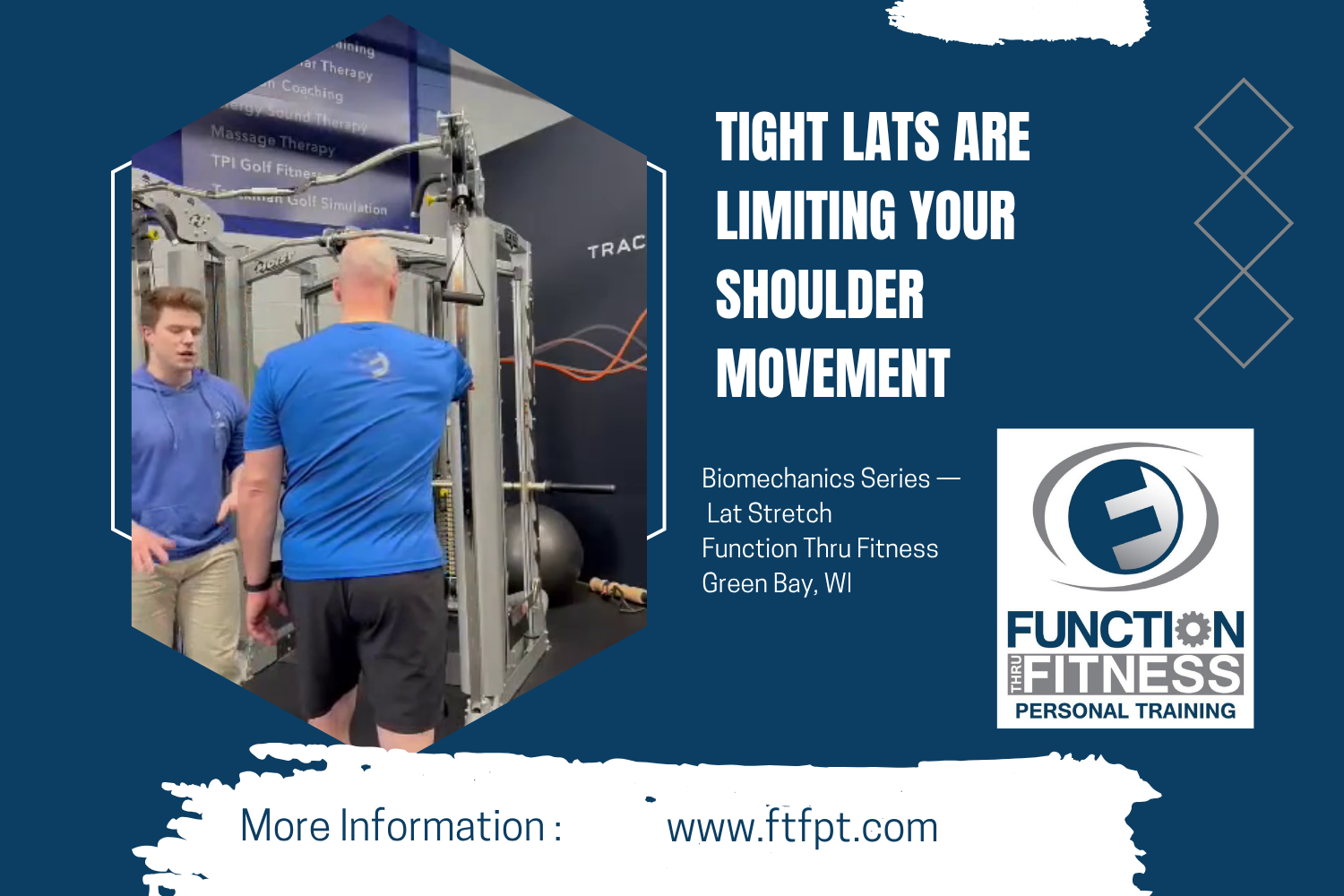
The lat stretch demonstrated in this video targets one of the most overlooked contributors to shoulder restriction: the latissimus dorsi. When the lat is tight, it limits shoulder movement, reduces rib cage expansion, and can contribute to shoulder impingement that does not resolve with isolated shoulder exercises. Performed with correct breath, rotation, and positioning, this stretch opens space in the backside of the rib cage in a way that passive stretching alone rarely achieves.
Why the Lat Matters for Shoulder Mobility
The latissimus dorsi is the largest muscle in the back. It attaches from the lower spine and pelvis all the way up to the upper arm bone. Because of that connection, a tight lat does not just limit back flexibility — it pulls directly on the shoulder, restricting how far it can rotate, reach overhead, or move through a full range of motion.
Many people who struggle with shoulder exercises range of motion have been working on the wrong area. They stretch the shoulder capsule, roll out the upper trap, or do mobility drills for the rotator cuff — and get limited results. The lat, sitting just below and behind the shoulder joint, is often the missing piece.
In our video, John Blaser walks Glen Gadwood through a lat stretch specifically designed to address this. The technique is rooted in biomechanics — meaning it considers how the body is positioned, how rotation is generated, and how breath drives the stretch rather than forcing it.
How to Set Up the Lat Stretch
The setup for this stretch is more specific than it looks, and getting it right makes the difference between feeling a vague pull and actually opening the backside of the rib cage.
Start by facing a rack or stable anchor point. Place the right foot directly in line with the rack, and step the left foot about half a step forward. This offset foot position simulates a turn to the right — which is intentional. The rotation built into the stance is part of what allows the lat to be properly targeted.
Grip the rack with the right hand thumb facing down. Thumb-up is also an option depending on shoulder comfort, but thumb-down is the preferred position when it is accessible. The wrist should be at shoulder height or slightly above.
From there, allow the knees to soften slightly and slide the hips back. This is not a deep squat or a full hinge — just enough to get out of an overly upright or locked position. The goal is length through the side of the torso.
The finishing detail is the sternum rotation. Turn the breastbone toward the right armpit just to the point where the chest opens and the stretch engages. This rotation is subtle, but it is the element that fully targets the lat and the backside of the rib cage rather than just the shoulder.
Using Breath to Drive the Stretch
Once the position is set, the work is done through breath cycles — not by pulling harder or pushing for more range.
Inhale gently through the nose. Then exhale through an open mouth, as if sighing, and allow all of the air to release. Each exhale is an opportunity for the body to let go a little more. The stretch deepens naturally with the breath rather than being forced.
Perform five to eight breath cycles in this position. Take your time. The pace should be slow and deliberate, not rushed.
How can I improve mobility as I age? This is exactly the kind of work that makes a meaningful difference over time. Breath-driven stretching respects the nervous system, reduces the likelihood of the muscle reflexively tightening against the stretch, and creates lasting change in tissue quality and mobility.
Sets, Reps, and Which Side to Stretch
The recommended protocol is two sets of five to eight breath cycles, performed in the morning and again at night.
As for whether to stretch both sides — that depends on the individual. Some people will benefit from working both sides symmetrically. Others may find the restriction is more prominent on one side. A biomechanical assessment helps determine which approach is appropriate for a specific body.
This is an important point. Applying the same stretch equally to both sides without understanding how each side is actually moving can sometimes reinforce imbalances rather than correct them. What is biomechanics and why does it matter? This is one reason: it provides the assessment framework needed to make those decisions accurately rather than guessing.
Who This Stretch Can Help
This lat stretch is useful across a wide range of situations:
Those dealing with shoulder impingement may find that addressing lat tightness reduces the mechanical stress contributing to their symptoms. When the lat is pulling the shoulder into a compressed position, no amount of rotator cuff work will fully resolve the impingement until that tension is released.
Anyone working on shoulder exercises range of motion for training, sport, or daily function will benefit from including the lat in their mobility routine. Range of motion at the shoulder is not just a product of the joint itself — it is influenced by every structure connected to it.
Golfers focused on golf posture and rotation may find this stretch particularly relevant. Tight lats restrict the upper body turn that drives swing efficiency. Essential stretches for golf flexibility should address the lat, and this technique is a strong addition to any golf-focused mobility routine. Golf stretches that ignore the lat are often incomplete.
Older adults looking to maintain overhead reach, postural integrity, and freedom of movement through the rib cage will find this stretch both accessible and effective.
The Biomechanics Perspective on Lat Stretching
John Blaser, NASM-CPT, NASM-CES, NASM-FNS, CBS, is a biomechanics specialist and the only Certified Biomechanics Specialist in Green Bay, WI. His work focuses on identifying how the body is actually moving — and which structures are contributing to limitation or pain — before applying any intervention.
The lat stretch demonstrated in this video reflects that approach. Rather than prescribing a generic shoulder mobility drill, the setup is specific to how the lat attaches, how rotation affects its tension, and how breath can be used as a tool to release it without triggering a protective response.
This is what biomechanics brings to movement work: precision. The same stretch performed with slightly different foot position, wrist height, or sternal rotation produces a different result. Getting those variables right is the difference between a stretch that works and one that misses.
FAQ — Lat Stretch for Shoulder and Rib Cage Mobility
Q: How can a lat stretch help with shoulder impingement? A: The lat attaches directly to the upper arm, and when it is tight, it can pull the shoulder into a position that increases compression in the joint. Stretching the lat reduces that tension and can relieve the mechanical contributors to shoulder impingement.
Q: How can I improve mobility as I age? A: Consistent, intentional mobility work — like this breath-driven lat stretch — performed twice daily is one of the most sustainable approaches. It respects the nervous system, creates lasting tissue change, and does not require equipment or significant time.
Q: What is biomechanics and why does it matter? A: Biomechanics examines how forces move through the body during real-world movement. It matters because pain and restriction rarely have a single isolated cause — biomechanics identifies how connected structures contribute to the problem so that interventions are accurate rather than generic.
Q: Are there essential stretches for golf flexibility that target the lat? A: Yes. Lat tightness limits upper body rotation, which directly affects swing mechanics and golf posture. This lat stretch is one of the essential stretches for golf flexibility because it addresses a structure that most golf-specific mobility routines overlook.
Q: Do I need to stretch both sides? A: Not necessarily. Some individuals benefit from bilateral lat stretching, while others have a more significant restriction on one side. A biomechanical assessment with a qualified specialist can help determine the right approach for your body.
Book a Session
If shoulder restriction, impingement, or limited rib cage mobility has been affecting your movement — or if you want to understand what is actually driving the restriction — a biomechanical assessment with John Blaser is the clearest starting point.
Book now: www.ftfpt.com/john
Looking for a better way to stay strong, mobile, and pain-free as you age?
At Function Thru Fitness, we go beyond big-box gyms. As one of the established fitness centers green bay wi, our focus is on restoring how the body moves, reducing pain, and building long-term strength through a proven function fitness approach.
We help people move better at every stage of life through personalized training, corrective exercise, golf fitness, neuromuscular therapy, and athlete recovery.
Download our free guide: Essential Exercises for Lifelong Mobility and Independence www.ftfpt.com/essential-exercises
Visit us at 801 Hoffman Rd. Suite 103, Green Bay, WI Book online at www.ftfpt.com