
Supine Calf Stretch for Lower Leg Mobility
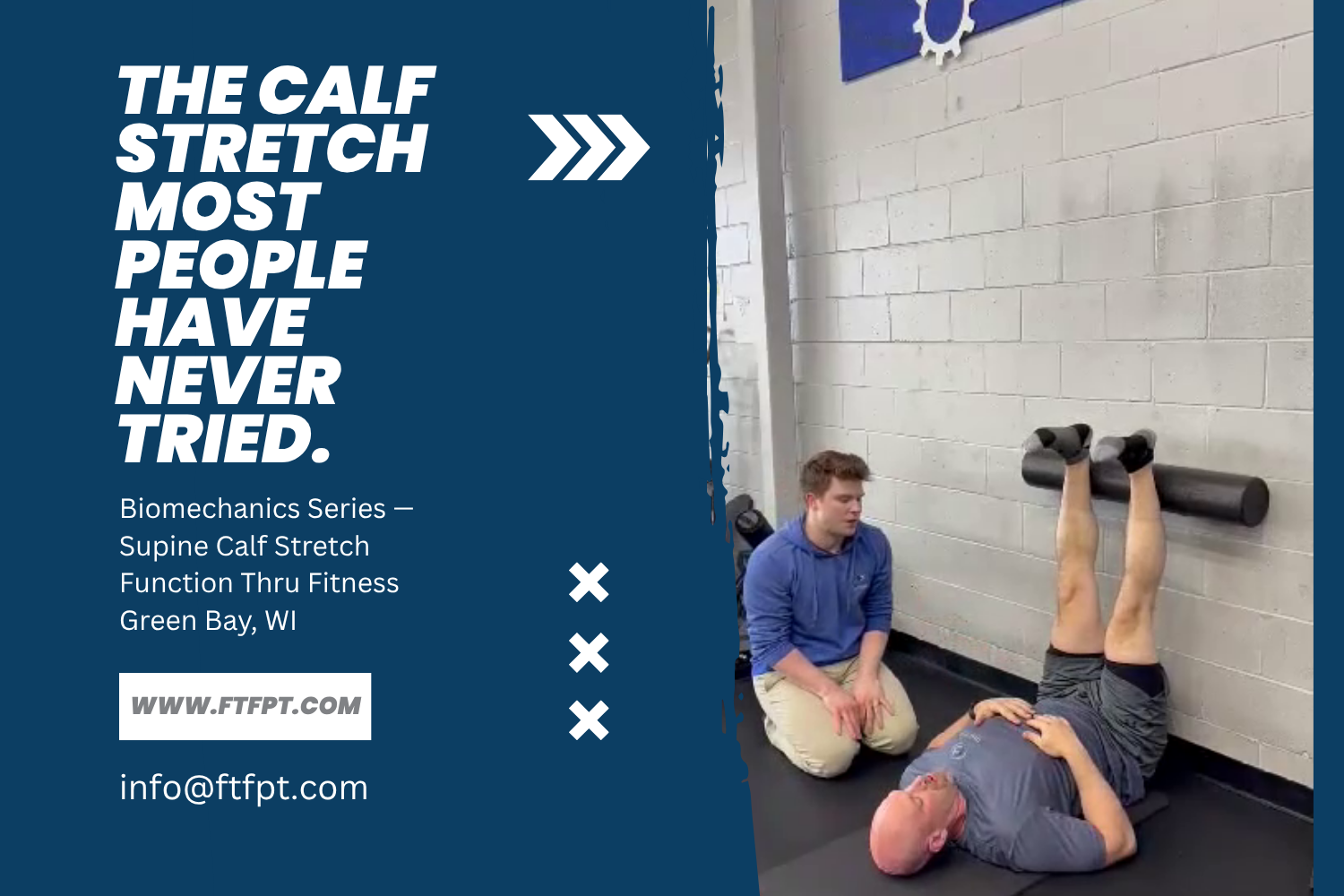
A tight calf is one of the most common complaints in lower body movement — and one of the most commonly addressed with a stretch that puts the body in the wrong position to fully isolate it. The supine calf stretch demonstrated in this video takes a different approach: lying flat on the floor, using breath cycles and deliberate positioning to release lower leg tension without the compensations that standing stretches often allow. For those focused on senior stretching exercises, lifelong mobility, or simply finding a technique that works when standing options have not, this is a practical and accessible solution.
Why the Standing Calf Stretch Has Limitations
The most common calf stretch most people know involves standing, stepping one foot back, and pressing the heel toward the floor. It works — to a degree. But it also introduces variables that can limit how effectively the calf is actually being targeted.
When standing, the hip, knee, and ankle all play a role in how the body positions itself under load. Compensation is easy. A slight bend in the knee, a shift in the hip, or a subtle rotation in the foot can move tension away from the calf and toward structures that are not the target. For people with ankle sensitivity, knee discomfort, or lower leg tightness that has not responded to traditional stretching, the standing position may be part of the problem.
Removing that position changes everything.
What Makes the Supine Position Different
In this video, John Blaser walks Glen through a calf stretch performed lying flat on the ground. The choice to use the supine position is not a modification for convenience — it is a deliberate biomechanical decision.
What is biomechanics and why does it matter? Biomechanics examines how the body is positioned and how forces move through it during movement. In the supine position, gravity and floor contact work together to naturally bias the body toward the backside — the heels, the hamstrings, the calves. The floor provides feedback at the shoulders, ribs, pelvis, and heels simultaneously, making compensation significantly harder.
The body does not need to work to stay upright. It does not need to balance. It simply lies flat, and that baseline positioning puts the calf in a better starting place for an effective stretch.
How to Perform the Supine Calf Stretch
The setup for this stretch is minimal, which is part of what makes it accessible.
Lie flat on the floor on your back. Allow the body to make full contact with the ground — backside of the shoulders, backside of the ribs, backside of the pelvis, and heels. This full contact is important. If any of those points are lifting or compensating, the position is not yet correct.
The knees should be as straight as possible. If straightening the knees produces discomfort, a slight bend is acceptable — but straight is preferred when it can be achieved without pain. The straighter the knee, the more directly the stretch isolates the calf rather than the hamstring.
From that position, the only active movement is drawing the toes toward the hips. Not aggressively. Not forcefully. Just a deliberate pull of the toes upward while maintaining full floor contact everywhere else.
That movement alone will produce a stretch in the calves for most people. Some may also feel a mild pull in the hamstrings, which is normal. The primary target is the calf.
Using Breath to Drive the Stretch
Once the position is set and the toes are drawing upward, the stretch is held and worked through breath cycles — not held statically or forced deeper through effort.
Take a long, comfortable inhale. Follow it with a full exhale. Allow the body to settle a little more with each breath cycle. Eight to ten breath cycles per set is the recommended protocol.
How can I improve mobility as I age? Breath-driven stretching is one of the most effective and sustainable answers to that question. Slow, deliberate breath cycles reduce muscular guarding, encourage the nervous system to allow greater range of motion, and create tissue change without the micro-trauma that aggressive stretching can produce.
Two sets of eight to ten breath cycles, performed in the morning and at night, is the recommended frequency for most people to begin noticing change.
Who Benefits Most from This Stretch
Because the supine calf stretch removes the standing position and requires no equipment, it is accessible to a wide range of people.
Those working on senior stretching exercises will find this technique particularly useful. It can be performed on the floor or on a firm surface, requires no balance, and does not load the ankle or knee under body weight. Mobility for seniors should prioritize techniques that can be performed consistently and safely — this stretch meets both criteria.
Anyone dealing with lower leg tightness that has not responded to standing stretches may find the supine position finally provides the isolation they have been missing. If compensation has been allowing the stretch to bypass the calf, removing the standing position eliminates that pathway.
Individuals focused on lifelong mobility as a long-term goal benefit from including low-load, high-frequency techniques like this in their daily routine. Mobility is not built through occasional intense sessions — it is built through consistent, accessible movement practiced regularly.
Golf fitness is another relevant context. Tight calves restrict ankle mobility, which affects how the lower body transfers force during a swing. Addressing lower leg tightness is part of a complete approach to movement quality for golfers.
The Biomechanics Approach to Stretching
John Blaser, NASM-CPT, NASM-CES, NASM-FNS, CBS, is a biomechanics specialist and the only Certified Biomechanics Specialist in Green Bay, WI. His approach to movement work — including stretching — is rooted in understanding how position, load, and breath interact to produce change in the body.
The supine calf stretch is a clear example of that thinking. The position is chosen based on how the body responds to gravity and floor contact. The breath protocol is chosen based on how the nervous system responds to slow, deliberate exhalation. The rep range is chosen based on what is typically needed to produce tissue change without overloading.
This is what biomechanics brings to everyday movement work: decisions grounded in how the body actually functions, not just convention.
FAQ — Supine Calf Stretch
Q: How can I improve mobility as I age? A: Accessible, low-load techniques performed consistently — like this supine calf stretch done twice daily with eight to ten breath cycles — are among the most effective approaches. They can be performed on the floor without equipment and do not require joint loading or balance.
Q: What is biomechanics and why does it matter? A: Biomechanics examines how the body is positioned and how forces move through it during movement. It matters because position directly affects which structures are actually being stretched or loaded — choosing the right position makes a technique more effective and reduces compensation.
Q: Why is the supine position better for a calf stretch than standing? A: The supine position uses gravity and floor contact to naturally bias the body toward the heels, making it harder to compensate through the hip or knee. Standing stretches allow more variability, which can shift tension away from the calf and toward surrounding structures.
Q: Is this one of the senior stretching exercises that can be done at home? A: Yes. This stretch requires no equipment, no standing, and no balance. It can be performed on the floor or a firm surface and is well suited to a morning or evening mobility routine at home.
Q: How long before I notice a change in lower leg tightness? A: Most people begin to notice change within one to two weeks of consistent daily practice. Two sets of eight to ten breath cycles, morning and night, is the recommended starting protocol. Individual results vary based on the degree of restriction and consistency of practice.
Book a Session
If lower leg tightness, limited ankle mobility, or recurring calf issues have been affecting your movement, a biomechanical assessment with John Blaser can help identify what is actually driving the restriction.
Book now: www.ftfpt.com/john
Looking for a better way to stay strong, mobile, and pain-free as you age?
At Function Thru Fitness, we go beyond big-box gyms. As one of the established fitness centers green bay wi, our focus is on restoring how the body moves, reducing pain, and building long-term strength through a proven function fitness approach.
We help people move better at every stage of life through personalized training, corrective exercise, golf fitness, neuromuscular therapy, and athlete recovery.
Download our free guide: Essential Exercises for Lifelong Mobility and Independence www.ftfpt.com/essential-exercises
Visit us at 801 Hoffman Rd. Suite 103, Green Bay, WI Book online at www.ftfpt.com