
Outside of Foot Roll — Supination Biased Mobilization for Lateral Foot Mobility
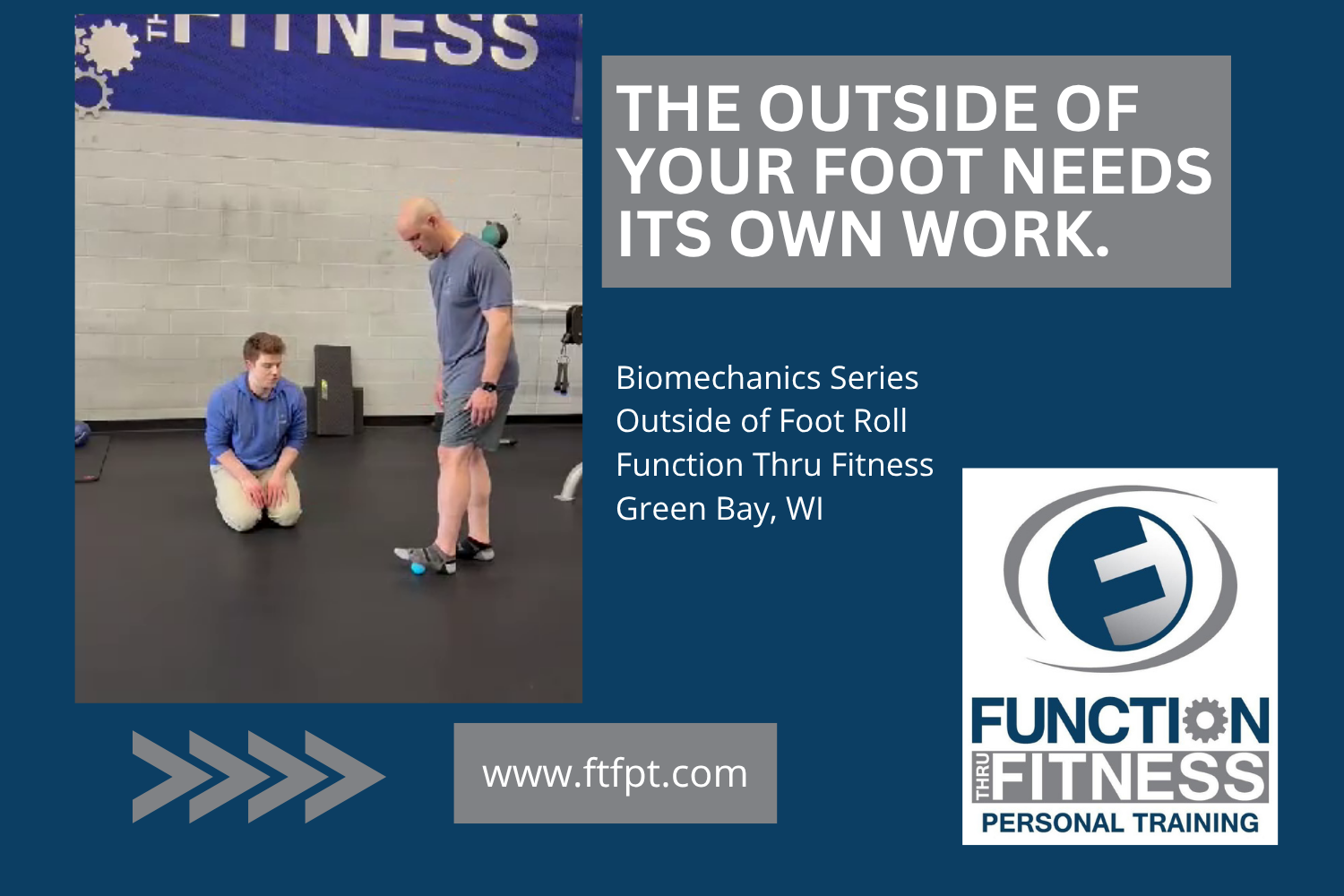
The supination biased mobilization demonstrated in this video targets the outer edge of the foot — a specific line running from the knuckle of the fourth toe back toward the heel that is rarely addressed in general foot mobility work. Using a domed foot position and steady pressure, this drill restores lateral foot mobility through a controlled back and forth rolling motion along that fourth toe line. Two minutes per foot, morning and night, is the recommended protocol. For those working on functional fitness for seniors, senior exercises for balance, or understanding how outer foot restriction influences movement patterns above it, this technique addresses a gap that most routines miss entirely.
Why the Outer Edge of the Foot Gets Overlooked
Most foot mobility conversations center on the arch, the heel, or the ball of the foot. The outer edge — the lateral line from the fourth toe toward the heel — rarely receives specific attention. Yet it plays a distinct and important role in how the foot loads during movement.
The outer foot is the first part of the foot to contact the ground during a normal walking stride. It is also the edge that the foot must roll across when moving into a fully loaded position. When that lateral line is restricted, the rolling pattern is disrupted and the ankle, knee, and hip compensate for the gap in mobility.
What is biomechanics and why does it matter? Biomechanics examines how the body's structures work together during movement — and how restriction in one area creates compensation patterns in others. The outer foot is a clear example of this principle. Tightness along the lateral line changes force distribution through the entire lower body chain, often showing up as discomfort or dysfunction in areas that appear unrelated to the foot.
What the Supination Biased Mobilization Targets
In this video, John Blaser walks Glen through a drill specifically designed for the outer foot. The term supination biased refers to the orientation of the foot during the movement — a slight doming or arching that positions the pressure on the lateral edge rather than the center of the foot.
This distinction matters. A general foot roll that keeps the foot flat distributes pressure broadly across the ball. This drill concentrates pressure along the fourth toe line — from the ball of the foot back toward the heel — so that the lateral edge receives targeted attention rather than being included in general stimulation.
How do I fix poor posture and movement patterns? When the outer foot is restricted, loading patterns through the ankle, knee, and hip shift in ways that alter posture and movement above. Addressing the lateral foot specifically — rather than relying on general foot mobility work — is a more precise and effective correction.
How to Perform the Supination Biased Mobilization
The drill is performed seated, which removes the standing balance challenge and allows full focus on the foot and the pressure applied to it.
Begin by locating the knuckle of the fourth toe. This is the second toe from the outside of the foot — just inside the pinky toe. Place pressure directly beneath that knuckle point through the ball of the foot.
From there, dome the foot — allow the arch to lift slightly so the foot holds a curved shape. This domed position is not a forceful movement. It is a subtle arch that shifts the foot's contact point toward the outer edge. Maintaining that shape throughout the drill is what keeps the pressure where it belongs.
With the domed position held and pressure applied beneath the fourth toe knuckle, roll the foot along that line — back from the ball toward the heel, stopping just before the heel itself. Then back toward the ball. That back and forth movement is the drill.
The pressure should be steady and consistent throughout. Not aggressive, not light — firm enough to feel the contact clearly beneath the fourth toe line as the foot moves.
Two minutes per foot, morning and night, is the recommended protocol.
What to Notice During the Drill
Because the fourth toe line is rarely specifically addressed, many people find this area more sensitive or resistant than expected. That is normal and expected — it reflects how infrequently the lateral edge receives direct attention.
Areas that feel notably tighter or more resistant during the roll indicate where lateral foot mobility is most limited. Working through those areas with controlled, steady pressure — rather than avoiding them — is how the drill begins to produce change over time.
The domed foot position is the most common place where form breaks down. If the foot flattens during the rolling motion, the pressure shifts away from the lateral edge and the specificity of the drill is lost. Maintaining that arch throughout the movement is the primary technique point.
Who Benefits from This Drill
This mobilization is relevant across a wide range of movement goals and populations.
Those working on senior exercises for balance will find this drill addresses a foundational contributor. The outer foot is heavily involved in how the body responds to weight shifts and perturbations. Restoring lateral foot mobility improves how the foot adapts to those shifts, which directly supports steadier balance.
Functional fitness for seniors programs benefit from including lateral foot mobility work as a foundation. Before strength, coordination, or balance exercises can be fully effective, the foot's ability to load and adapt across its full surface needs to be addressed. This drill contributes to that foundation.
Those focused on mobility for seniors more broadly will find the outer foot is one of the areas that loses mobility earliest with reduced activity and age — and one of the most practically addressed through a simple daily drill like this.
Golfers benefit from lateral foot mobility as well. The outer foot plays a role in how the lead and trail foot load during the swing. Restriction along the fourth toe line can limit ankle mobility and affect how force is transferred through the lower body into the swing.
Anyone working with a corrective exercise specialist on lower body movement dysfunction, postural compensation, or recurring discomfort in the ankle, knee, or hip may find the outer foot is part of the pattern that needs to be addressed first.
How This Drill Complements the Outer to Inner Foot Roll
This supination biased mobilization is a natural companion to the outer to inner foot roll demonstrated in the previous video in this series. Where the outer to inner roll works across the full ball of the foot from the pinky toe to the big toe, this drill goes deeper along the specific lateral line from the fourth toe back toward the heel.
Together, the two drills cover the foot's contact surface comprehensively — the full width of the ball and the outer edge that connects the ball to the rear of the foot. For anyone working on complete foot mobility, performing both drills is the more thorough approach.
The Biomechanics Perspective
John Blaser, NASM-CPT, NASM-CES, NASM-FNS, CBS, is a biomechanics specialist and the only Certified Biomechanics Specialist in Green Bay, WI. His approach to foot mobility is specific by design — the foot has distinct structural zones that load and function differently, and addressing them with precision produces better outcomes than general rolling or massage.
How can I improve mobility as I age? The answer is rarely one technique applied broadly. It is the right technique applied to the right structure. The supination biased mobilization is a clear example of that precision — a drill that exists because the outer foot needs its own work, and general foot rolling does not fully provide it.
FAQ — Outside of Foot Roll: Supination Biased Mobilization
Q: What is biomechanics and why does it matter for foot mobility? A: Biomechanics examines how forces move through connected structures during movement. The outer edge of the foot has specific mobility requirements that influence how force transfers through the ankle, knee, and hip. Addressing lateral foot mobility with precision — rather than general rolling — produces more targeted and effective results.
Q: How can I improve mobility as I age? A: Targeted, daily, low-load foot mobility work is one of the most practical answers — especially when it addresses specific structures like the outer foot that are often the first to lose mobility with reduced activity and age.
Q: Are there senior exercises for balance that specifically address the outer foot? A: Yes. The supination biased mobilization targets the lateral edge of the foot, which plays a direct role in how the body adapts to weight shifts and perturbations. Improving lateral foot mobility supports steadier balance across daily activities.
Q: How do I fix poor posture and movement patterns that involve the outer foot? A: A biomechanical assessment can identify whether lateral foot restriction is contributing to movement compensation above it. The supination biased mobilization is a foundational correction that addresses the outer foot directly before building more complex corrective work.
Q: How does this drill differ from the outer to inner foot roll? A: The outer to inner foot roll works across the full width of the ball of the foot from the pinky toe to the big toe. The supination biased mobilization follows a specific line along the outer edge of the foot — the fourth toe line — from the ball back toward the heel. Together they address the foot's contact surface comprehensively.
Book a Session
If outer foot tightness, balance challenges, or lower body movement patterns have been limiting your movement, a biomechanical assessment with John Blaser can identify what is driving them and where to start.
Book now: www.ftfpt.com/john
Looking for a better way to stay strong, mobile, and pain-free as you age?
At Function Thru Fitness, we go beyond big-box gyms. As one of the established fitness centers green bay wi, our focus is on restoring how the body moves, reducing pain, and building long-term strength through a proven function fitness approach.
We help people move better at every stage of life through personalized training, corrective exercise, golf fitness, neuromuscular therapy, and athlete recovery.
Download our free guide: Essential Exercises for Lifelong Mobility and Independence www.ftfpt.com/essential-exercises
Visit us at 801 Hoffman Rd. Suite 103, Green Bay, WI Book online at www.ftfpt.com