
Inner Arch Mobilization for Foot Mobility and Elasticity
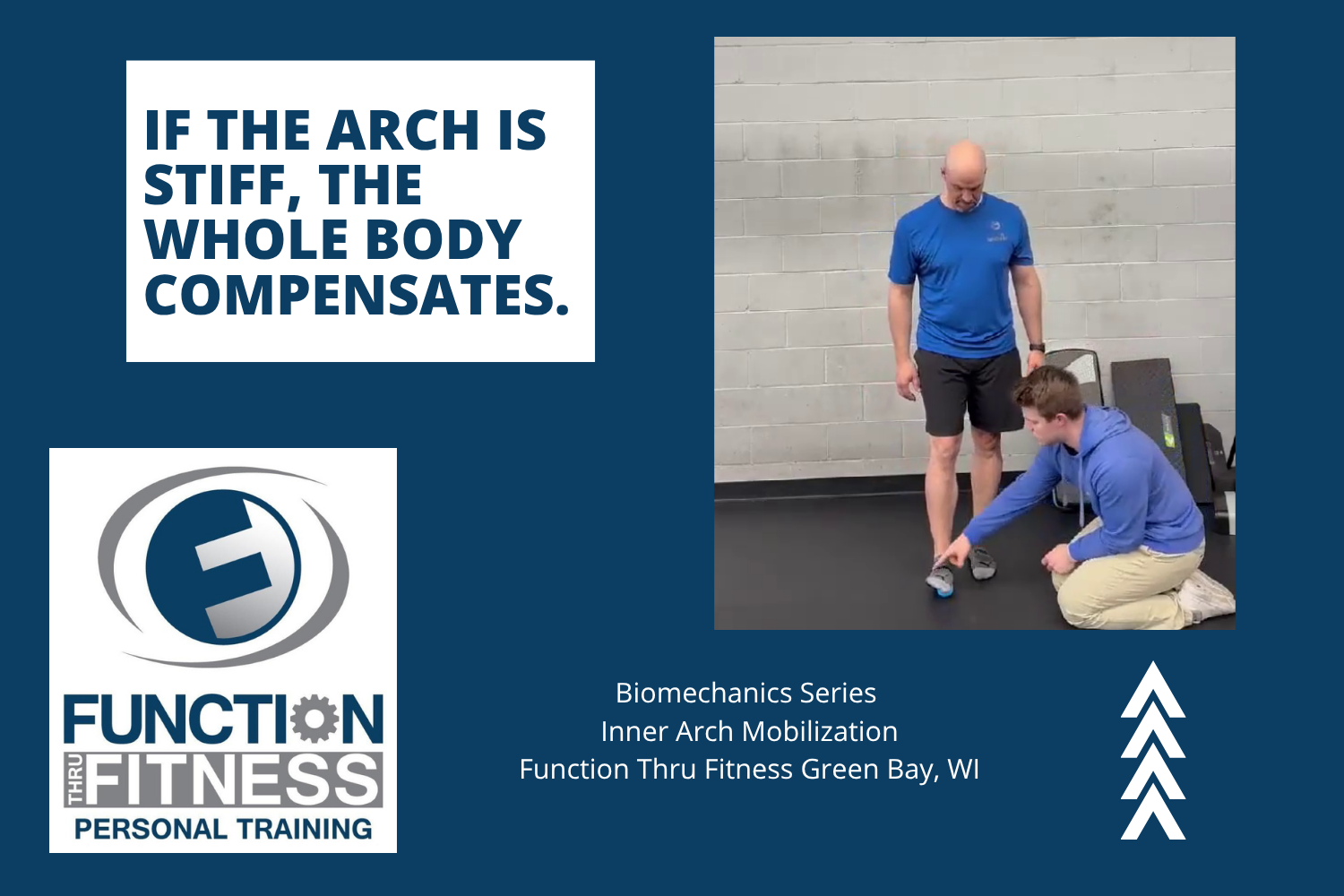
The inner arch mobilization demonstrated in this video targets the medial line of the foot — from the knuckle of the big toe back toward the heel — using steady downward pressure and a controlled rolling motion to restore arch elasticity and mobility. It requires no equipment, takes two minutes per foot, and addresses one of the most sensory-rich and mechanically significant structures in the body. When the inner arch is stiff and restricted, everything above it compensates — and that compensation is where pain and dysfunction eventually appear. For those working on functional fitness for seniors, senior stretching exercises, or understanding what drives movement compensation through the lower body, this drill addresses the foundation.
The Inner Arch as a Movement Foundation
The foot is not simply a platform the body stands on. It is a dynamic, sensory-rich structure that responds to the ground, absorbs force, and transfers energy upward through the ankle, knee, hip, and spine with every step. The inner arch — the medial line running from the big toe back toward the heel — is the primary load-bearing structure within that system.
When the inner arch moves freely and responds elastically, force transfers efficiently and the chain above it can function without compensation. When the arch is stiff or restricted, that transfer breaks down. The body adapts by shifting load to nearby structures — and those structures, now taking on stress they were not designed for, are where discomfort and pain eventually show up.
What is biomechanics and why does it matter? Biomechanics identifies exactly this kind of relationship — how restriction in one structure creates compensatory load in another. The inner arch is a clear example: its mobility is not just a foot issue. It is a whole-body movement issue.
What the Inner Arch Mobilization Does
In this video, John Blaser walks Glen through the inner arch mobilization. The goal is to restore mobility and elasticity through the medial line of the foot — the zone that most people never address specifically, even if they roll the bottom of their foot generally.
The drill follows a specific line. It is not a general foot massage or a broad rolling pattern. The pressure is applied along the inner arch specifically, from the big toe knuckle back toward the heel, with the intention of restoring how that line moves and responds under load.
How is corrective exercise different from physical therapy? A corrective exercise specialist approaches the foot as part of the kinetic chain — assessing how arch restriction influences movement at the ankle, knee, and hip — rather than evaluating the arch in isolation. That perspective is what makes corrective exercise more comprehensive for long-term movement health.
How to Perform the Inner Arch Mobilization
The drill is performed seated, which removes the balance demand and allows full attention to be placed on the foot and the pressure applied to it.
Begin by placing the ball directly beneath the knuckle of the big toe. Apply pressure downward through the floor, distributing it evenly across the foot. This is not a one-point contact — the entire foot maintains connection with the floor while the pressure concentrates beneath that big toe knuckle.
From that starting point, follow the inner arch line — rolling the ball slowly back toward the heel along the medial edge of the foot. Stop just before reaching the heel itself. Do not roll onto the heel. Then return along that same line back toward the big toe.
The inner arch is typically tender on most people. That tenderness reflects both the sensory density of the area and how infrequently it receives direct attention. The pressure should be firm enough to feel clearly — enough to know contact is being made with the arch — but not so aggressive that steady breathing becomes difficult. If breathing becomes labored or the discomfort feels sharp, reduce the pressure.
Two minutes per foot, morning and night, is the recommended protocol.
Why the Arch Must Be Both Mobile and Elastic
John makes a specific point in this video: the foot needs to be mobile, and it needs to be elastic. Those are two distinct qualities.
Mobility refers to the arch's ability to move through its range — to compress under load and rebound as that load lifts. Elasticity refers to how quickly and completely it returns. A foot that moves but does not rebound efficiently is still limiting force transfer. A foot that is stiff in the arch loses both.
How can I improve mobility as I age? The inner arch is one of the first structures to lose elasticity with reduced activity and age. Consistent daily work — two minutes morning and night — is one of the most practical ways to maintain that quality over time. For functional fitness for seniors and senior stretching exercises programs, foot elasticity should be a foundational target, not an afterthought.
How This Drill Completes the Foot Mobilization Series
This inner arch mobilization is the third video in the foot mobilization series from John Blaser at Function Thru Fitness. Each video in the series addresses a distinct zone of the foot's contact surface:
The outer to inner foot roll covered the full width of the ball of the foot — from the pinky toe knuckle to the big toe — restoring general mobility across the forefoot.
The supination biased mobilization targeted the outer edge specifically — the fourth toe line from the ball toward the heel — addressing the lateral contact zone.
This inner arch mobilization addresses the medial line — the big toe line from the ball back toward the heel — completing the picture of how the foot's full contact surface can be specifically and systematically maintained.
Together, the three drills provide comprehensive foot mobility work that addresses each zone with precision rather than relying on general rolling alone.
Who Benefits from This Drill
The inner arch mobilization is relevant across a wide range of people and movement goals.
Those working on senior stretching exercises will find this drill addresses one of the most foundational but commonly skipped areas. Arch mobility influences balance, walking quality, and the ease of daily movement in ways that become increasingly significant with age.
Functional fitness for seniors programs benefit from including inner arch work as a starting point. The foot is the foundation of every functional movement pattern — squatting, stepping, transferring weight — and arch elasticity is part of what makes those movements responsive and efficient.
Anyone working with a corrective exercise specialist on lower body pain, balance difficulty, or movement compensation may find inner arch restriction is contributing to the pattern. Addressing the arch first creates a more stable and responsive foundation for the corrective work that follows.
Golfers will also find arch elasticity relevant. The medial foot line plays a role in how the trail and lead foot load and push off during the swing. Restricted arch mobility can limit ankle and hip movement in ways that affect swing mechanics and consistency.
The Biomechanics Perspective
John Blaser, NASM-CPT, NASM-CES, NASM-FNS, CBS, is a biomechanics specialist and the only Certified Biomechanics Specialist in Green Bay, WI. His approach to movement starts at the foot — because that is where the body's relationship with the ground begins.
The inner arch mobilization reflects that perspective directly. It is not a generic mobility drill. It follows the medial line specifically, applies pressure with intention, and restores the elastic responsiveness that allows the foot to perform its role as the body's primary ground contact surface.
When the foot is functioning properly, the structures above it can do the same. When it is not, compensation is inevitable — and that compensation is where pain eventually finds its way in.
Internal Links Suggested anchor: biomechanical assessment → link to ftfpt.com biomechanical assessment service page Suggested anchor: corrective exercise → link to ftfpt.com corrective exercise service page
FAQ — Inner Arch Mobilization
Q: What is biomechanics and why does it matter for the inner arch? A: Biomechanics examines how restriction in one structure creates compensatory patterns in others. The inner arch is the foot's primary load-bearing line — when it is stiff or restricted, the ankle, knee, and hip compensate. Addressing arch mobility biomechanically means treating it as a whole-body movement issue, not just a foot problem.
Q: How can I improve mobility as I age? A: Maintaining arch elasticity through consistent daily work is one of the most effective and sustainable approaches. Two minutes on the inner arch in the morning and at night addresses one of the first areas to lose mobility with reduced activity and age, and it requires no equipment.
Q: How is corrective exercise different from physical therapy? A: A corrective exercise specialist evaluates the foot as part of the kinetic chain — assessing how arch restriction influences movement at the ankle, knee, hip, and beyond. Physical therapy often focuses on the symptomatic area. Corrective exercise looks at the movement system as a whole to identify where compensation originates.
Q: Why is the inner arch typically tender during this drill? A: The inner arch is both sensory-dense and frequently under-addressed in most mobility routines. Tenderness reflects how little direct attention the area typically receives. As the drill is performed consistently, tenderness usually decreases as mobility and elasticity improve.
Q: Should I do all three foot mobilization drills together? A: Yes, when possible. The outer to inner foot roll, the supination biased mobilization, and the inner arch mobilization each target a distinct zone of the foot's contact surface. Together they provide comprehensive foot mobility work that no single drill can fully replicate.
Book a Session
If arch stiffness, foot pain, or lower body movement compensation has been affecting your movement, a biomechanical assessment with John Blaser is the clearest starting point for identifying where the pattern begins.
Book now: www.ftfpt.com/john
Looking for a better way to stay strong, mobile, and pain-free as you age?
At Function Thru Fitness, we go beyond big-box gyms. As one of the established fitness centers green bay wi, our focus is on restoring how the body moves, reducing pain, and building long-term strength through a proven function fitness approach.
We help people move better at every stage of life through personalized training, corrective exercise, golf fitness, neuromuscular therapy, and athlete recovery.
Download our free guide: Essential Exercises for Lifelong Mobility and Independence www.ftfpt.com/essential-exercises
Visit us at 801 Hoffman Rd. Suite 103, Green Bay, WI Book online at www.ftfpt.com