
What People Get Wrong When Treating Pain at Home — and Why It Keeps the Cycle Going
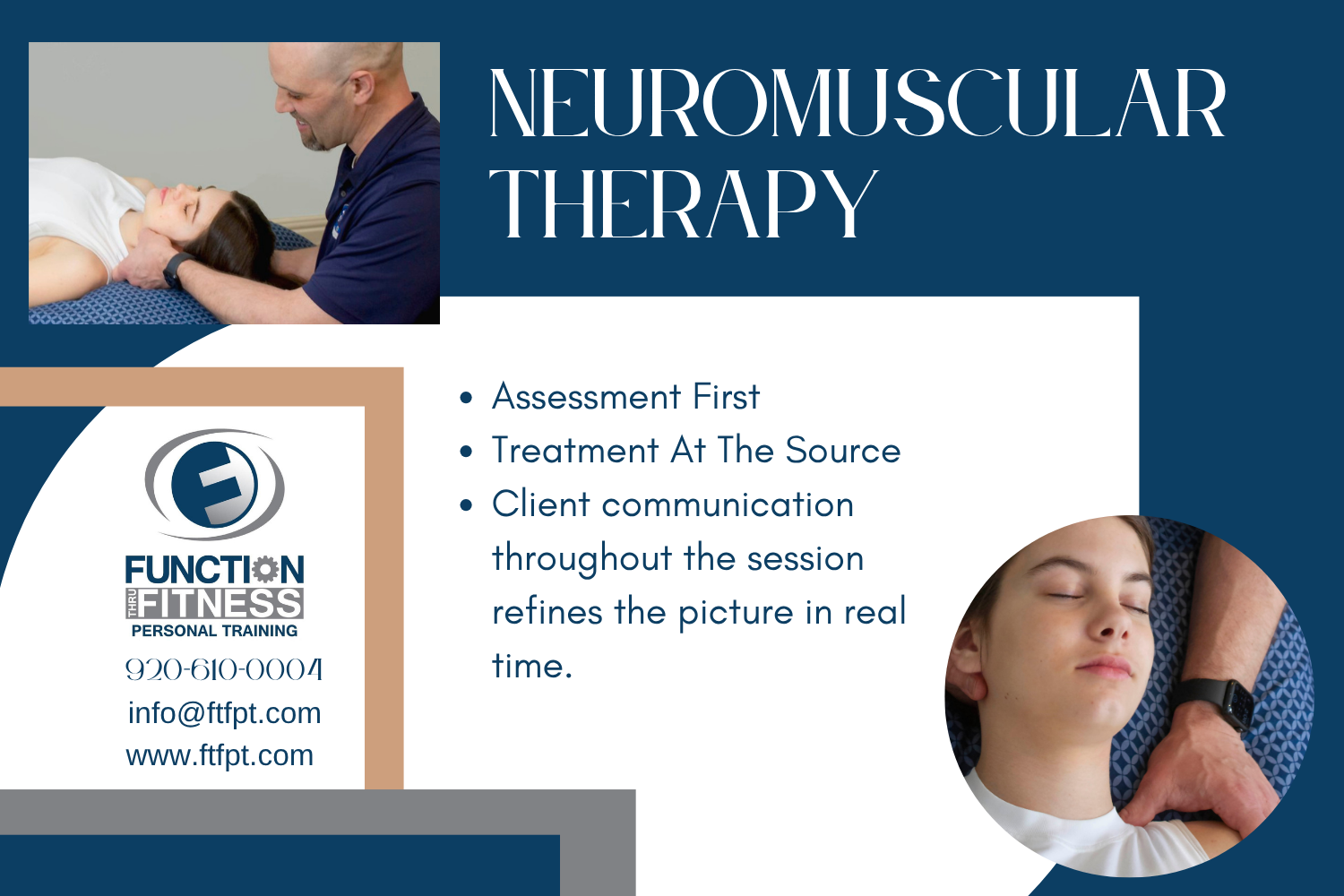
The foam roller, the Theragun, the massage ball, the knobber — these tools are in millions of homes, and most of the people using them are applying them in a way that provides temporary relief while reinforcing the underlying pattern driving their pain. Understanding what is neuromuscular therapy and how it differs from self-treatment is one of the most important things someone can know before spending another month in the same cycle of relief and return.
The Self-Treatment Mistake Almost Everyone Makes
The instinct is understandable. Something hurts, so you treat where it hurts. IT band tight and painful? Roll it. Neck stiff? Press the knobber in. Upper back tense after a long day? Work the Theragun over it.
These tools are not without value — increased circulation, temporary tissue softening, and short-term relief are all real effects. But when these tools are applied to the site of pain without any assessment of where the pain is coming from, they are addressing a symptom rather than a source. And that distinction determines whether the relief lasts or the pain returns.
Why does my pain keep coming back? For the majority of people asking that question, the answer is that self-treatment has consistently targeted where pain is felt — never where it originates. The source location, the movement pattern, the structural relationship generating the tension — none of that has ever been found or addressed.
Why Treating the Symptom Site Can Make Things Worse
This is the part that surprises most people. Not only does direct treatment of the symptom site fail to resolve the underlying pattern — it can actively deepen it.
Tight tissue has a greater capacity to contract. When pressure is applied to a symptomatic area repeatedly, the tissue receives a stimulus that can increase its contractile response over time. The body also adapts — it begins to recognize the pain-relief-pain cycle as normal, and the pattern that is generating the tension becomes more entrenched rather than less.
The result is a vicious cycle that is difficult to break through self-treatment alone — precisely because the source of the cycle has never been identified.
Why am I still in pain even after therapy? If therapy — whether at home or with a practitioner — has only ever addressed the site of pain, the source has remained untouched. The system can lock down further around the unaddressed pattern, making each subsequent attempt at relief feel less effective.
What You Cannot Do on Your Own
There is a second reason the self-treatment cycle persists, and it is not about willpower or effort. It is about what is visible and assessable from inside the body versus outside it.
You cannot see your own movement patterns. You cannot observe how your posture, your structural relationships, and your compensations are generating tension in specific areas. The IT band does not get tight on its own — it gets tight because of how the hip, the knee, and the foot are moving relative to each other. The neck does not lock up in isolation — it responds to what is happening in the shoulder, the thoracic spine, and the ribcage.
A trained neuromuscular therapist uses postural assessment, range of motion testing, and specific tissue palpation to see the pattern from outside. That is not something a foam roller or a Theragun can replicate — and it is the missing piece in every self-treatment program that has not worked.
What is neuromuscular therapy used for? It is used precisely for this: to provide the assessment that self-treatment cannot, and to identify the source that self-treatment tools will never find on their own.
The Role of Myofascial Release and Trigger Point Therapy in NMT
One of the approaches within neuromuscular therapy is myofascial release and trigger point therapy — the identification and treatment of specific tissue patterns that refer pain to other locations. A trigger point in the glute, for example, can refer sensation into the IT band. A restriction in the thoracic spine can generate neck pain. A pelvic imbalance can create rib cage tension.
When a self-treatment tool is applied to the IT band, the neck, or the ribs, it is stimulating tissue that is receiving referred sensation from somewhere else. The relief is real but temporary because the trigger point or myofascial pattern generating the referral has not been touched.
Precision neuromuscular therapy maps these patterns through assessment and then treats at the source — the trigger point location, the restricted structure, the postural imbalance — rather than the referral location.
What NMT Assessment Finds That You Cannot Find Yourself
The assessment process in nmt therapy begins with postural observation. From there, range of motion testing identifies which movements are restricted and which structural relationships are involved. Specific tissue palpation — with client feedback about where sensation travels — builds a picture of the referral patterns at work.
This is not a process that can be replicated at home. The combination of trained observation, hands-on palpation, and client feedback creates a diagnostic picture that no self-assessment tool can produce. And it is that picture — the pattern map — that tells the therapist where treatment needs to go.
For those searching for neuromuscular massage therapy near me in the Green Bay area, this is what makes nmt therapy different from general massage or self-treatment: the assessment that precedes the hands-on work is what makes the hands-on work effective.
For those searching for massage therapists green bay wi who work from assessment rather than symptom location, our approach provides the pattern identification that breaks the self-treatment cycle and addresses what self-care tools cannot reach.
FAQ — What People Get Wrong with Self-Treatment
Q: Why does my pain keep coming back after foam rolling or using a Theragun? A: Because these tools treat where pain is felt, not where it comes from. The movement pattern or structural imbalance generating the tension is never addressed. Without assessment to find the source, the cycle continues.
Q: Why am I still in pain even after therapy? A: If therapy has consistently treated the site of pain rather than its origin, the underlying pattern has never been addressed. Neuromuscular therapy uses assessment to identify the source first — so that treatment goes where it needs to rather than where the pain appears.
Q: What is neuromuscular therapy used for in cases like this? A: NMT is used to break the self-treatment cycle by providing what self-treatment tools cannot — systematic assessment of movement patterns, identification of the true source of pain, and targeted treatment at that source rather than its referral location.
Q: Is it always wrong to use self-treatment tools? A: Not always — but using them without knowing whether the pain site is the source site is the common mistake. Once a neuromuscular therapist has assessed the pattern and identified the source, self-care guidance is provided as part of home care. The tools have value when directed correctly.
Q: What does precision neuromuscular therapy involve? A: Precision neuromuscular therapy involves systematic postural and range of motion assessment, specific tissue palpation to identify referral patterns and trigger points, and targeted hands-on treatment at the identified source. Client communication throughout the session refines the picture in real time.
Book a Session
If self-treatment has been providing temporary relief without lasting change, a neuromuscular therapy session can identify what the tools have been missing.
Chad, Heather, Glen, and Stacey all offer neuromuscular therapy at Function Thru Fitness. Book with any of them at the links below.
Book Now:
Chad - chad@ftfpt.com / 920-915-7831 / www.ftfpt.com/chad
Heather- heather@ftfpt.com / 920-676-9387 / www.ftfpt.com/heather
Glen – glen@ftfpt.com / 920-562-4357 / www.ftfpt.com/glen
Stacey- stacey@ftfpt.com / 602-575-6126 / www.ftfpt.com/stacey
Looking for a better way to stay strong, mobile, and pain-free as you age?
At Function Thru Fitness, we go beyond big-box gyms. As one of the established fitness centers green bay wi, our focus is on restoring how the body moves, reducing pain, and building long-term strength through a proven function fitness approach.
We help people move better at every stage of life through personalized training, corrective exercise, golf fitness, neuromuscular therapy, and athlete recovery.
Download our free guide: Essential Exercises for Lifelong Mobility and Independence www.ftfpt.com/essential-exercises
Visit us at 801 Hoffman Rd. Suite 103, Green Bay, WI Book online at www.ftfpt.com