
What Is Neuromuscular Therapy and How Is It Different from Massage?
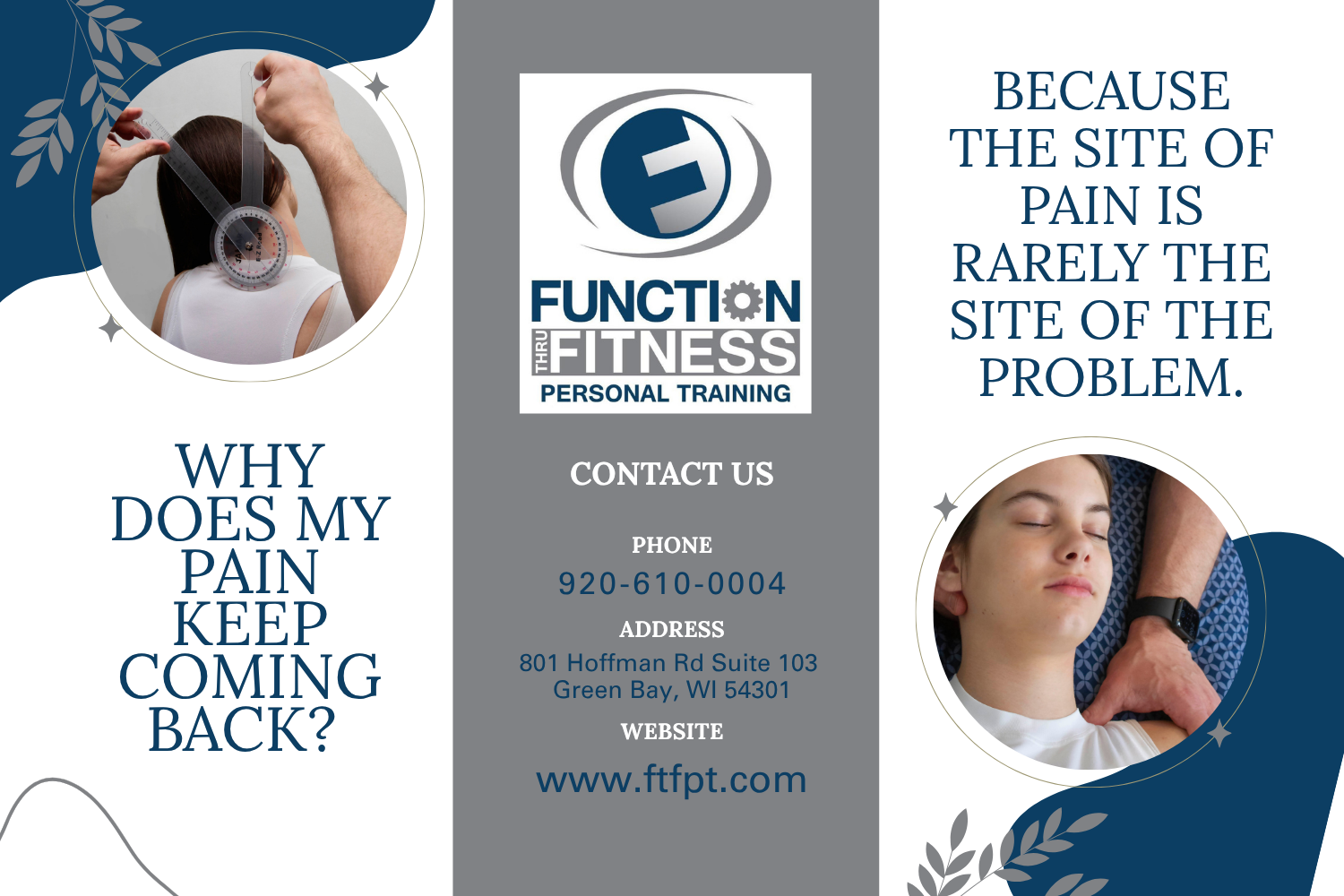
Neuromuscular therapy massage is a methodology built on assessment — a systematic process of identifying where pain is actually coming from before any hands-on treatment begins. It is not a technique applied to wherever discomfort appears. It is an approach that traces the source of a symptom through postural evaluation, range of motion testing, and specific tissue assessment, then treats the origin rather than the site of pain. Understanding what is neuromuscular therapy and how it differs from massage therapy is the first step toward knowing whether it is the right approach for symptoms that have not responded to general treatment.
Why Pain Is Rarely Where the Problem Is
Most people describe their symptoms by location. Wrist pain. Shoulder tightness. Neck stiffness. It is a natural way to communicate discomfort — and it is also one of the reasons pain keeps coming back after treatment.
When treatment targets the location of pain rather than the source, the relief is temporary. The underlying issue remains untreated, and the symptoms return. This pattern is one of the most common experiences people bring to a neuromuscular therapist.
Why does my pain keep coming back? Because the site of pain is frequently a referral location — a place where tension or restriction elsewhere in the body creates a sensation. The pronator teres muscle in the forearm, for example, can refer sensation into the wrist or elbow when it is restricted or contains adhesions. Treating the wrist directly may reduce the sensation temporarily, but the pronator teres remains the source.
Neuromuscular therapy is designed specifically to find that source before treating it.
What Neuromuscular Therapy Is — and What It Is Not
In this video, Stacey Kilps, CPNMT, LMT, CYT, BS, explains neuromuscular therapy as a methodology rather than a modality. That distinction matters. A modality is a technique — a specific type of touch or tool. A methodology is a framework — a way of thinking about pain, assessment, and treatment that guides every decision in the session.
What is neuromuscular massage therapy? At its core, it is an assessment-driven approach to soft tissue treatment that identifies the true cause of a symptom and treats there. The hands-on work is specific and targeted, not general.
What makes it different from massage therapy? Several things:
Massage therapy is typically performed on a table, with the client disrobed, using general gliding techniques across large areas of the body. It provides relaxation and general relief but does not involve formal assessment or identification of specific tissue sources.
Neuromuscular therapy is performed almost entirely clothed. Skin contact may occur in limited areas for fascial work — using the skin as a handle to move tissue beneath — but the client is never fully disrobed. The session involves continuous communication, specific pressure on identified structures, and assessment throughout rather than general coverage.
The partnership with the client is also a distinguishing feature. In NMT, the client is actively involved — reporting what they feel, where sensation travels, and how pressure affects their symptoms. That feedback guides the treatment in real time.
How Neuromuscular Therapy Works in Practice
In this video, Stacey demonstrates on Kim, who manages ongoing thumb and wrist symptoms from extended computer use. Rather than beginning at the wrist — the site of the symptom — the assessment starts in the forearm.
The pronator teres is a muscle that runs from the inside of the elbow across the forearm. During typing and mousing, the hand is held in a pronated position — palm facing down. The pronator teres is constantly active in that position, and over time it can develop adhesions and trigger points that refer sensation into the wrist and elbow.
When Stacey applies specific pressure to that muscle on Kim, sensation travels — into the wrist in one location, into the elbow in another. That referral pattern is clinical information. It identifies the tissue as a source, not just a bystander.
Treating the pronator teres allows the forearm to return toward a more neutral position rather than remaining locked in pronation. But the forearm is often not the end of the assessment. Symptoms that appear in the hand and wrist frequently trace further up the chain — into the bicep, the tricep, the shoulder, and potentially the neck. A complete session follows that chain until the origin is found.
Watch the Full Video
Assessment, Home Care, and the Client Partnership
One of the defining characteristics of nmt therapy is what happens between sessions. Home care is provided at the end of every appointment — specific exercises, stretches, or awareness cues that connect the hands-on work to the client's daily life and give them tools to manage their symptoms between visits.
This home care component is part of what makes neuromuscular therapy more comprehensive than general massage. The client is not passive. They leave with something to do — a way to participate in their own recovery rather than relying solely on hands-on treatment.
Can personal training help with chronic pain? When neuromuscular therapy is part of a broader program at Function Thru Fitness — paired with corrective exercise, movement assessment, or personal training — the results are more durable. Pain is addressed at the source, movement patterns are corrected, and strength is built on a foundation that has been properly cleared.
What Is Neuromuscular Therapy Used For?
What is neuromuscular therapy used for? It is most useful when pain has persisted despite other treatments, when symptoms have no clear structural cause on imaging, or when the location of pain does not match the location of restriction. Common presentations include:
Wrist, hand, and forearm pain in people who work extensively at computers — as demonstrated in this video with Kim's pronator teres assessment.
Neck and shoulder symptoms that have not responded to massage or stretching — often because the source is in a different muscle than where the pain appears.
Referral patterns where pain in one location is consistently produced by pressure in another — a hallmark of trigger point involvement that neuromuscular therapy is specifically trained to identify and treat.
Chronic or recurring pain that returns after periods of relief — indicating that the source has not been correctly located or treated.
For those searching for neuromuscular massage therapy near me or therapeutic massage green bay that goes beyond general relaxation, Function Thru Fitness offers a clinical, assessment-based alternative designed for people whose pain has not been resolved elsewhere.
FAQ — What Is Neuromuscular Therapy?
Q: What is neuromuscular therapy used for? A: Neuromuscular therapy is used to identify and treat the true source of pain — not just where it appears. It is most effective for recurring pain, referral patterns, and symptoms that have not responded to general massage or other treatment. Assessment drives every session.
Q: What is neuromuscular massage therapy and how does it differ from regular massage? A: Neuromuscular massage therapy is assessment-driven. It begins with postural and range of motion evaluation, applies specific pressure to identified tissue sources, and includes client communication and home care. Regular massage is generally performed on a table with the client disrobed, using broad gliding techniques without formal assessment.
Q: Why does my pain keep coming back after massage or treatment? A: Pain recurs when the source is not treated. Most general treatment addresses the location of pain rather than its origin. Neuromuscular therapy traces the symptom back to its actual source — which is often in a different structure than where the pain appears — and treats there.
Q: What is nmt therapy like as an experience? A: You remain clothed throughout the session. The therapist applies specific pressure to identified areas, communicates continuously about what you feel and where, and adjusts based on your feedback. Home care is provided at the end. There is no table, no draping, and no general coverage.
Q: Can personal training help with chronic pain alongside neuromuscular therapy? A: Yes. At Function Thru Fitness, neuromuscular therapy can be integrated with corrective exercise and personal training. Once the source of pain is identified and treated, building movement quality and strength on top of that foundation produces more durable results.
Book a Session
If recurring pain, referral symptoms, or a pattern that has not responded to general treatment has been affecting your daily life, a neuromuscular therapy session is a clear next step.
Chad, Heather, and Glen all offer neuromuscular therapy at Function Thru Fitness. Book with any of them at the links below.
Book Now:
Chad - chad@ftfpt.com / 920-915-7831 / www.ftfpt.com/chad
Heather- heather@ftfpt.com / 920-676-9387 / www.ftfpt.com/heather
Glen – glen@ftfpt.com / 920-562-4357 / www.ftfpt.com/glen
Looking for a better way to stay strong, mobile, and pain-free as you age?
At Function Thru Fitness, we go beyond big-box gyms. As one of the established fitness centers green bay wi, our focus is on restoring how the body moves, reducing pain, and building long-term strength through a proven function fitness approach.
We help people move better at every stage of life through personalized training, corrective exercise, golf fitness, neuromuscular therapy, and athlete recovery.
Download our free guide: Essential Exercises for Lifelong Mobility and Independence www.ftfpt.com/essential-exercises
Visit us at 801 Hoffman Rd. Suite 103, Green Bay, WI Book online at www.ftfpt.com