
What Is a Biomechanical Assessment? John Blaser Explains
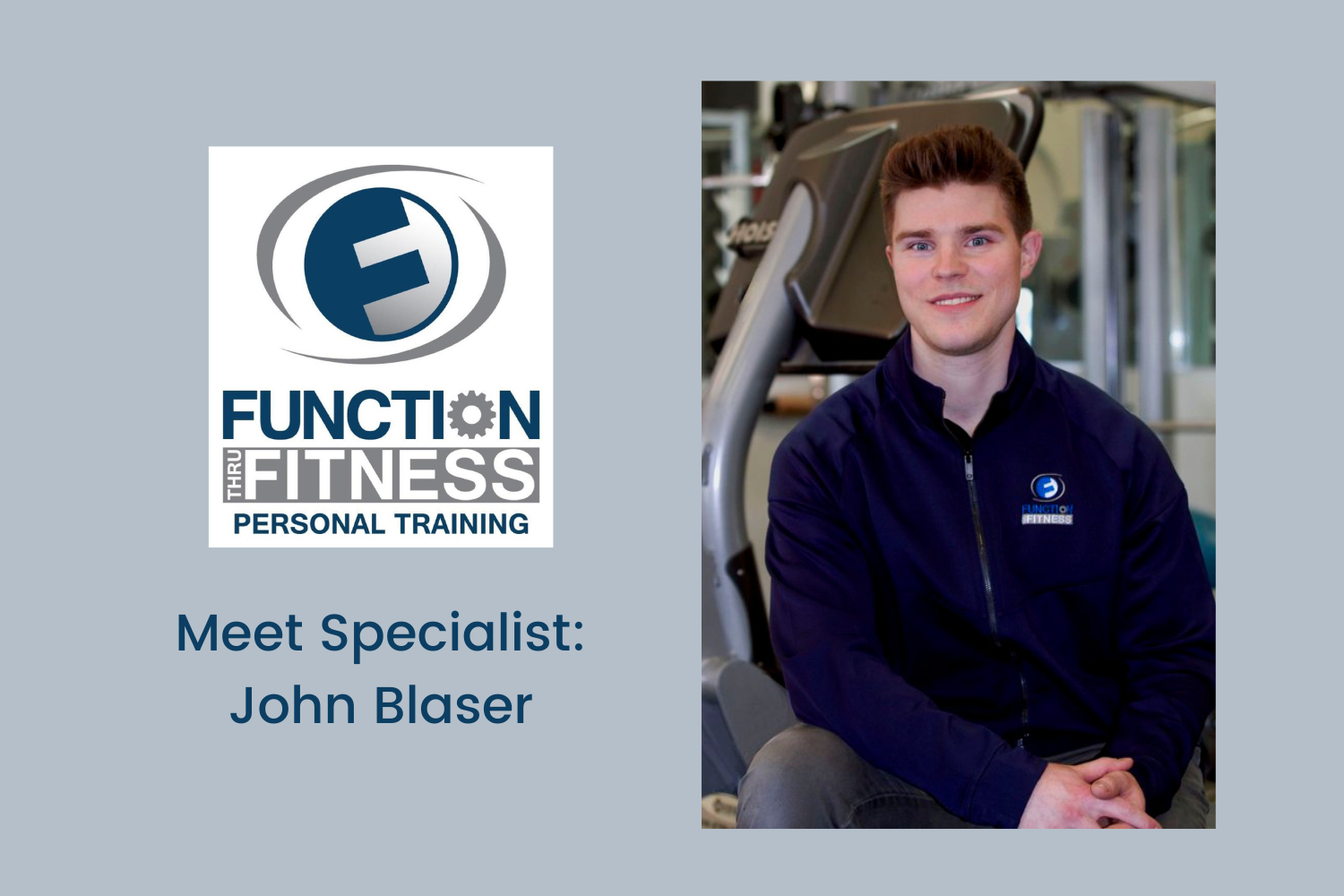
A nagging pain in the shoulder. Hip pain every time you squat or lift something heavy. It's tempting to just work around pain like this indefinitely, rather than finding out what's actually causing it. At Function Thru Fitness in Green Bay, WI, John Blaser, NASM-CPT, NASM-CES, NASM-FNS, CBS — the only Certified Biomechanics Specialist in Green Bay — offers a biomechanical assessment designed to answer exactly that question, for clients throughout Green Bay and the surrounding Brown County communities of Northeast Wisconsin.
In our video, John walks through what that assessment actually involves, step by step, and why he considers this level of detail worth the time for anyone with a body.
Why 'Where Do I Start?' Is the Right Question
A lot of people never quite know where to start when it comes to a pain point that's been nagging at them. Is it the shoulder itself, or something upstream in the neck? Is hip pain during a squat actually a hip problem, or a symptom of something happening at the feet? John's biomechanical assessment exists to answer that question directly, rather than leaving a client to guess or simply avoid the movements that hurt.
Range of Motion Testing: Neck, Shoulders, and Hips
The assessment starts with detailed range of motion testing across the neck, shoulders, and hips. This isn't a quick check — John describes the process as very detail-oriented, methodically working through each area to understand exactly how much range a client has, and where that range is limited or compensating for something else.
Testing all three regions together, rather than just the joint that happens to hurt, is deliberate. A shoulder that feels tight during overhead movement might actually be compensating for limited rotation in the neck. Hip pain during a squat might trace back to restricted ankle or hip range that's forcing the low back to take on load it wasn't designed to handle. Looking at the whole chain is what makes it possible to catch those connections instead of missing them.
Looking at the Feet and Hip Height on the Table
From there, John looks at the feet and evaluates hip height with the client lying on the table. This step matters because so much of what shows up as shoulder or hip pain actually starts somewhere else in the kinetic chain — an imbalance at the feet or hips can ripple upward or downward in ways that aren't obvious just from where the pain is felt.
Checking hip height specifically gives John a baseline reading before gravity and standing load are introduced. A difference in hip height while lying flat can point to an asymmetry that's quietly influencing how weight gets distributed through the hips, knees, and even the shoulders during everyday movement and exercise.
An AI Posture Analyzing Tool to Sharpen the Read
John also uses an AI posture analyzing tool as part of the process — not as a replacement for his own trained eye, but as a way to double-check and refine what he's seeing. It's one more layer of detail in an assessment that's already built to be thorough rather than quick.
Adding Gravity to the Equation
A key part of John's approach is looking at what happens when gravity and real-world load are added to the picture. A joint can look fine lying on a table, and behave completely differently once a client is standing, squatting, or bearing weight. That's often where certain issues get magnified, revealing compensations that wouldn't show up in a purely seated or lying evaluation.
This is one of the biggest differences between a table-only evaluation and John's full process. Plenty of issues stay hidden as long as the body is supported and unloaded. It's only once a client is standing, bracing, or moving under load — the exact conditions where the shoulder or hip pain actually shows up in daily life — that the full picture becomes clear. That's the point in the assessment where John can usually connect a client's symptom to its actual root cause.
Understanding How Your Body Manages Pressure
The point of all this detail, in John's words, comes down to something direct even though the assessment itself is thorough: to see exactly what's going on in a client's body, and to understand how that body manages internal and external pressure once real-world demands are added back in. That's useful information whether the client is a competitive athlete pushing performance, or, as John puts it, a grandmother who wants to be able to pick up her grandkids without pain.
Who a Biomechanical Assessment Is For
Where can I get a professional running gait analysis, or a detailed look at what's driving nagging shoulder or hip pain? A biomechanical assessment like John's covers both, and applies broadly — to athletes managing performance and injury risk, to older adults who simply want to move through daily life without pain, and to anyone in between. As John puts it, if you have a body, this kind of assessment has something useful to offer.
Finding a Biomechanics Specialist in Green Bay
Where to find biomechanics consulting services near me: John Blaser is the only Certified Biomechanics Specialist in Green Bay, WI, offering this level of detailed assessment at Function Thru Fitness for clients throughout Green Bay and the surrounding Brown County area of Northeast Wisconsin.
Frequently Asked Questions
Where can I get a professional running gait analysis?
John Blaser, the only Certified Biomechanics Specialist in Green Bay, WI, offers detailed movement assessments at Function Thru Fitness that include gait and range of motion analysis across the neck, shoulders, and hips, along with an evaluation of the feet and hip height.
Where to find biomechanics consulting services near me
Function Thru Fitness in Green Bay, WI is home to John Blaser, the only Certified Biomechanics Specialist in the area. His biomechanical assessment is built to identify exactly what's driving a client's pain or movement limitation before any training plan is created.
Top biomechanics firms specializing in injury prevention
The strongest biomechanics-focused injury prevention work starts with a detailed, individualized assessment rather than a generic screening. John Blaser's process at Function Thru Fitness — range of motion testing, table-based evaluation, and an AI posture analyzing tool — is built around that same principle.
How to find a specialist for a functional capacity evaluation?
Look for a specialist with the credentials and process to back up the evaluation, not just a quick screen. John Blaser, CBS, uses a detailed, multi-step biomechanical assessment at Function Thru Fitness to evaluate exactly how a client's body handles movement and load.
How to find a qualified personal trainer for shoulder strength?
For clients dealing with nagging shoulder pain specifically, starting with a biomechanical assessment like John Blaser's can identify whether the issue originates in the shoulder itself or somewhere else in the neck, upper back, or hips — information that shapes a much more effective strength plan than guesswork.
If a nagging shoulder or hip pain has you wondering where to even start, book a session with John Blaser at www.ftfpt.com/john and find out exactly what's going on.
Looking for the right place to start? Download our free guide: Essential Exercises for Lifelong Mobility and Independence — designed to improve strength, mobility, and balance at any age, no equipment required.
www.ftfpt.com/essential-exercises
At Function Thru Fitness, we're not your typical gym. As a trusted Fitness Center Green Bay WI, we specialize in personalized care through:
✔ Personal Trainer Green Bay programs tailored to your goals
✔ Corrective Exercise Specialist Near Me sessions to restore pain-free movement
✔ TPI Golf coaching and Golf Trackman Simulator training for performance and mobility
✔ Neuromuscular Therapy and Soft Tissue Therapy to relieve pain and restore function
✔ Athlete Recovery and Green Bay Personal Training solutions to keep you strong for the long term
Discover why so many choose Function Fitness and our Functional Fitness Gym approach to live healthier, more active lives.
Visit us at 801 Hoffman Rd. Suite 103, Green Bay, WI
www.ftfpt.com | info@ftfpt.com | 920-610-0004