
Why Biomechanics Is Different From Traditional Shoulder Rehab
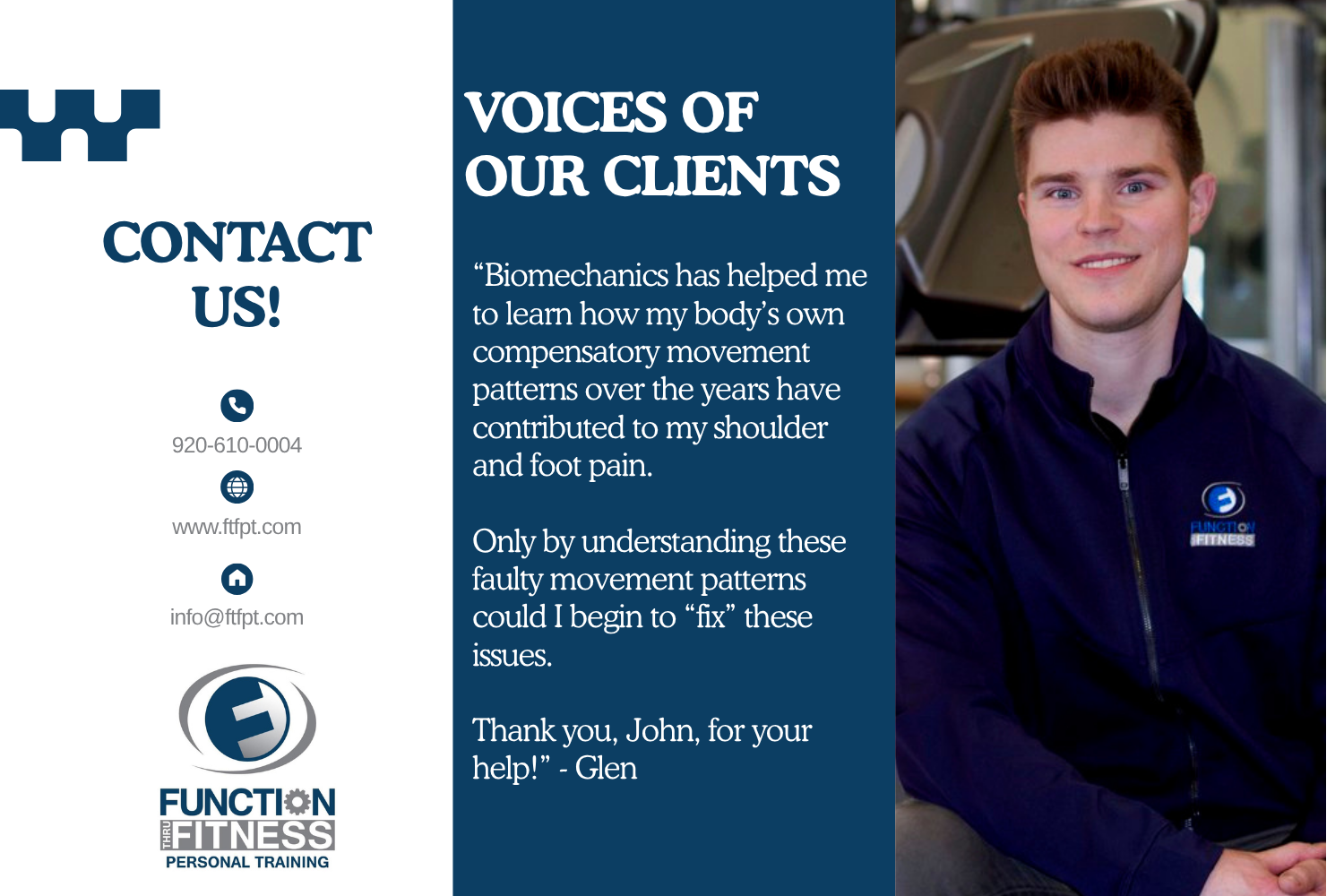
Many people live with shoulder pain for years, trying different exercises, treatments, or therapies — only to feel relief temporarily before the pain returns. This client experience explains why biomechanics takes a different and more effective approach.
Client Experience
“Biomechanics has helped me to learn how my body’s own compensatory movement patterns over the years have contributed to my shoulder and foot pain. Only by understanding these faulty movement patterns could I begin to ‘fix’ these issues!
Run of the mill shoulder rehab exercises do not work if your problem is from a mal-aligned rib cage that doesn’t allow your shoulder blade to move properly. Compensating for a shoulder blade that doesn’t glide correctly over the rib cage will lead to overuse injuries for certain muscles involved in movement of the shoulder joint (rotator cuff musculature, deltoid, pec, lat, upper trap, etc.)
You can treat any of these injured muscles time and time again only to see the pain return because the compensatory movement pattern was never addressed.
This is where biomechanics is different… Biomechanics addresses the compensatory movement patterns first and then it focuses on strengthening the muscles around the shoulder joint. This equals better long-term results! Thank you for all your help, John!”
What Are Compensatory Movement Patterns?
Compensatory movement patterns develop when the body adapts to injury, restriction, posture changes, or poor mechanics over time. While compensation allows movement to continue, it often places excessive stress on joints and muscles that were never designed to handle that workload.
In this case, shoulder and foot pain were not isolated problems. They were the result of how the body had learned to move — and compensate — over years.
Why Traditional Shoulder Rehab Often Doesn’t Last
Many shoulder rehab programs focus on strengthening individual muscles such as the rotator cuff, deltoids, or upper back. While this can temporarily reduce pain, it does not address why those muscles are being overused.
If the rib cage is misaligned or the shoulder blade cannot glide properly, the shoulder joint is forced to compensate. Strengthening without correcting movement mechanics often leads to recurring pain.
The Importance of Rib Cage and Shoulder Blade Mechanics
The shoulder joint depends heavily on how the shoulder blade moves along the rib cage. When that relationship is disrupted, surrounding muscles are forced to work harder, increasing the risk of overuse injuries.
Biomechanics identifies these movement restrictions first, instead of repeatedly treating the symptoms that result from them.
Why Biomechanics Produces Long-Term Results
Biomechanics takes a systematic approach by:
Identifying compensatory movement patterns
Restoring proper alignment and movement sequencing
Then strengthening muscles once efficient movement is restored
This approach allows the body to move more efficiently, reducing stress on joints and muscles and leading to more sustainable results.
Personalized Assessment Makes the Difference
Every person compensates differently. Biomechanics assessments at Function Thru Fitness are individualized, allowing movement patterns to be addressed based on how each body functions — not a generic protocol.
For clients with recurring pain, biomechanics provides clarity, direction, and long-term solutions instead of repeated short-term fixes.
Call to Action
If shoulder pain keeps returning despite exercises or treatment, biomechanics may be the missing piece.
Function Thru Fitness in Green Bay, WI offers biomechanics assessments designed to identify and correct compensatory movement patterns so your body can move better and stay pain-free longer.
FAQ: Biomechanics and Shoulder Pain
What is biomechanics?
Biomechanics evaluates how the body moves and how faulty movement patterns contribute to pain.
Why does shoulder pain keep coming back?
Pain often returns when compensatory movement patterns are never corrected.
Does biomechanics help rotator cuff pain?
Yes. Shoulder blade and rib cage mechanics directly affect rotator cuff stress.
How is biomechanics different from rehab exercises?
Biomechanics focuses on movement patterns first, then strengthening.
Who should consider a biomechanics assessment?
Anyone with recurring pain, limited movement, or unresolved injuries.
Looking for a better way to stay strong, mobile, and pain-free as you age?
At Function Thru Fitness, we go beyond big-box gyms. As one of the established fitness centers green bay wi, our focus is on restoring how the body moves, reducing pain, and building long-term strength through a proven function fitness approach.
We help people move better at every stage of life through personalized training, corrective exercise, golf fitness, neuromuscular therapy, and athlete recovery.
Download our free guide:
Essential Exercises for Lifelong Mobility and Independence
www.ftfpt.com/essential-exercises
Visit us at 801 Hoffman Rd. Suite 103, Green Bay, WI
Book online at www.ftfpt.com