
Personal Training Green Bay WI: How to Perform the Squat Row Correctly
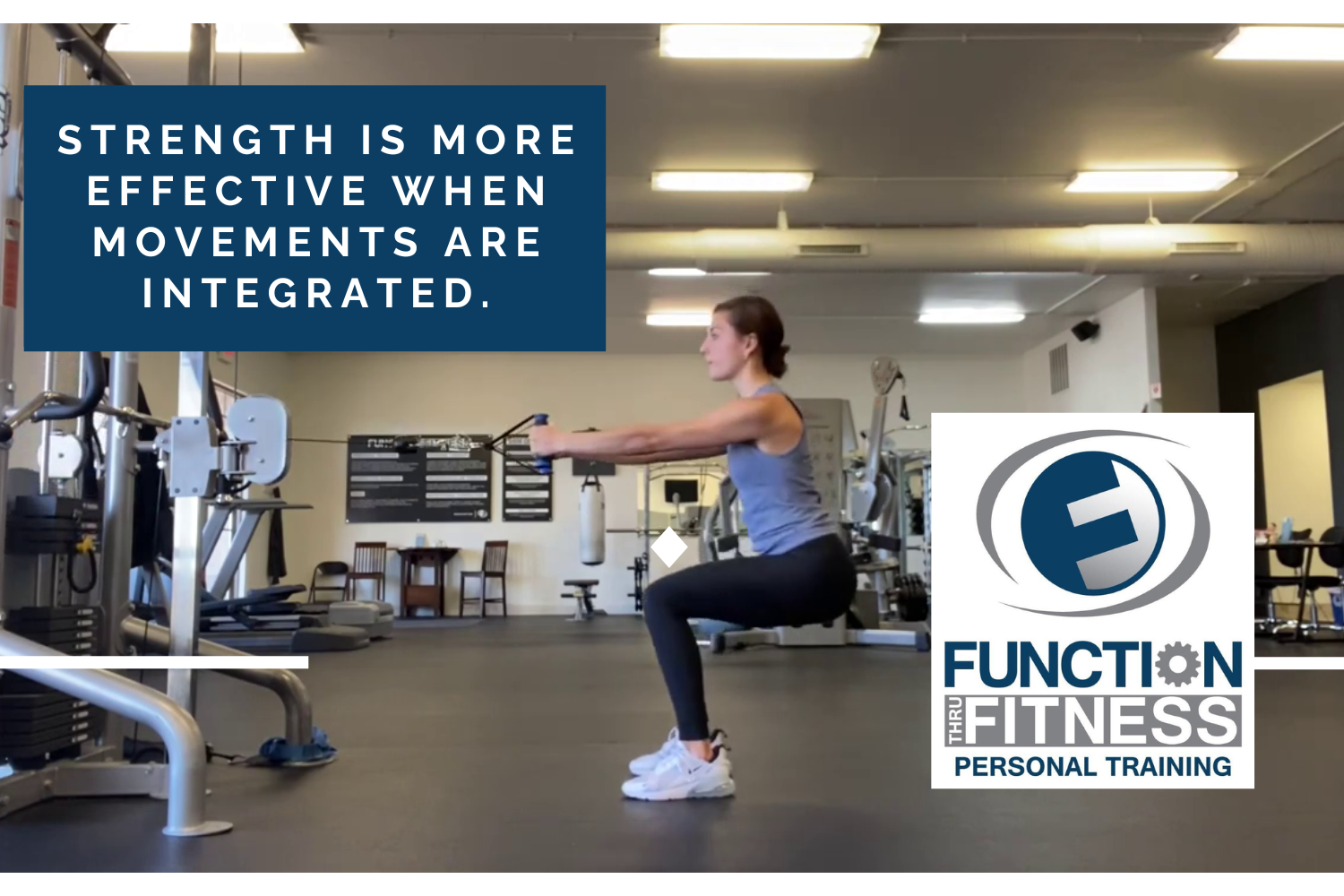
Many people treat strength exercises as isolated movements.
But real-life movement is integrated.
At Function Thru Fitness, Personal Training Green Bay WI focuses on exercises that combine lower body strength, upper body pulling, and core stability into one controlled pattern.
The squat row is one of those movements.
What Is a Squat Row?
The squat row combines:
• A squat pattern
• A horizontal pulling movement
• Core stabilization
• Postural control
It strengthens both the lats and quads while reinforcing proper mechanics.
How to Set Up the Squat Row
Begin facing a cable machine:
• Feet slightly wider than hips
• Toes pointing forward
• One handle in each hand
• Spine tall and core engaged
Before moving, ensure your rib cage is stacked over your pelvis. This prevents excessive arching during the movement.
Execution
As you descend into the squat:
• Knees track directly over toes
• Hips sit back and down
• Arms extend forward
As you stand up:
• Pull elbows back
• Keep chest tall
• Avoid rounding shoulders
• Do not fully lock out the knees
Avoiding full knee lockout maintains muscular tension and reduces joint stress.
Programming Variation
A strong progression includes:
• 10 full squat rows
• Then hold the squat low for 10 controlled rows
This increases time under tension and challenges stability.
For added balance and instability:
• Perform on a BOSU
• Maintain core engagement
• Keep spine neutral
The instability component forces deeper core activation and postural awareness.
Common Mistakes
We frequently correct:
• Knees collapsing inward
• Locking out the knees
• Rounding the shoulders
• Losing core engagement
• Overextending through the lower back
This is why coached Personal Training Green Bay WI produces better results than unsupervised workouts.
Why This Exercise Works
The squat row reinforces:
• Hip and knee coordination
• Lat engagement
• Postural endurance
• Core stabilization
• Integrated strength
It mirrors real-life movements where you must hinge, pull, and stabilize simultaneously.
Whether you are:
• A golfer improving rotational control
• An athlete building integrated strength
• A desk worker correcting posture
• Someone rebuilding after injury
This exercise provides functional benefit.
Strength With Structure
At Function Thru Fitness in Green Bay, WI, exercises are selected intentionally.
We assess biomechanics first.
Then we layer strength on top of proper movement patterns.
The squat row is often programmed after:
• Hip mobility corrections
• Core stabilization work
• Postural alignment improvements
It is not about how much weight you use.
It is about movement quality under control.
Watch the full video to see proper execution and progression.
If you want structured Personal Training Green Bay WI focused on long-term function, schedule a consultation at Function Thru Fitness.
FAQ SECTION
Q - What muscles do the squat row work?
A - It primarily strengthens the quads and lats while engaging the core and improving posture.
Q - Should I lock out my knees at the top?
A - No. Avoid locking out to maintain muscular tension and reduce joint stress.
Q - Can beginners perform this exercise?
A - Yes, with proper coaching and appropriate resistance selection.
Looking for a better way to stay strong, mobile, and pain-free as you age?
At Function Thru Fitness, we go beyond big-box gyms. As one of the established fitness centers green bay wi, our focus is on restoring how the body moves, reducing pain, and building long-term strength through a proven function fitness approach.
We help people move better at every stage of life through personalized training, corrective exercise, golf fitness, neuromuscular therapy, and athlete recovery.
Download our free guide:
Essential Exercises for Lifelong Mobility and Independence
www.ftfpt.com/essential-exercises
Visit us at 801 Hoffman Rd. Suite 103, Green Bay, WI
Book online at www.ftfpt.com