
Nutrition Coaching: How Much Protein Do You Really Need?
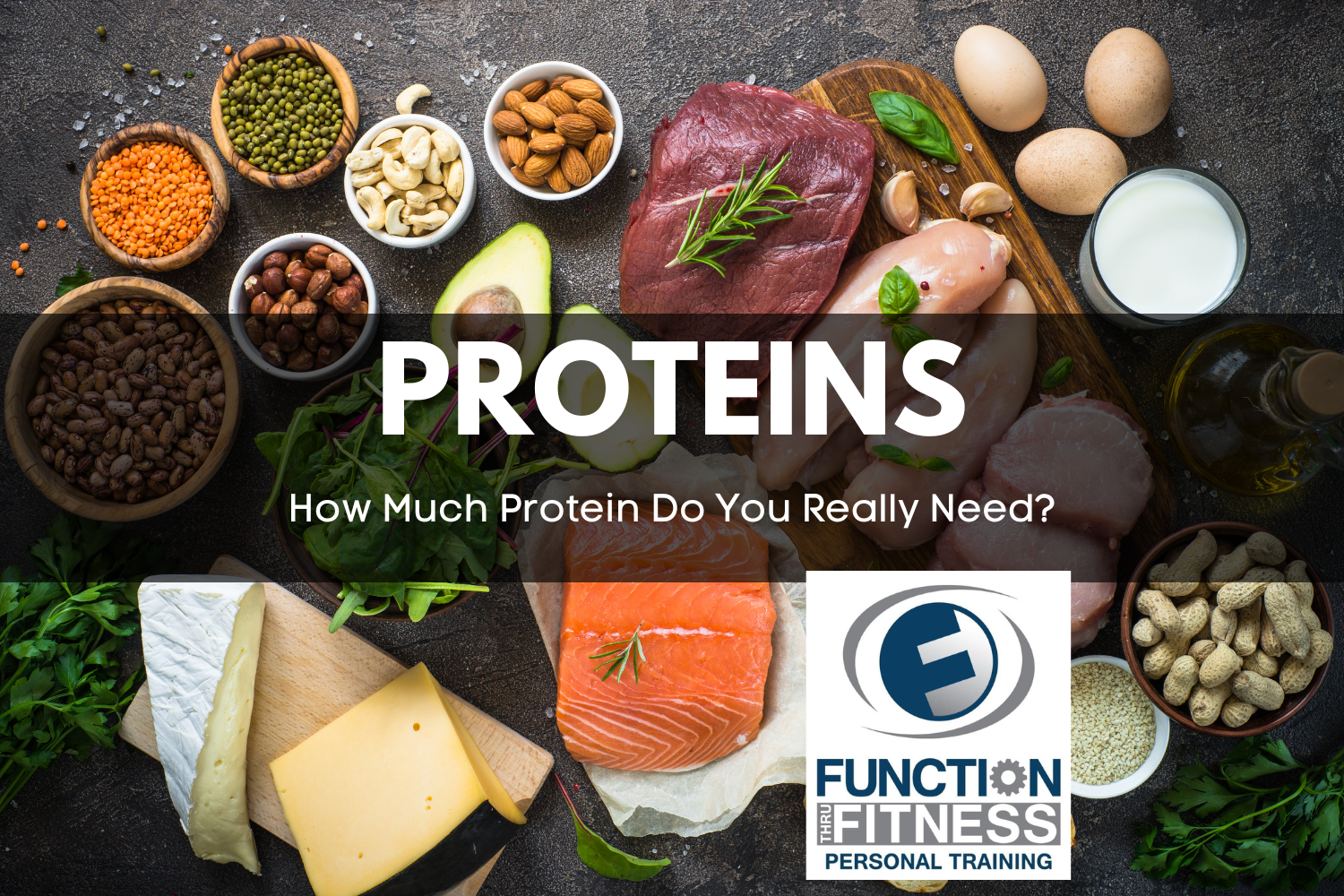
Most people either under-eat protein or dramatically overcomplicate it.
They try fad diets, obsess over food scales, or guess their way through meals — and then wonder why they feel fatigued, struggle to build muscle, or plateau in their progress.
At Function Thru Fitness in Green Bay, WI, Nutrition Coaching starts with simple, sustainable fundamentals. And protein is one of the most important.
Why Protein Matters
Protein is the building block of your body. It supports:
• Muscle repair and growth
• Recovery after workouts
• Hormone production
• Metabolic function
• Long-term strength and function
Without adequate protein intake, your body simply cannot rebuild efficiently after training. That leads to slower progress, soreness that lingers, and difficulty maintaining lean muscle mass.
In our video, John Blaser, NASM-CPT, NASM-CES, NASM-FNS, CBS, explains a practical approach most people can follow.
A Simple Daily Protein Target
A good starting point for most adults is:
30–40 grams of protein per meal
3–4 meals per day
That typically brings you into the range of 120–150 grams per day, which supports recovery and performance for many individuals.
This isn’t a rigid rule. Some people need more, some slightly less. But it provides structure — which is exactly what effective Nutrition Coaching should do.
Portioning Without a Food Scale
You do not need to weigh every ounce of food to be successful.
John recommends using your hand as a reference:
• A fist-sized portion of meat (about 4 ounces)
• Roughly 25–30 grams of protein
If you need more, increase to about a fist and a half (around 6 ounces).
This makes protein tracking practical. You can apply it at home, at restaurants, or while traveling — without stress.
Why Most People Undereat Protein
Many clients in Green Bay come to us thinking they eat “enough.”
But when we review their intake, they often:
• Skip protein at breakfast
• Rely heavily on carbohydrates
• Underestimate portion sizes
• Fail to eat consistently throughout the day
The result? Low energy, slower recovery, and difficulty maintaining muscle mass.
That’s where structured Nutrition Coaching becomes valuable.
Nutrition Coaching Is Not a Diet Plan
At Function Thru Fitness, Nutrition Coaching is not about restrictive dieting.
It is about:
• Education
• Structure
• Sustainability
• Supporting your training goals
We align protein intake with your:
• Personal training plan
• Corrective exercise program
• Biomechanics assessment
• Golf performance goals
Because nutrition should support movement, not compete with it.
Protein and Long-Term Function
If your goal is:
• Building strength
• Reducing pain
• Improving body composition
• Supporting hormonal balance
• Enhancing recovery
Protein intake becomes foundational.
It supports muscle preservation as you age, which is critical for long-term mobility and injury prevention.
This is especially important for adults over 40 in the Green Bay area who want to stay active without constant setbacks.
Who Should Focus on Protein Intake?
Nutrition Coaching focused on protein is especially helpful for:
• High school athletes
• Golfers improving performance
• Adults trying to lose body fat
• Individuals rebuilding strength after injury
• Women navigating hormonal changes
• Seniors protecting muscle mass
Protein is not a trend. It is a biological requirement.
Personalized Guidance Makes the Difference
While 30–40 grams per meal is a good starting point, your individual needs may vary depending on:
• Body weight
• Activity level
• Training intensity
• Age
• Recovery demands
That is why working with a structured Nutrition Coaching plan inside a personal training environment produces better results than guessing alone.
At Function Thru Fitness in Green Bay, WI, your plan is built around restoring optimal function — not chasing extremes.
Watch the full video to hear John explain how to structure your meals simply and effectively.
If you are unsure whether you are eating enough protein to support your goals, schedule a consultation and let’s build a plan that works for your body.
FAQ SECTION
Q- How much protein should I eat per meal?
A - A common starting point is 30–40 grams of protein per meal, spread across 3–4 meals per day.
Q - Do I need to weigh my food to track protein?
A - Not necessarily. Using your fist as a portion reference (about 4 ounces of meat) can provide a practical guideline.
Q - Does protein help with weight loss?
A - Adequate protein intake supports muscle maintenance, recovery, and metabolic function, all of which play a role in body composition.
Looking for a better way to stay strong, mobile, and pain-free as you age?
At Function Thru Fitness, we go beyond big-box gyms. As one of the established fitness centers green bay wi, our focus is on restoring how the body moves, reducing pain, and building long-term strength through a proven function fitness approach.
We help people move better at every stage of life through personalized training, corrective exercise, golf fitness, neuromuscular therapy, and athlete recovery.
Download our free guide:
Essential Exercises for Lifelong Mobility and Independence
www.ftfpt.com/essential-exercises
Visit us at 801 Hoffman Rd. Suite 103, Green Bay, WI
Book online at www.ftfpt.com