
Wall Slides: The Shoulder Exercise That Fixes Posture and Relieves Pain at the Same Time
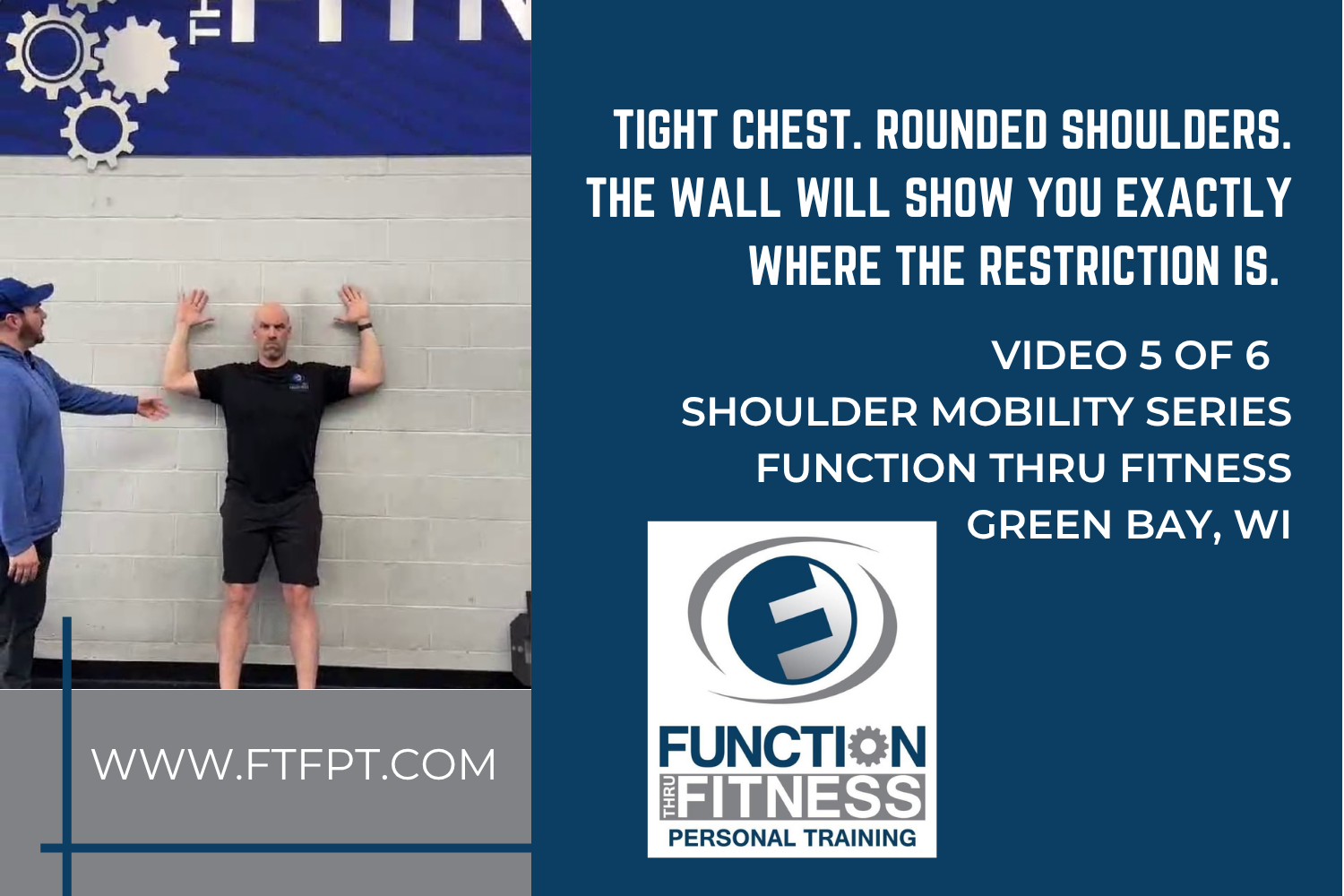
Wall slides use the wall as a feedback surface to train shoulder external rotation and upper back strength simultaneously. Starting with the back flat against the wall and arms overhead, the movement drives the elbows down while keeping the hands and wrists on the wall — challenging the external rotation and strength that poor posture and tight chest muscles take away.
Shoulder pain and poor posture almost always arrive together. The chest tightens, the shoulders round forward, the upper back weakens, and the shoulder loses its ability to externally rotate. Everything compensates. Pain follows.
Most people address one piece of this without addressing the whole. They stretch the chest. They do rows. They try to sit up straighter. And the shoulder still hurts, the posture still breaks down, because no single intervention is targeting the mechanism behind the problem.
Wall slides are different. By using the wall as both a training surface and an immediate feedback tool, they train shoulder external rotation and upper back strength simultaneously — in the exact context where the posture problem lives. The wall tells you in real time how much external rotation the shoulder has, and every rep either reinforces that range or expands it.
In this video, I walk Glen through the full movement. This is Video 5 of 6 in our shoulder mobility series at Function Thru Fitness in Green Bay, WI.
Watch the Full Video
Why External Rotation Is the Missing Piece
The shoulder joint moves in multiple directions, but two of them — internal rotation and external rotation — are at the center of most shoulder pain and posture problems.
Internal rotation brings the arm inward, across the body. It is the position the shoulder settles into when the chest is tight and the arm rests at the side. Prolonged sitting, driving, typing, and phone use all reinforce internal rotation and gradually limit the opposing direction.
External rotation brings the arm outward, rotating the humerus away from the body. It is the position required for overhead movement, reaching behind the body, and proper shoulder blade positioning during upper body exercises. When external rotation is limited, the shoulder joint compensates during these movements — the humerus impinges against the surrounding structures, the rotator cuff is stressed, and pain develops.
Training external rotation strength — not just range — is what wall slides provide. The shoulder has to actively rotate outward against the resistance of the tight anterior structures to keep the wrists on the wall. That active demand builds the external rotator strength that a stretched chest alone cannot restore.
How to Perform Wall Slides
Watch the video to see Glen move through the full exercise before attempting it yourself.
Start standing with the back against a wall. The low back, upper back, and head should all be in contact with the wall. Arms are extended overhead, with the backs of the hands, wrists, and arms resting against the wall.
From that position, drive the elbows downward toward the sides — like performing a pulldown movement — while maintaining contact between the hands, wrists, and wall throughout. The key is to keep the wrists on the wall as far down as the shoulder will allow.
At the point where the hands or wrists begin to come off the wall — where the shoulder can no longer maintain external rotation through the movement — stop and return to the overhead starting position. Do not force through that point. The lift-off is the feedback that tells you exactly where the shoulder's current external rotation range ends.
Focus on external rotation throughout the descent. As the elbows drive down, actively think about rotating the shoulder outward — turning the palms more toward the wall. That conscious effort keeps the right muscles engaged and prevents the shoulder from compensating by rolling forward.
The Wall as Feedback
One of the most valuable aspects of wall slides is what the wall tells you. When the wrists come off the wall early — when the hands pull away from the surface before the elbows have traveled far — that is direct information about the shoulder's external rotation range and the strength of the muscles responsible for maintaining it.
Over time, as the chest releases and the external rotators strengthen, the elbows can travel further down the wall before the wrists lift. That visible, measurable progress is one of the reasons wall slides are effective in a long-term corrective exercise program — the feedback loop is built into every single rep.
This is shoulder exercises strength work that serves simultaneously as a posture correction, an external rotation training tool, and an ongoing assessment of shoulder mobility progress.
Who Benefits Most From Wall Slides
Wall slides are appropriate for almost anyone dealing with shoulder pain, forward shoulder posture, or chest tightness — which describes a large portion of the working population. Desk workers, drivers, and anyone who spends long hours in a forward-reaching position will find that wall slides directly counteract the postural effects of those habits.
For older adults working on mobility for seniors, wall slides build the overhead shoulder strength and external rotation control needed for everyday reaching movements, carrying, and activities that require the arms to move above shoulder height.
For athletes and golfers, external rotation strength is foundational to shoulder health under load. Rehab exercises for rotator cuff programs frequently include external rotation work because the rotator cuff's primary role is to keep the humerus centered in the joint — and it cannot do that effectively without adequate external rotation strength.
For anyone asking why does my pain keep coming back in the shoulder despite stretching or strengthening, the answer is often that external rotation was never directly addressed. Wall slides close that gap.
How This Fits the Series
By Video 5, the series has built scapular retraction strength, full scapular range of motion, all four directions of scapular movement, and shoulder circumduction. Wall slides add the external rotation and posture integration component that ties all of those pieces together in a standing, functional context.
One video remains. For a program built specifically around your shoulder restrictions and posture patterns, a Functional Assessment at Function Thru Fitness identifies the exact deficits and guides a corrective exercise approach designed around your body.
FAQ
Q: What do wall slides do for shoulder pain? A: Wall slides train shoulder external rotation and upper back strength simultaneously, using the wall as a feedback surface to make restrictions immediately visible. Because most shoulder pain is connected to internal rotation dominance, tight chest muscles, and weak external rotators, wall slides address the underlying cause directly — building the shoulder exercises strength components that hold the joint in proper position and reduce the compensatory strain that produces pain.
Q: How do I fix poor posture and movement patterns involving my shoulders? A: Fixing shoulder-related posture requires strengthening the muscles that hold the shoulder in proper position — particularly the external rotators and upper back — while releasing the chest tightness that pulls it forward. Wall slides train both simultaneously by demanding external rotation through a movement that keeps the shoulder in a posture-correcting context from start to finish.
Q: Why do my wrists come off the wall during wall slides? A: When the wrists come off the wall during wall slides, it means the shoulder's external rotation range has reached its current limit and the muscles can no longer maintain that rotation through the movement. This is information, not failure — it shows exactly where the shoulder's restriction is and gives a clear marker for tracking progress over time as the external rotation range improves.
Q: Are wall slides good for rotator cuff issues? A: Yes. External rotation strength is one of the foundational components of rotator cuff health. The rotator cuff keeps the humerus centered in the shoulder socket, and it cannot perform that function effectively without adequate external rotation strength and range. Wall slides are frequently included in rehab exercises for rotator cuff programs because they train this component in a functional, posture-integrated context.
Q: Can wall slides help with shoulder pain from sitting all day? A: Yes. Shoulder pain from prolonged sitting is almost always connected to tight chest muscles and loss of external rotation — the exact deficits wall slides address. By training the shoulder to externally rotate against the wall while the back is flat and the spine is neutral, wall slides directly counteract the postural effects of extended sitting and build the strength needed to maintain better shoulder positioning through a long day.
Looking for a better way to stay strong, mobile, and pain-free as you age?
At Function Thru Fitness, we go beyond big-box gyms. As one of the established fitness centers green bay wi, our focus is on restoring how the body moves, reducing pain, and building long-term strength through a proven function fitness approach.
We help people move better at every stage of life through personalized training, corrective exercise, golf fitness, neuromuscular therapy, and athlete recovery.
Download our free guide: Essential Exercises for Lifelong Mobility and Independence www.ftfpt.com/essential-exercises
Visit us at 801 Hoffman Rd. Suite 103, Green Bay, WI Book online at www.ftfpt.com