
What to Wear to a Neuromuscular Therapy Session — and Who Can Benefit
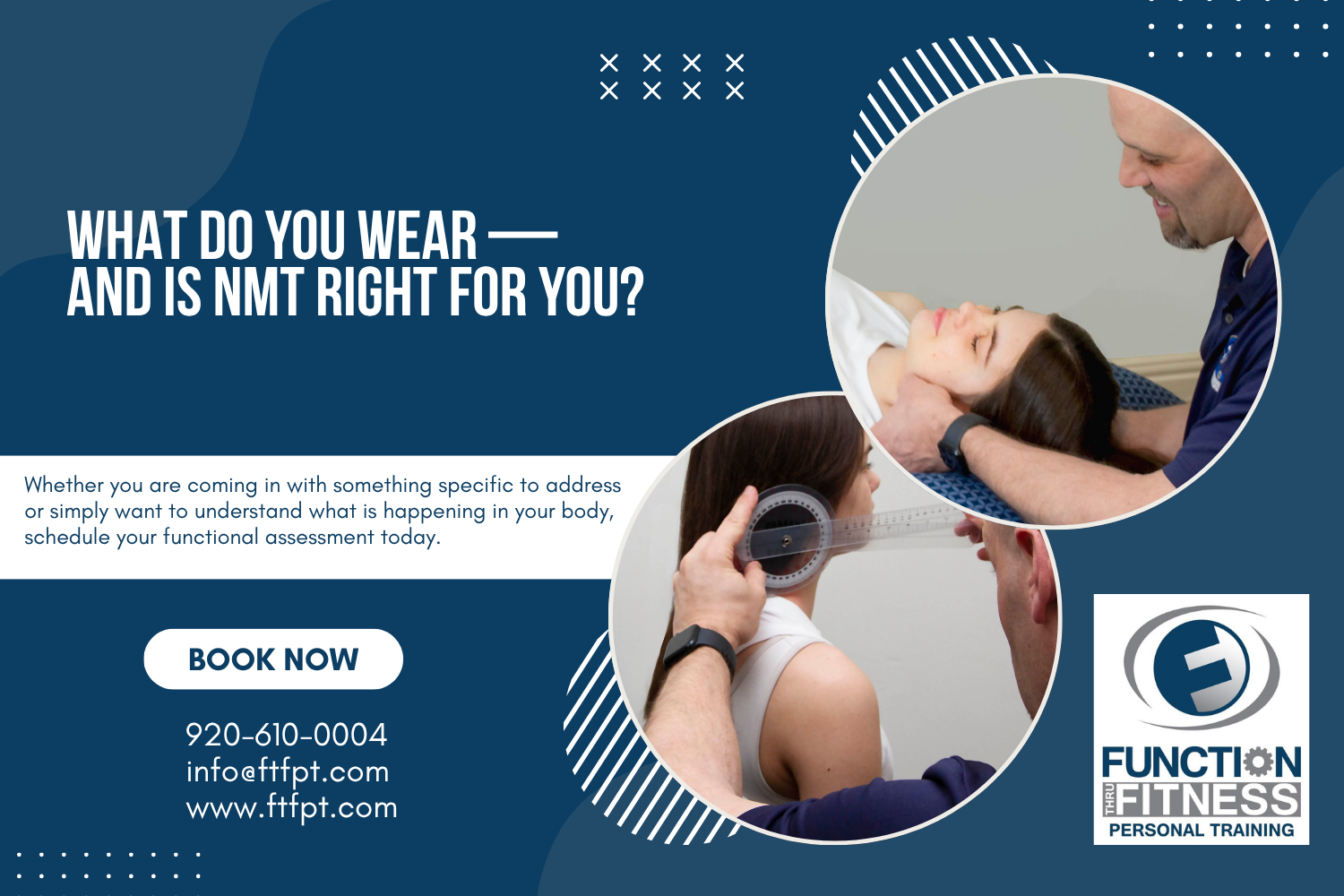
Before a first neuromuscular therapy session, most people have two questions that have nothing to do with the treatment itself. The first is practical: what do I wear? The second is more fundamental: is this even for me? In this video, we answer both — and the answers are simpler than most people expect. This post covers what the video explains and adds context on why the attire guidance matters clinically and how the approach shifts depending on whether symptoms are present.
What to Wear: The Simple Answer and Why It Matters
Gym clothes are all you need. Shorts and a t-shirt are the ideal combination for a neuromuscular therapy session. That is not just a comfort recommendation — it has a direct clinical reason behind it.
Neuromuscular therapy massage is hands-on work that requires the therapist to access and accurately feel specific tissue layers. Heavier fabrics — jeans, thick leggings, layered clothing — create a barrier that reduces the precision of that palpation. The therapist is working to identify specific tissue patterns, referral responses, and structural relationships through contact. Thinner layers allow for a cleaner, more accurate read of what is happening beneath the surface.
This matters most during the assessment phase and during targeted tissue work. A small clothing choice has a real impact on the quality of information the therapist can gather and act on.
So: shorts and a t-shirt. Comfortable, light, and easy to move in. That is the full answer.
Who Can Benefit from Neuromuscular Therapy
The more layered question is who neuromuscular therapy is actually for. The short answer: most people who book a session are symptomatic, and that is where the approach is most specifically applied. But being symptomatic is not a requirement.
When Symptoms Are Present
The primary application of nmt therapy is addressing soft tissue-driven pain or dysfunction. When someone comes in with a specific presentation — chronic pain, recurring tension, a movement restriction that has not responded elsewhere — the assessment-first model is built to find the source of that presentation and treat there.
The process is not general. It begins with intake paperwork and a focused symptom conversation, moves into assessment, and then directs hands-on work at the identified origin rather than the site where pain is felt. For symptomatic clients, this is where what is neuromuscular massage therapy becomes most distinct from general massage: the systematic effort to find cause, not just address effect.
For clients dealing with patterns that have resisted other treatments — foam rolling, general massage, stretching, or even symptom-focused therapy — this is the application that produces lasting change. Pain is rarely where the problem comes from. The assessment finds where it does.
When Symptoms Are Not Present
You do not need to be in pain to benefit from a neuromuscular therapy session. When no specific symptoms are present, the session takes a more general approach. The assessment framework still informs the work — it simply produces a broader picture rather than a targeted symptom map.
For clients who are proactively investing in their soft tissue health, managing physical stress from training or demanding physical work, or simply curious about what is neuromuscular therapy and what their tissue patterns look like at baseline, a general session has value. It is a different kind of session from the symptom-specific model, but it draws on the same clinical foundation.
The Symptom-Specific Versus General Distinction
Understanding this distinction helps set expectations before booking. If you are coming in with a specific complaint — a shoulder that has been tight for months, recurring lower back tension, IT band pain that foam rolling has not resolved — the session will be oriented around finding and addressing the source of that complaint. The intake, the conversation, and the assessment all build toward that.
If you are coming in without a specific symptom, the session is more exploratory. The therapist still applies the same clinical skills and assessment awareness — but without a symptom to track, the work is broader. General soft tissue health, overall tissue quality, and any latent patterns that may not yet be producing symptoms are all within scope.
Both are valid reasons to book. The session simply looks different depending on what you bring in.
How Neuromuscular Therapy Fits Into a Broader Approach
For clients dealing with soft tissue pain or movement dysfunction, precision neuromuscular therapy works most effectively when combined with corrective exercise. The neuromuscular therapy addresses the soft tissue pattern at the source. Corrective exercise builds the movement behavior and strength that support lasting change after the tissue has been released.
The personal training team at Function Thru Fitness provides corrective exercise alongside the neuromuscular therapy team. When clients engage both, the outcomes consistently improve — the two approaches are designed to complement each other.
For those in Green Bay searching for therapeutic massage green bay with a clinical structure, or massage therapists green bay wi who work from assessment rather than symptom location, Function Thru Fitness provides that model through Glen, Heather, and Chad.
Who Provides Neuromuscular Therapy at Function Thru Fitness
Glen Gadwood, CPNMT, LMT, BCTMB, NASM-CES is the owner of Function Thru Fitness and believes pain-free movement is possible at any age, providing neuromuscular therapy and Musculoskeletal Pain Assessment rooted in long-term, root-cause care.
Heather Milton, LMT, NASM-CPT is a licensed massage therapist pursuing advanced certification in neuromuscular therapy, with a focus on pain relief and soft tissue assessment.
Chad Gossen, CPNMT, LMT, NASM-CPT, CES combines neuromuscular therapy with corrective exercise and personal training — offering a uniquely integrated approach for clients navigating both soft tissue and movement issues.
For those searching for massage therapists green bay wi who work from an assessment-first model, all are available to book.
FAQ — What to Wear and Who Benefits from Neuromuscular Therapy
Q: What should I wear to a neuromuscular therapy session? A: Gym clothes — shorts and a t-shirt are ideal. Lighter fabrics allow the therapist to access and accurately feel the tissue layers during assessment and hands-on work. Jeans or heavy clothing reduce the precision of that contact and are not recommended.
Q: Do I need to have symptoms to benefit from neuromuscular therapy? A: No. Most clients who book are symptomatic, and the session is most specifically applied when there is a complaint to assess and address. But clients without active symptoms can still benefit through a more general session that evaluates overall tissue quality and latent patterns before they produce pain.
Q: What is neuromuscular massage therapy and how is it different from a regular massage? A: Neuromuscular massage therapy is assessment-driven soft tissue work focused on identifying the source of a symptom rather than treating where pain is felt. A regular massage typically addresses areas of tension or discomfort directly. NMT begins with intake, a symptom conversation, and assessment before any hands-on work begins — the treatment follows the clinical picture, not the symptom location.
Q: What is neuromuscular therapy used for in cases without active pain? A: For clients without active symptoms, neuromuscular therapy can be used to evaluate baseline tissue quality, identify latent patterns that may not yet be producing symptoms, and support overall soft tissue health for those in physically demanding work or training. The session is more general than symptom-specific, but the clinical foundation is the same.
Book a Session
Chad - chad@ftfpt.com / 920-915-7831 / www.ftfpt.com/chad
Heather- heather@ftfpt.com / 920-676-9387 / www.ftfpt.com/heather
Glen – glen@ftfpt.com / 920-562-4357 / www.ftfpt.com/glen
Looking for a better way to stay strong, mobile, and pain-free as you age?
At Function Thru Fitness, we go beyond big-box gyms. As one of the established fitness centers green bay wi, our focus is on restoring how the body moves, reducing pain, and building long-term strength through a proven function fitness approach.
We help people move better at every stage of life through personalized training, corrective exercise, golf fitness, neuromuscular therapy, and athlete recovery.
Download our free guide: Essential Exercises for Lifelong Mobility and Independence www.ftfpt.com/essential-exercises
Visit us at 801 Hoffman Rd. Suite 103, Green Bay, WI Book online at www.ftfpt.com