
Shoulder Exercises Range of Motion: How Proper Deltoid Raises Support Healthy Movement
Shoulder Exercises Range of Motion: How Proper Deltoid Raises Support Healthy Movement
Limited shoulder mobility can affect far more than just workouts. Reaching overhead, carrying groceries, maintaining good posture, and even sleeping comfortably can become difficult when shoulder range of motion is restricted.
Shoulder exercises range of motion should focus on controlled movement, proper alignment, and muscle awareness, not forcing the joint beyond what it can safely handle. One simple but highly effective exercise when performed correctly is the deltoid raise.
Why Shoulder Range of Motion Matters
The shoulder is one of the most mobile joints in the body, but that mobility also makes it vulnerable to poor movement patterns. When range of motion is limited or uncontrolled, other areas — especially the neck — often try to compensate.
Common issues associated with poor shoulder mobility include:
Neck and upper-trap tension
Shoulder discomfort or pinching
Poor posture
Difficulty lifting or reaching
Reduced upper-body strength
Improving shoulder range of motion is not about pushing harder. It’s about moving better.
Deltoid Raises and Shoulder Exercises Range of Motion
Deltoid raises are commonly used to strengthen the shoulders, but when performed incorrectly, they often do more harm than good.
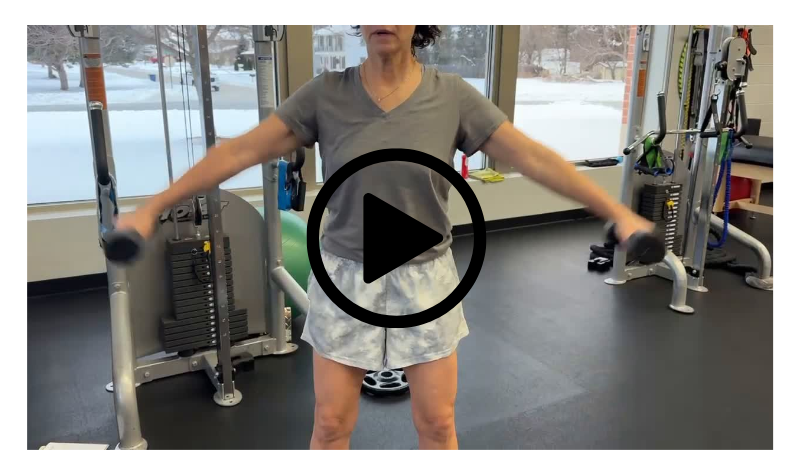
In our video, we demonstrate deltoid raises with a key focus on stopping the movement at shoulder height. Raising the arms higher than shoulder level frequently causes the neck muscles to take over, which reduces the effectiveness of the exercise and can increase tension or discomfort.
When deltoid raises are done with proper control:
The shoulder muscles stay engaged
Neck compensation is minimized
Movement quality improves
Shoulder range of motion is trained safely
This is exactly how shoulder exercises range of motion should be approached — with intention, control, and awareness of how the body responds.
Why Technique Matters More Than Weight
Many people assume shoulder mobility improves by lifting heavier or pushing through discomfort. In reality, poor technique often reinforces the very issues they’re trying to fix.
Controlled deltoid raises emphasize:
Proper joint positioning
Smooth, pain-free movement
Balanced muscle engagement
Reduced strain on the neck and upper back
This makes them an excellent option for individuals dealing with stiffness, past shoulder injuries, or chronic neck tension.
Watch the Video: Proper Deltoid Raises for Shoulder Mobility
In our video, you’ll see exactly how to perform deltoid raises to support healthy shoulder range of motion. We walk through:
Proper arm height
Controlled tempo
Common mistakes that lead to neck engagement
How small adjustments make a big difference
Watching the movement performed correctly can help you better understand what your shoulders should feel like during the exercise.
A Personalized Approach Makes the Difference
At Function Thru Fitness in Green Bay, WI, we don’t prescribe exercises in isolation. Shoulder mobility is always assessed alongside posture, neck movement, and overall upper-body mechanics.
This allows us to choose shoulder exercises range of motion that:
Match the individual’s current ability
Reduce discomfort instead of aggravating it
Support long-term movement health
If shoulder stiffness, neck tension, or limited range of motion has been holding you back, a personalized assessment can help identify the right next step.
Want a simple place to start?
Download our free guide: Essential Exercises for Lifelong Mobility and Independence — designed to improve strength, mobility, and balance at any age, no equipment required.
www.ftfpt.com/essential-exercises
At Function Thru Fitness, we’re not your typical gym. As a trusted Fitness Center Green Bay WI, we specialize in personalized care through:
✔ Personal Trainer Green Bay programs tailored to your goals
✔ Corrective Exercise Specialist Near Me sessions to restore pain-free movement
✔ TPI Golf coaching and Golf Trackman Simulator training for performance and mobility
✔ Neuromuscular Therapy and Soft Tissue Therapy to relieve pain and restore function
✔ Athlete Recovery and Green Bay Personal Training solutions to keep you strong for the long term
Discover why so many choose Function Fitness and our Functional Fitness Gym approach to live healthier, more active lives.
Booking is now simpler and faster with our new online scheduling.
Visit us at 801 Hoffman Rd. Suite 103, Green Bay, WI
www.ftfpt.com | info@ftfpt.com | 920-610-0004