
How to Know If Your Pain Is a Soft Tissue Issue — and When Neuromuscular Therapy Is the Right Step
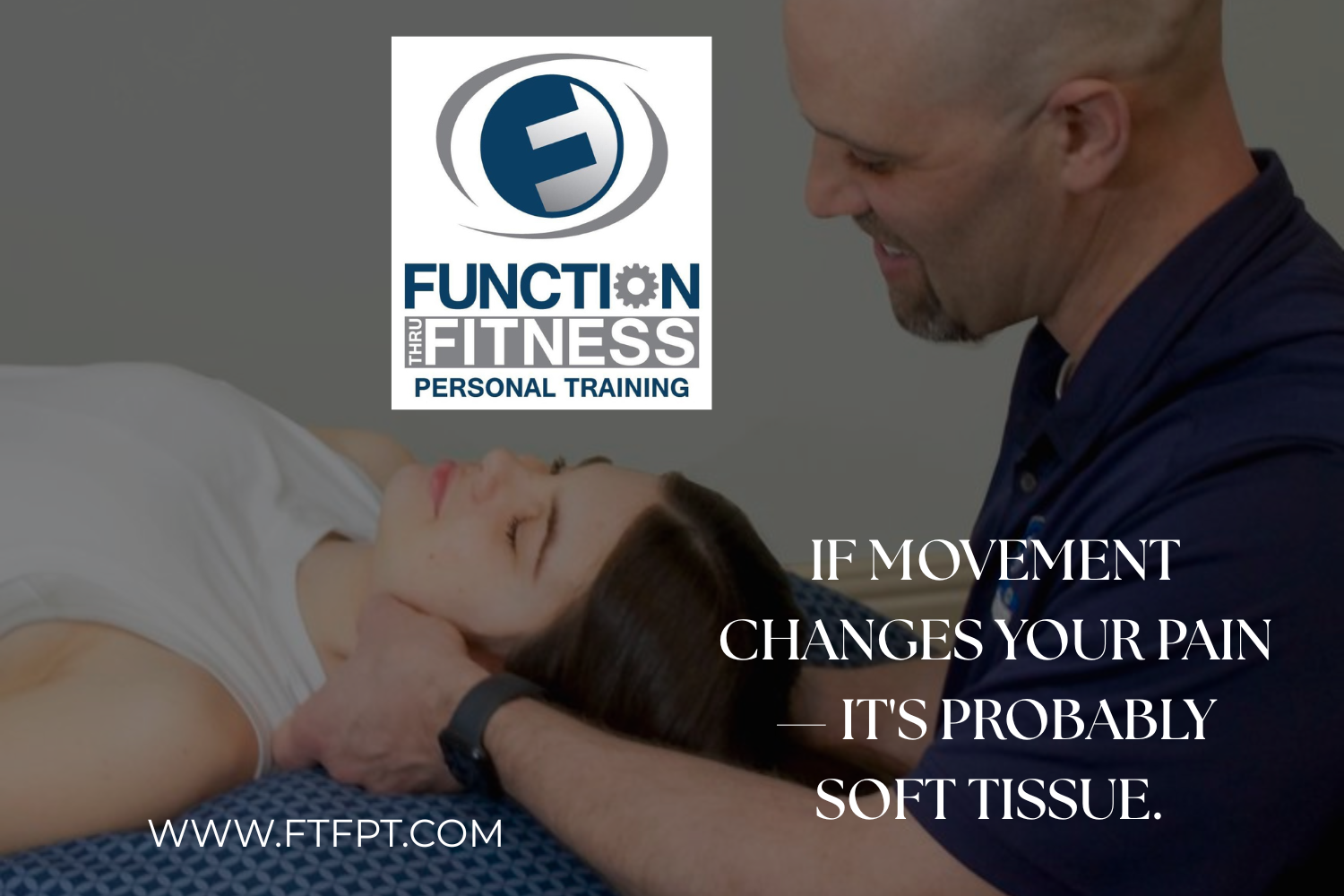
When pain appears in a location like the left arm or shoulder, the first question many people ask is what is causing it — and whether they need to be concerned about something beyond a muscle problem. In this video, we explain the clearest indicator that points toward a soft tissue source: whether movement changes the pain. That single factor — movement-dependency — is one of the most reliable signals available at home before any clinical assessment takes place, and it is the signal that points directly toward neuromuscular therapy massage as the appropriate next step.
The Movement-Dependency Signal
The most accessible way to evaluate whether pain is likely coming from soft tissue is to move and observe. Does the pain increase when you reach overhead? Does reaching behind your back produce pain or feel limited in a way it should not? Does the pain shift depending on the position of your arm, shoulder, or neck?
If the answer to any of these is yes — if movement consistently changes the pain — that is the body communicating that soft tissue is involved. Soft tissue restrictions respond to position and load. When a muscle, fascia, or the compensation pattern surrounding a restricted structure is the source of pain, the pain will be movement-dependent. It will hurt more in certain ranges and ease in others.
This is the key distinguishing factor Stacey describes in this video. The example used is left arm pain — a presentation that understandably creates concern about cardiac causes in many people. The distinguishing factor is not the location of the pain or its intensity. It is whether movement changes it. A soft tissue restriction will respond to how the arm, shoulder, and surrounding structures are positioned. That response is what identifies it.
What Causes Movement-Dependent Pain
What causes neck and back pain — or arm, shoulder, or hip pain — that is consistently position-specific and movement-dependent? Soft tissue compensation patterns are the most common answer for pain that behaves this way.
When one structure in the body becomes restricted — shortened, adhered, or held in a sustained contraction — surrounding tissues adapt. Some get pulled into lengthened, overstretched positions. Others take on load they were not designed to carry. The resulting pattern generates pain in tissues that are compensating, which means the pain location is frequently not the source location.
The movement-dependency of this kind of pain reflects the soft tissue relationships involved. Reaching overhead loads the shoulder complex in a specific way. Reaching behind the back tests the rotational range of the shoulder, thoracic spine, and surrounding fascia. When those movements consistently produce or increase pain, the soft tissue pattern is responding to the demand — and that is the signal to seek assessment.
Why This Matters Before Booking
Understanding this signal has practical value before a person ever books a session. It provides a meaningful reference point: if movement changes the pain, soft tissue is highly likely to be involved, and a neuromuscular therapy assessment is an appropriate and productive next step. If movement does not change the pain — if it is constant regardless of position, unrelated to how the body is loaded — that is a different pattern and warrants a different kind of evaluation first.
Stacey's framing in this video is useful precisely because it is accessible. A person at home, wondering whether their left arm pain is something to be alarmed about, can ask the movement question. If reaching in a particular direction reliably increases the pain or creates a familiar restriction, the answer is pointing toward soft tissue — and toward the assessment-first model of nmt therapy rather than continued guessing.
What Neuromuscular Therapy Does with This Information
When someone comes in with movement-dependent pain, the intake conversation and assessment process at Function Thru Fitness are designed to map the pattern behind it. Which movements are restricted and in which direction tells the therapist a great deal about which structures are involved and where the compensation is likely originating.
From there, myofascial release and trigger point therapy techniques are applied at the identified source — the structure or tissue pattern driving the restriction and the pain — rather than at the location where the pain is felt. Range of motion is retested through the session as the tissue responds, providing real-time feedback on whether the treatment is directed at the right place.
What is neuromuscular therapy used for in movement-restricted presentations? Identifying which soft tissue pattern is limiting the movement, finding the source within that pattern, and restoring the range that the restriction has taken away. When treatment goes to the right place, the movement-dependent pain that pointed toward soft tissue resolves — because the restriction generating it has been addressed.
For those in Green Bay experiencing movement-dependent pain and searching for neuromuscular massage therapy near me or therapeutic massage green bay with clinical assessment, Function Thru Fitness provides this through Glen, Heather, and Chad.
Who Provides Neuromuscular Therapy at Function Thru Fitness
Glen Gadwood, CPNMT, LMT, BCTMB, NASM-CES is the owner of Function Thru Fitness and believes pain-free movement is possible at any age, providing neuromuscular therapy and Musculoskeletal Pain Assessment rooted in long-term, root-cause care.
Heather Milton, LMT, NASM-CPT is a licensed massage therapist pursuing advanced certification in neuromuscular therapy, with a focus on pain relief and soft tissue assessment.
Chad Gossen, CPNMT, LMT, NASM-CPT, CES combines neuromuscular therapy with corrective exercise and personal training — offering a uniquely integrated approach for clients navigating both soft tissue and movement issues.
For those searching for massage therapists green bay wi who work from an assessment-first model, all are available to book.
FAQ — How to Know If Pain Is a Soft Tissue Issue
Q: What causes neck and back pain that changes with movement? A: Movement-dependent pain — pain that gets worse in certain positions or with specific movements — is a primary indicator of a soft tissue cause. Soft tissue restrictions respond to the load and position of the structures around them, producing pain that shifts as the body moves. Assessment by a neuromuscular therapist can identify which specific structure or pattern is responsible.
Q: How can I tell if arm pain is a soft tissue issue rather than a cardiac concern? A: The key indicator is movement-dependency. If reaching overhead increases the pain, or reaching behind your back is limited and painful, the pain is responding to the position of soft tissue structures — which is not characteristic of cardiac-origin pain. If you are uncertain or the pain is accompanied by other concerning symptoms, always seek medical evaluation first. But movement-dependent pain is a strong clinical signal pointing toward soft tissue.
Q: What is neuromuscular therapy used for when pain is movement-dependent? A: Neuromuscular therapy is used to assess which soft tissue pattern is generating the movement restriction and pain, identify the source within that pattern, and direct hands-on treatment there. The result is restored range of motion and resolution of the pain that movement was consistently triggering.
Q: Can soft tissue issues cause pain that feels like it is coming from somewhere else? A: Yes. Soft tissue compensation patterns frequently generate pain at locations that are not the source. A restriction in one structure creates compensating tension in surrounding tissue, and the compensating tissue is often where pain is felt. This is why movement assessment — observing which ranges are limited and which movements produce pain — is essential to identifying where treatment needs to go.
Q: When should I book a neuromuscular therapy session for movement-related pain? A: When pain consistently changes with movement — increasing in certain ranges, limiting specific directions of reach or rotation — that is the signal that soft tissue is involved and that assessment is the productive next step. The sooner the compensation pattern is identified, the less entrenched it becomes.
Book a Session
Chad - chad@ftfpt.com / 920-915-7831 / www.ftfpt.com/chad
Heather- heather@ftfpt.com / 920-676-9387 / www.ftfpt.com/heather
Glen – glen@ftfpt.com / 920-562-4357 / www.ftfpt.com/glen
Looking for a better way to stay strong, mobile, and pain-free as you age?
At Function Thru Fitness, we go beyond big-box gyms. As one of the established fitness centers green bay wi, our focus is on restoring how the body moves, reducing pain, and building long-term strength through a proven function fitness approach.
We help people move better at every stage of life through personalized training, corrective exercise, golf fitness, neuromuscular therapy, and athlete recovery.
Download our free guide: Essential Exercises for Lifelong Mobility and Independence www.ftfpt.com/essential-exercises
Visit us at 801 Hoffman Rd. Suite 103, Green Bay, WI Book online at www.ftfpt.com