
Prone Around the World: The One Shoulder Exercise That Trains All Four Directions of Scapular Movement
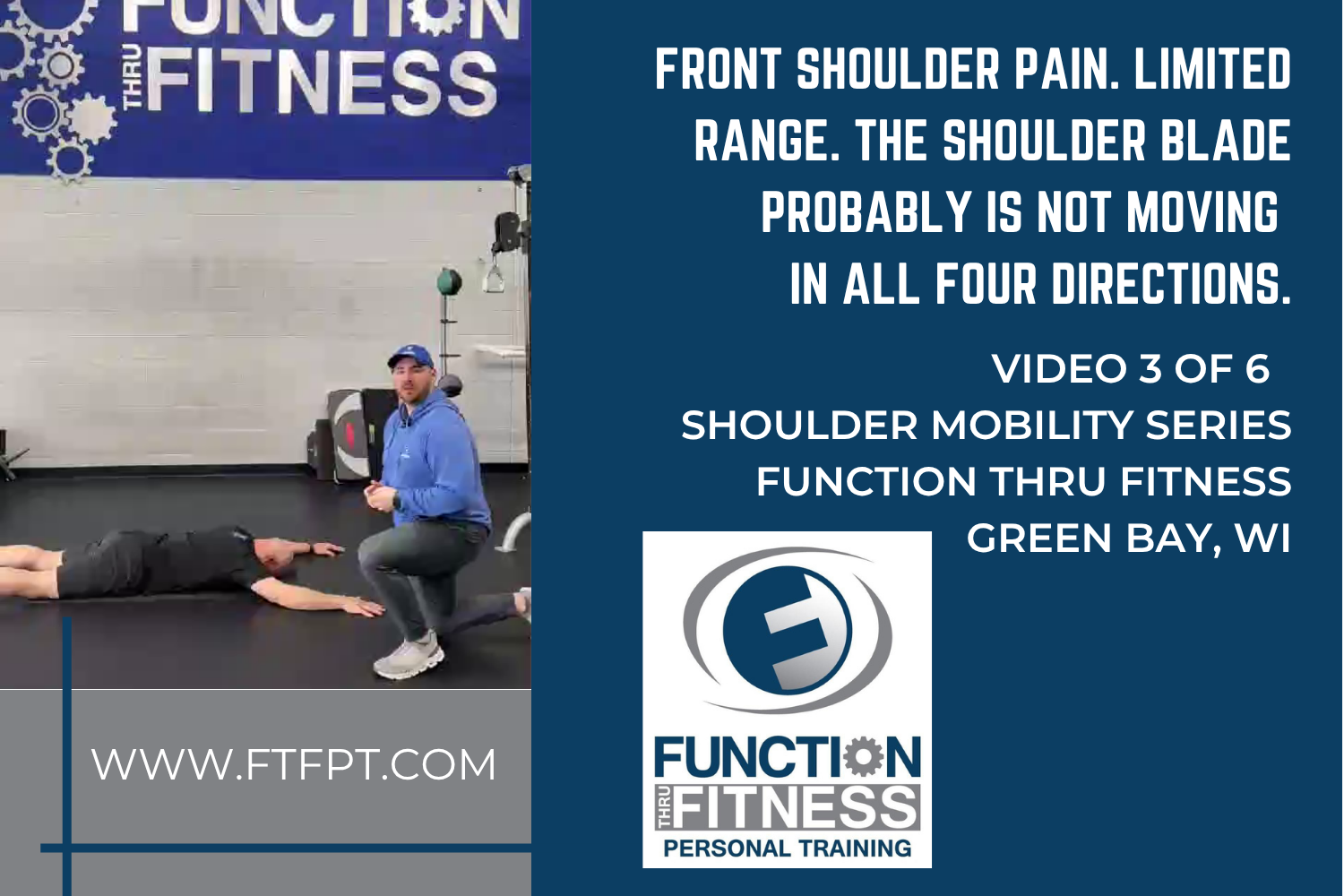
The prone around the world takes the shoulder blade through elevation, retraction, protraction, and depression in a single continuous arc. Performed lying face down with large sweeping arm movements, it strengthens the muscles responsible for full scapular control — making it one of the most complete shoulder exercises range of motion drills for addressing shoulder pain and restoring healthy movement.
Most people dealing with shoulder pain have tried some version of shoulder strengthening. Rows, face pulls, band pull-aparts — all useful exercises, all targeting retraction. What most shoulder programs miss is the rest of the picture.
The shoulder blade does not just retract. It elevates, depresses, protracts, and retracts — four distinct directions of movement that require four sets of muscles to work with both strength and coordination. When one or more of those directions is restricted, the shoulder joint compensates. The rotator cuff picks up the load. Discomfort builds, range of motion narrows, and the problem persists no matter how many rows or band exercises get added to the program.
The prone around the world addresses all four directions in one exercise. That is what makes it the centerpiece of Video 3 in our six-part shoulder mobility series at Function Thru Fitness in Green Bay, WI.
In this video, Ben walks Glen through the full movement with coaching cues for technique and range. If you have been following this series from the beginning, this exercise takes the scapular strength built in Videos 1 and 2 and applies it across the complete range of motion the shoulder blade is designed to move through.
Why All Four Directions Matter
Each direction of scapular movement serves a specific function in how the shoulder works.
Retraction draws the shoulder blades toward the spine and is essential for posture and upper back stability. It is what most shoulder corrective programs train, and for good reason — it directly counteracts the forward rounding that prolonged sitting creates.
Depression moves the shoulder blades downward, away from the ears. It is what keeps the upper trap from dominating shoulder movement and allows the mid and low trap to do their job during pulling and pressing exercises.
Elevation raises the shoulder blades toward the ears. While it is not a direction most people need to strengthen, training it as part of a full arc ensures the muscles responsible for controlled elevation — and the muscles that resist unwanted elevation — are being challenged through their full range.
Protraction moves the shoulder blades away from the spine and around the rib cage. It is driven primarily by the serratus anterior, a muscle that is consistently underactive in people with shoulder pain and forward shoulder posture. Weak protraction is often behind pain in the front of the shoulder and instability during pressing movements.
When all four directions are trained together — as they are in the prone around the world — the shoulder blade develops the coordinated, three-dimensional control that healthy shoulder function requires.
How to Perform the Prone Around the World
Watch the video to see Glen move through the full arc before attempting it yourself.
Start lying face down — prone — with the forehead resting on the ground. This keeps the neck neutral throughout the movement. Arms are at the sides or slightly out from the body.
Begin by lifting both arms off the floor. From there, sweep them wide and upward in large circular arcs, keeping them as far off the floor as possible throughout the movement. The goal is to continue the arc all the way around until the hands meet at the lower back.
At the lower back, let the shoulders fall — allowing full protraction before reversing the movement. Retract the shoulder blades, then sweep back in the opposite direction, returning through the full arc to the starting position.
The key coaching cues: big movements, shoulder blades together and retracted as much of the arc as possible, and stay off the floor the entire time. The moment the arms drop to the floor or the range shortens, the shoulder blade stops being challenged through its full working range.
The exercise is not about speed. Slow, intentional movement through the complete arc trains the muscles more effectively than rushing through it.
Who Benefits Most From This Exercise
This exercise is one of the most effective shoulder exercises range of motion drills for anyone dealing with front-of-shoulder pain. That presentation — pain at the front of the joint during pressing movements, reaching overhead, or at rest — is frequently connected to limited protraction range and a weak serratus anterior. Taking the shoulder blade through full protraction as part of this movement directly addresses that restriction.
It is also valuable for anyone working through rehab exercises for rotator cuff issues, since healthy rotator cuff function depends on the shoulder blade being able to move freely in all directions. When scapular mobility is restored, the rotator cuff can perform its stabilizing role without the compensation patterns that cause discomfort.
For golfers, full scapular mobility is foundational to shoulder health through the demands of the swing. The shoulder girdle absorbs significant rotational force during the swing, and restricted scapular movement is a common contributor to shoulder pain and reduced performance in golfers of all levels.
For older adults focused on mobility for seniors and maintaining shoulder function for daily activities — reaching overhead, carrying, lifting — the prone around the world builds the kind of full-range scapular control that supports those movements safely and confidently.
How This Fits the Series
The shoulder mobility series at Function Thru Fitness builds progressively across six videos. Video 1 established mid and low trap strength through the banded scapula retraction. Video 2 added full retraction and protraction range in the quadruped position. Video 3 integrates all four directions of scapular movement into a single loaded movement pattern.
The subsequent videos continue building on this foundation. For a program tailored to your specific shoulder mechanics, a Functional Assessment at Function Thru Fitness identifies exactly where the restrictions are and builds corrective exercise programming around them.
Watch the Full Video
FAQ’s
Q: What does the prone around the world exercise do for the shoulders? A: The prone around the world takes the shoulder blade through all four directions of movement — elevation, retraction, depression, and protraction — in a single continuous arc. This trains the full scope of muscles responsible for scapular control, making it one of the most complete shoulder exercises range of motion drills for building shoulder blade coordination and addressing the restrictions behind chronic shoulder pain.
Q: Why do I have pain in the front of my shoulder? A: Pain in the front of the shoulder is often connected to restricted protraction range and weakness in the serratus anterior — the muscle responsible for moving the shoulder blade around the rib cage. When protraction is limited, the front of the shoulder joint is compressed during reaching and pressing movements. The prone around the world directly addresses this by training the shoulder blade through full protraction as part of a complete arc of movement.
Q: How do I fix poor posture and movement patterns affecting my shoulders? A: Fixing posture and movement patterns affecting the shoulders requires more than just pulling the shoulders back. Full shoulder blade mobility — in all four directions — needs to be restored, and the muscles responsible for each direction need to be strengthened. The prone around the world is one of the most effective exercises for this because it trains all four directions together rather than isolating one at a time.
Q: Are these exercises appropriate for seniors with shoulder stiffness? A: Yes. The prone around the world is appropriate for older adults focused on mobility for seniors because it requires no equipment and moves the shoulder through its full natural range without loading the joint. It builds the scapular control needed for everyday overhead and reaching movements and can be performed at whatever pace and range the individual's current mobility allows.
Q: How does scapular mobility relate to rotator cuff health? A: The rotator cuff stabilizes the shoulder joint during movement. When the shoulder blade is restricted in any of its four directions of movement, the rotator cuff must compensate for the restriction, which increases the stress on its tendons and muscles. Restoring full scapular mobility through exercises like the prone around the world is often a foundational component of rehab exercises for rotator cuff programs because it reduces the compensatory load on the rotator cuff.
Looking for a better way to stay strong, mobile, and pain-free as you age?
At Function Thru Fitness, we go beyond big-box gyms. As one of the established fitness centers green bay wi, our focus is on restoring how the body moves, reducing pain, and building long-term strength through a proven function fitness approach.
We help people move better at every stage of life through personalized training, corrective exercise, golf fitness, neuromuscular therapy, and athlete recovery.
Download our free guide: Essential Exercises for Lifelong Mobility and Independence www.ftfpt.com/essential-exercises
Visit us at 801 Hoffman Rd. Suite 103, Green Bay, WI Book online at www.ftfpt.com