
Quadruped Scapula Retraction and Protraction: Restore Shoulder Blade Mobility Before It Becomes a Problem
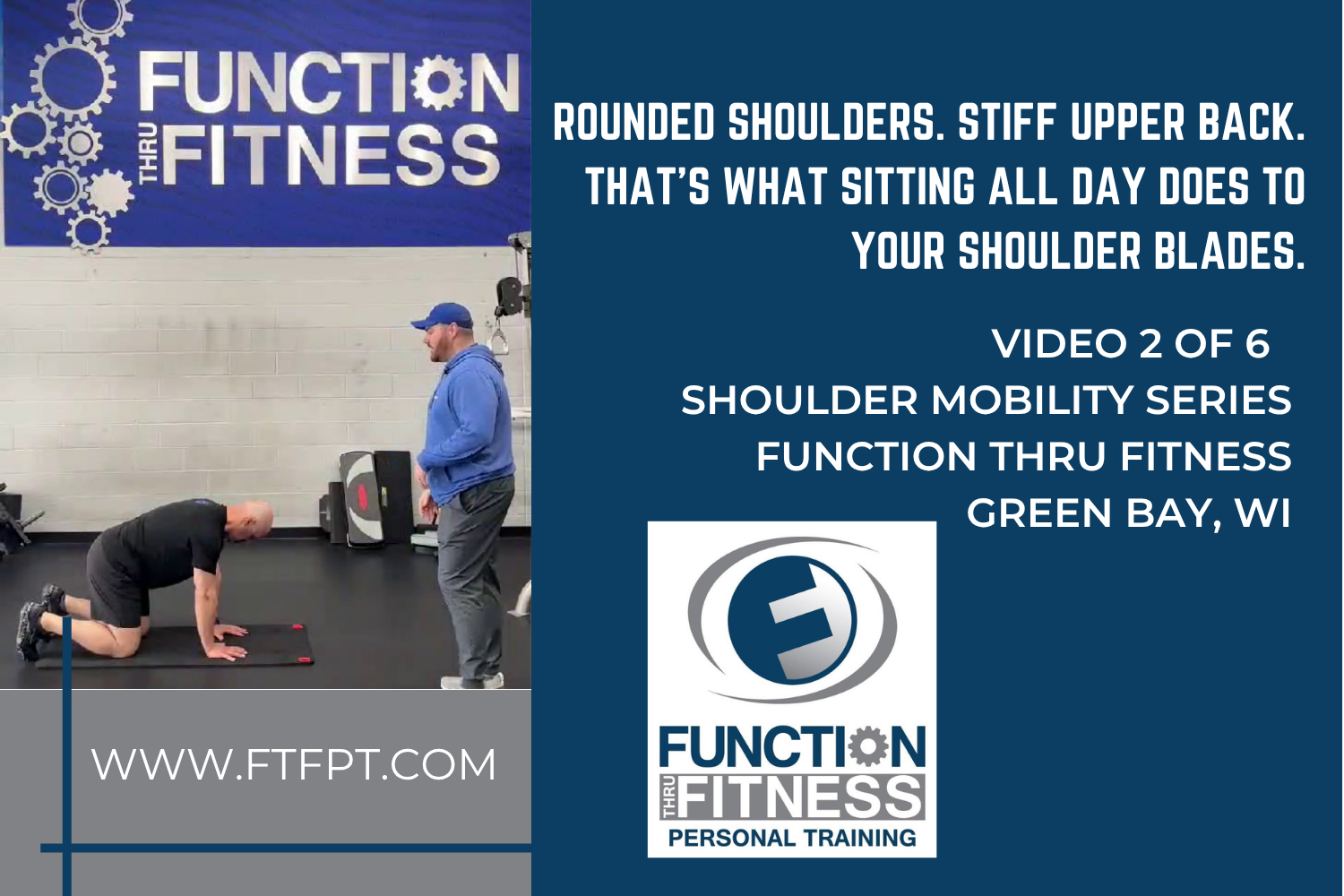
The quadruped scapula retraction and protraction moves the shoulder blades through their full range of motion — sinking the chest toward the floor in retraction and pushing the spine toward the ceiling in protraction. Performed with a braced core and no upper trap involvement, this exercise restores shoulder blade mobility lost from prolonged sitting and prepares the body for safe, effective upper body training.
Most shoulder problems do not start in the gym. They start at the desk.
Hours of sitting in a forward position — shoulders rounded, chest compressed, upper back passive — gradually trains the muscles around the shoulder blades to stop moving. The serratus anterior, which protracts the shoulder blade and holds it flat against the rib cage, becomes inhibited. The mid and lower trapezius, which retract and depress the shoulder blade, grow weak. The chest tightens. The upper back stiffens.
By the time someone picks up a weight or starts an upper body training session, the shoulder blades are essentially stuck. They are not moving through their full range, they are not positioned properly, and the muscles that should be controlling them are not firing the way they should. Loading the shoulder joint from that starting point is how minor stiffness becomes chronic discomfort.
The quadruped scapula retraction and protraction fixes this. It is one of the most direct shoulder exercises range of motion movements for restoring full scapular mobility — and it works equally well as a warm-up before training or a reset after a long day at a desk.
In this video, Ben walks Glen through the full movement. This is Video 2 of 6 in our shoulder mobility series at Function Thru Fitness in Green Bay, WI.
Understanding Retraction and Protraction
The shoulder blade moves in several directions. Retraction draws it toward the spine. Protraction moves it away from the spine and around the rib cage. Both directions are essential for healthy shoulder function, and both are restricted in people who spend long hours sitting.
Most corrective shoulder work focuses on retraction — pulling the shoulder blades back to counteract the rounded posture of sitting. That is important, and Video 1 of this series covers the banded scapula retraction specifically for that purpose. But protraction matters equally. Without full protraction range, the serratus anterior stays weak, the shoulder blade cannot move properly during overhead and pressing movements, and the rotator cuff ends up compensating for what the scapula should be controlling.
This exercise trains both directions in one movement, which is what makes it such an efficient addition to either a warm-up or a corrective exercise program.
How to Perform the Quadruped Scapula Retraction and Protraction
Watch the video to see Glen demonstrate the full movement before trying it yourself.
Start on hands, feet, and knees. The spine should be neutral — not arched, not rounded — with the core braced and the back flat. This starting position matters. A sagging lower back will shift the demand away from the shoulder blades the moment the movement begins.
For the retraction: let the chest sink toward the floor while keeping the arms as straight as possible. The shoulder blades draw toward each other as the chest drops. This should feel like a controlled lowering — not a collapse — with the arms maintaining their length throughout.
For the protraction: push away from the floor using only the muscles around the shoulder blades. The cue I use here is to imagine a point in your spine and push it toward the ceiling. That image consistently gets people into full protraction range because it directs the movement to the right place rather than having the arms do the work.
Two details must be maintained throughout. No shrugging — if the shoulders rise toward the ears, the upper trap is compensating. Keep them down and let the shoulder blades drive the movement. And abs tight on the way into retraction — the moment the core releases, the lower back sags, and the shoulder blades stop being the primary mover.
Full range in both directions is the goal. The greater the range, the more the serratus anterior and mid to low trap are being trained through their complete working length.
Why This Belongs Before Upper Body Training
Upper body exercises — pressing, pulling, rowing — all require the shoulder blade to move and stabilize simultaneously. When the shoulder blade is restricted, those exercises load the rotator cuff and shoulder joint in ways they are not designed to handle. Rehab exercises for rotator cuff programs frequently address this because scapular mobility is foundational to rotator cuff health.
Performing the quadruped retraction and protraction before upper body training reactivates the muscles responsible for scapular movement, restores range of motion that sitting has compressed, and sets the shoulder blade in the position it needs to be in for the session ahead. It is a short investment — even two to three sets before training — that directly affects how well every subsequent exercise works.
Why This Also Works as a Desk Reset
For people asking how do I fix poor posture and movement patterns developed from a sedentary workday, this exercise offers a practical answer. What causes neck and back pain in office workers is frequently the cascade that starts with shoulder blades that stop moving — chest tightness, upper back rounding, neck compensation. Breaking that pattern mid-day or at the end of a workday with a movement that takes the shoulder blades through their full range interrupts the cycle before it compounds.
Shoulder exercises strength and mobility do not require a gym. This exercise requires nothing but floor space and a few minutes of intentional movement.
How This Fits Into the Series
This is Video 2 of 6 in our shoulder mobility series. The series is built progressively — each exercise addressing a specific component of shoulder function that connects to the next. Video 1 covered the banded scapula retraction for strengthening the mid to low trap. Video 2 adds full-range mobility in both directions. The subsequent videos build on this foundation.
For a program built around your specific shoulder mechanics and movement patterns, a Functional Assessment at Function Thru Fitness identifies exactly where the restrictions are and guides the corrective exercise approach most appropriate for your body.
Watch the Full Video
FAQ’s
Q: What is the difference between scapula retraction and protraction? A: Scapula retraction draws the shoulder blades toward the spine — the movement associated with pulling the shoulders back into good posture. Protraction moves the shoulder blades away from the spine and around the rib cage — the movement associated with reaching forward. Both directions are essential for healthy shoulder function and are often restricted in people who sit for long periods.
Q: How do I fix poor posture and movement patterns from sitting at a desk? A: Fixing desk-related posture and movement patterns requires both releasing what has become tight and reactivating what has become weak. The quadruped scapula retraction and protraction addresses both by moving the shoulder blades through their full range, which reactivates the serratus anterior and mid to low trapezius that sitting inhibits. Used consistently as a desk reset or pre-training warm-up, it directly counteracts the effects of prolonged sitting on shoulder blade mobility.
Q: Why should I do shoulder mobility exercises before upper body training? A: Before upper body training, the shoulder blades need to be moving freely through their full range. When shoulder blade mobility is restricted — which is common after prolonged sitting — upper body exercises load the rotator cuff and shoulder joint in ways that create discomfort and limit performance. Shoulder exercises range of motion like the quadruped retraction and protraction reactivate the muscles responsible for scapular movement before those exercises begin.
Q: What causes neck and back pain that starts in the shoulders? A: What causes neck and back pain connected to the shoulders is often restricted scapular mobility combined with tight chest muscles. When the shoulder blades cannot move freely, the neck and upper back compensate, taking on load they are not designed to handle. Restoring full scapular mobility through targeted corrective exercise is one of the most effective ways to address the root cause of this pattern.
Q: Are these exercises appropriate for rotator cuff issues? A: Yes. The quadruped scapula retraction and protraction is frequently included in rehab exercises for rotator cuff programs because full scapular mobility is essential for healthy rotator cuff function. When the shoulder blade is restricted, the rotator cuff cannot perform its stabilizing role properly. Restoring scapular range of motion is often a foundational step before loading the rotator cuff with strengthening exercises.
Looking for a better way to stay strong, mobile, and pain-free as you age?
At Function Thru Fitness, we go beyond big-box gyms. As one of the established fitness centers green bay wi, our focus is on restoring how the body moves, reducing pain, and building long-term strength through a proven function fitness approach.
We help people move better at every stage of life through personalized training, corrective exercise, golf fitness, neuromuscular therapy, and athlete recovery.
Download our free guide: Essential Exercises for Lifelong Mobility and Independence www.ftfpt.com/essential-exercises
Visit us at 801 Hoffman Rd. Suite 103, Green Bay, WI Book online at www.ftfpt.com